

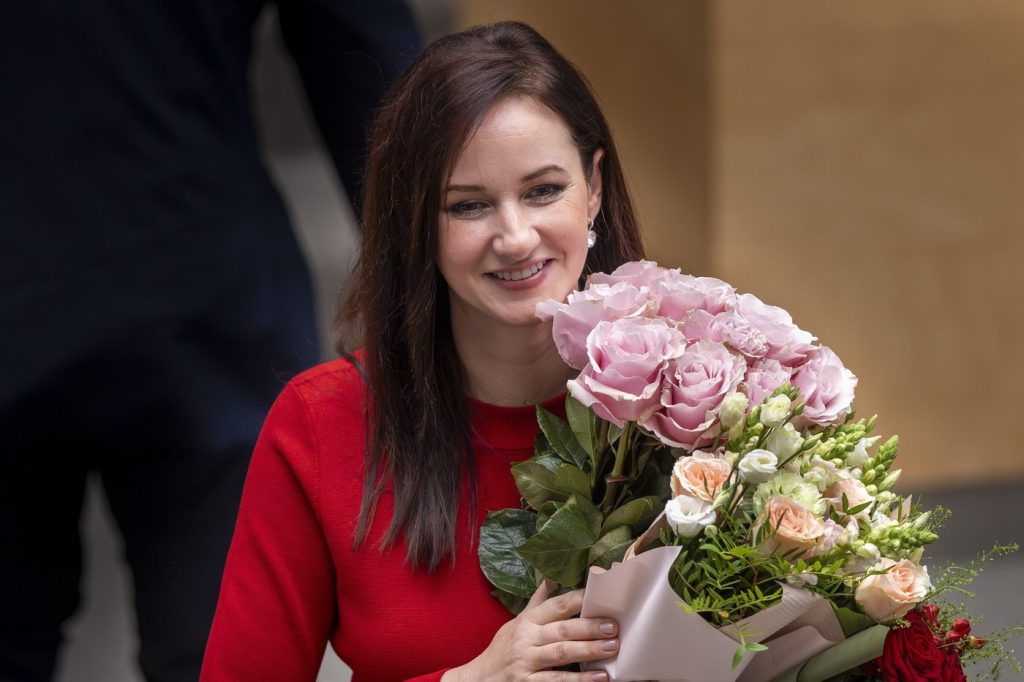
VILNIUS, Lithuania (AP) — On August 26, 2025, Lithuania's parliament made a significant decision by electing Inga Ruginiene, a former labor union leader and relative political newcomer, as the country's new prime minister. This decision came just weeks after her predecessor, Gintautas Paluckas, resigned following investigations into his business dealings.
The lawmakers voted overwhelmingly in favor of Ruginiene, with 78 votes supporting her appointment and 35 opposing it. At just 44 years old, Ruginiene has transitioned from leading Lithuania's labor union confederation to becoming a key figure in the political landscape, having recently joined the center-left Social Democratic Party before the general elections of the previous year. Following her party's rise, she served as the minister for social affairs and labor under Paluckas, who held office for less than a year before stepping down.
Paluckas faced intense scrutiny, with media reports investigating his financial and business transactions, some of which dated back over a decade. Following these revelations, Lithuania's anti-corruption and law enforcement agencies initiated their own inquiries into his conduct.
In her speech prior to the parliamentary vote, Ruginiene emphasized her commitment to "restoring stability" within the government. She expressed her intention to ensure that the government fulfills its mandate as entrusted by the voters. President Gitanas Nauseda, who played a pivotal role in nominating her, highlighted Ruginiene’s negotiating skills and her ability to seek compromise, qualities deemed essential for her new role.
The Social Democrats have formed a new center-left coalition, bringing two junior partners on board, and collectively hold a solid majority in the Seimas with 82 of the 141 seats. This coalition is expected to enable Ruginiene to implement her policies effectively during her tenure.
Although Ruginiene must still go through formal procedural steps to be officially appointed by the president and subsequently sworn in at a ceremony in parliament, these actions are largely seen as mere formalities. Her government is anticipated to serve the remainder of the four-year term initiated by the fall elections from the previous year.
Despite the governmental shakeup, it is unlikely that Lithuania's foreign policy will experience significant shifts. President Nauseda, elected separately from the parliament, remains a prominent voice on the international stage, particularly in support of Ukraine amidst the ongoing conflict with Russia, a stance that enjoys widespread backing among the Lithuanian populace. Located on the frontline of the Western alliance, Lithuania, a member of both the European Union and NATO, shares borders with Russia's Kaliningrad exclave and Belarus, which is allied with Russia.








