

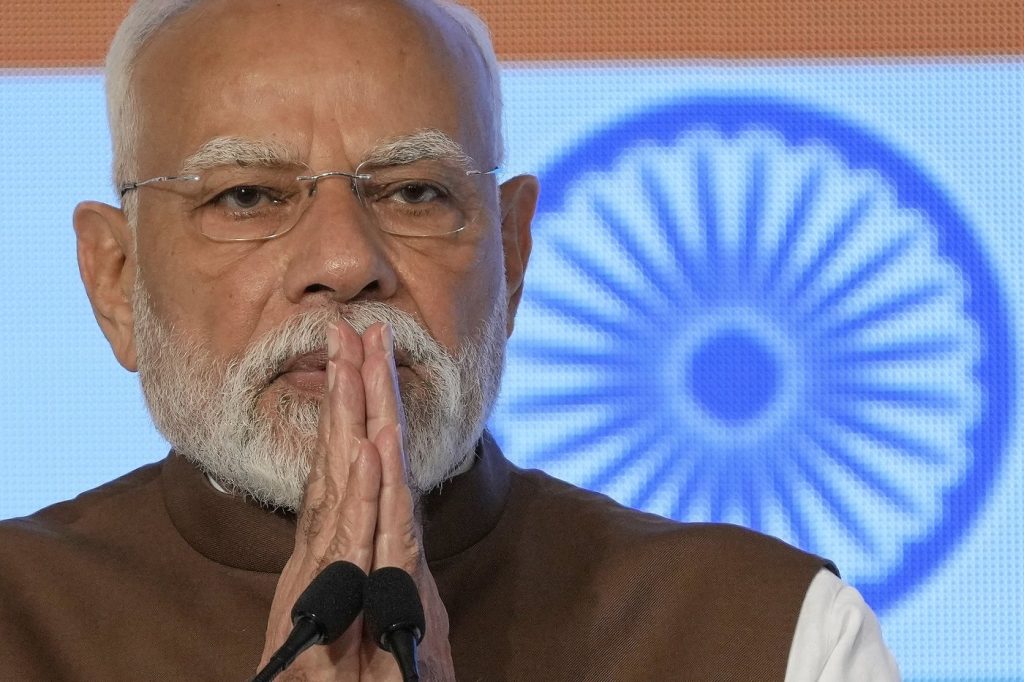
Indian Prime Minister Narendra Modi commenced his trip to Japan and China with significant engagement at a Tokyo business forum on Friday. During this visit, he met with Japanese Prime Minister Shigeru Ishiba. The two leaders are scheduled to discuss and unveil a "joint vision" aimed at strengthening cooperation over the next decade across various sectors, including security, economy, energy, and human resources.
Modi and Ishiba are also anticipated to reaffirm their collaboration within the Quad alliance, which includes the United States and Australia. This framework is strategically designed to counter the increasing dominance of China in the region. Both countries are facing the impact of U.S. President Donald Trump's trade and tariff measures, adding urgency to their discussions.
Modi's visit follows his recent meeting with China's Foreign Minister Wang Yi, where he expressed optimism about improving Sino-Indian relations. These discussions come after a prolonged period of tensions centered around their Himalayan borders. During his meeting with Ishiba, Modi is expected to push for Japanese private sector investments in India, targeting an investment goal of 10 trillion yen (approximately $68 billion) over the next decade. Additionally, they aim to enhance human resource exchanges to half a million people in the next five years.
The two nations recognize the potential benefits of India's skilled workforce to alleviate Japan's labor shortages, stemming from an aging and declining population. Modi highlighted the potential for Japanese companies to invest in India, emphasizing that reforms have fostered a more transparent and predictable business environment. He remarked that "In India’s development journey, Japan has always been an important partner" during his speech at the forum organized by Japan's influential business lobby, Keidanren.
Modi referenced the success of Suzuki Motor Corporation in India and expressed confidence that Japan and India could replicate such achievements in various sectors, including batteries, robotics, semiconductors, shipbuilding, and nuclear energy. He emphasized that these collaborations could significantly contribute to the progress of countries in the Global South and Africa. "Japan is a tech powerhouse, and India is a talent powerhouse," Modi stated, asserting that the two nations together could "lead this century’s tech revolution" across domains like green energy, next-generation mobility, and logistics infrastructure.
In response, Ishiba affirmed the shared values between India and Japan, including democracy and the rule of law. He asserted that "Japan’s advanced technology and India’s outstanding talent, as well as its large market, are complementing each other to a dramatic expansion of our economic ties." He underscored the significance of extending their cooperation beyond the Indian Ocean to encompass Africa and Europe, which could further enhance their bilateral relationship.
This meeting marks a crucial step in solidifying economic and strategic ties between India and Japan amidst global challenges. The anticipated agreements and shared vision could pave the way for increased collaboration, leveraging each nation's strengths to achieve mutual benefits effectively.








