

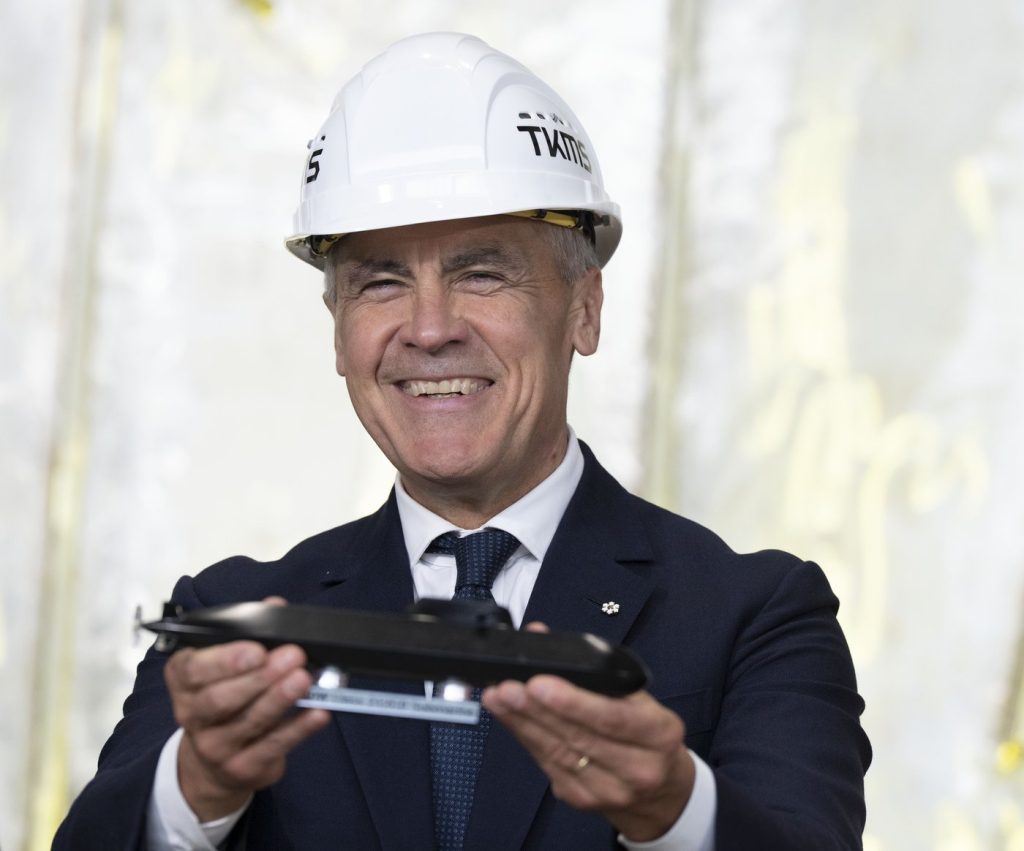
OTTAWA - The competition to provide Canada with its new fleet of submarines intensified this week, with Ottawa narrowing the contest down to two suppliers: a South Korean company and a German firm. This substantial procurement project is crucial for modernizing Canada’s naval capabilities.
1. Why does Canada need to purchase new submarines?
Canada is in a race to replace its aging Victoria-class submarines, which were acquired second-hand from the United Kingdom in 1998. These submarines are deteriorating rapidly and costly to maintain. As Prime Minister Mark Carney highlighted, Canada currently operates only one functional submarine. The Victoria-class fleet is expected to be phased out by the mid-2030s, with the first new submarine aimed to be operational by 2035 to prevent any operational interruptions.
The push for this procurement became increasingly urgent post-2024, when former Prime Minister Justin Trudeau announced the submarine project during a NATO summit in Washington. The NATO alliance has been pressuring Canada to enhance its defense spending, as the nation has historically struggled to meet its commitment of spending over 2 percent of its GDP on defense. A modern submarine fleet would significantly elevate Canada’s defense expenditure.
2. Who are the contenders for the supply contract?
Prime Minister Carney announced in Berlin on August 25 that the procurement process has been “downselected” to two finalists. One contender is Hanwha Oceans, based in South Korea, which manufactures the KSS-III submarine. These submarines utilize lithium-ion batteries and are already in service with the Republic of Korea Navy. Hanwha asserts that if contracted by next year, they could deliver their first submarine by 2032, followed by a total of four submarines by 2035, with subsequent deliveries occurring annually. However, the company has not yet exported these submarines to another country.
The competing firm, ThyssenKrupp Marine Systems (TKMS), is an established manufacturer responsible for the majority of NATO’s conventional submarine fleet. They are promoting the new 212CD submarine model, which is being produced for the German and Norwegian navies and operates on hydrogen fuel cells and diesel engines. Should Canada opt for TKMS, it would benefit from interoperability and resource-sharing with NATO partners.
3. What are Canada’s expectations from the submarine purchases?
Despite the unassuming title of the project — the “Canadian Patrol Submarine Project” — government documentation emphasizes that stealth and lethality are paramount capabilities for the new submarines. Canada’s defense policy update “Our North, Strong and Free” underscores a commitment to Arctic protection, especially in light of Russia’s military expansion in the region and emerging national security challenges due to climate change. The Royal Canadian Navy is specifically looking for subs that can operate under Arctic ice conditions, which is critical for tracking, deterring threats, and engaging in combat when necessary.
Carney emphasized the need for submarines suited for operations under demanding conditions across Canada’s three coasts. Furthermore, he has indicated that there should be economic benefits for the domestic market as part of this procurement. Reports suggest that Hanwha plans to establish maintenance facilities on both coasts, while TKMS intends to involve all three significant Canadian shipyards in the project.
4. What will be the financial implications of the new submarines?
The new submarines are expected to represent the largest defense procurement initiative in decades, although the Canadian government has refrained from announcing a specific budget or cost estimate. The price tag could reach into the tens of billions, largely depending on the number of submarines ultimately ordered. Questions regarding financial specifics have remained unanswered as the government is set to negotiate with suppliers. The recent F-35 stealth jets acquisition, which exceeded initial estimates by billions, has added scrutiny to the financial planning of this submarine project.
While there was speculation about considering nuclear submarines—known for their cost and complexity—the federal government quickly ruled out this option as an impractical commitment.
5. What are the next steps in the procurement process?
As Ottawa moves forward, it will begin extensive discussions with both competing firms. There remains the option to issue a formal request for proposal or directly enter negotiations. Vice-Admiral Angus Topshee, the chief of the Royal Canadian Navy, has suggested that a decision could potentially be made by the end of the year if Ottawa proceeds aggressively.








