

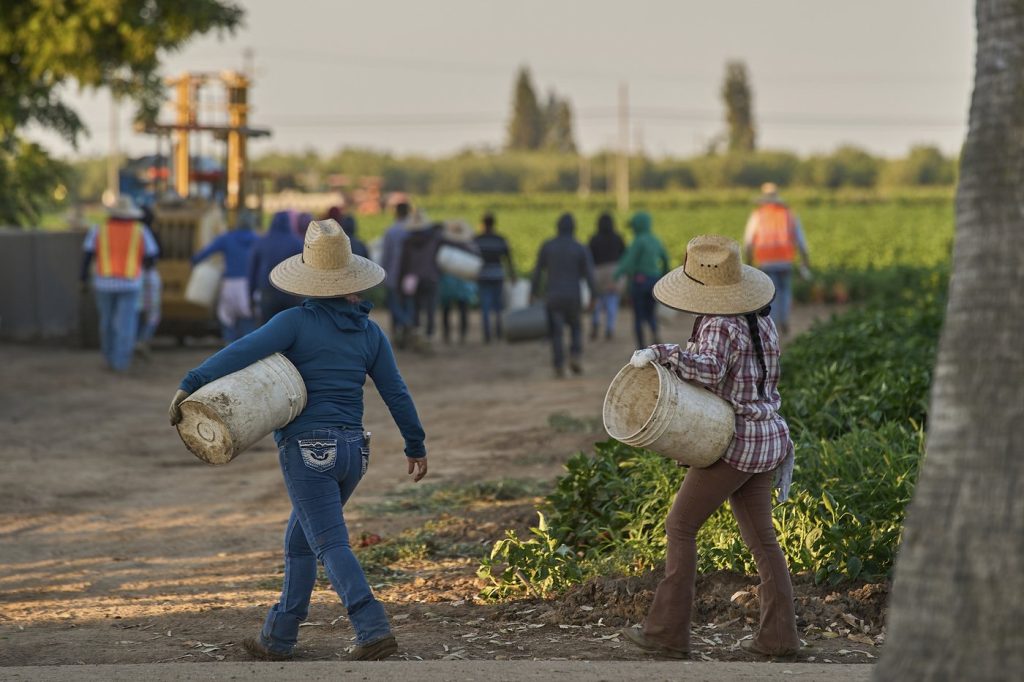
Tomato season is in full swing, and Lidia, a farmworker in California's Central Valley, is in the midst of harvesting. However, she harbors significant anxiety due to the potential actions of U.S. Immigration Control and Enforcement (ICE). After crossing the U.S.-Mexico border illegally over 23 years ago as a teenager, she is particularly concerned about being stopped while driving and questioned about her immigration status. Lidia explained, "We need to work. We need to feed our families and pay our rent." This sentiment comes as Labor Day celebrations highlight the contributions of workers in the U.S., countered by fears stemming from the intensified immigration policies initiated by former President Donald Trump.
According to preliminary data analyzed by the Pew Research Center, more than 1.2 million immigrants have vanished from the U.S. labor force between January and July 2023. This decline encompasses both undocumented individuals and legal residents, emphasizing the significant role immigrants play in the workforce, constituting nearly 20% of it. As highlighted by Pew senior researcher Stephanie Kramer, approximately 45% of workers in farming, fishing, and forestry industries, 30% of construction workers, and 24% of service workers are immigrants. Moreover, this trend coincides with the first recorded drop in the overall immigrant population since the number of undocumented individuals peaked at 14 million in 2023.
Kramer suggested that the causes of this decline are multifaceted, hinting at voluntary departures, avoidance of deportation, and potential underreporting. Despite the current circumstances, she emphasized that the early indicators of decreasing net migration are unlikely to be exaggerated. Trump's administration campaigned on a platform promising the deportation of millions of undocumented immigrants, focusing on targeting "dangerous criminals." However, most detainees do not have criminal backgrounds, and illegal border crossings have significantly decreased under his policies.
Pia Orrenius, a labor economist at the Federal Reserve Bank of Dallas, noted that immigrants typically account for at least 50% of job growth in the U.S. She remarked that the previously high inflow of migrants has essentially come to a halt, significantly affecting job creation. This sentiment is echoed by Elizabeth Rodriguez, who is concerned about the labor shortages in agriculture due to immigration enforcement actions at farms, which have caused delays and wastage of crops, particularly during peak harvest seasons.
In Ventura County, California, Lisa Tate manages her family's agricultural business and faces similar challenges. While she does not attribute all staffing issues directly to immigration policies, she recognizes that fears of ICE raids are widespread among her workers. Numerous farmworkers were arrested earlier in the year, creating an atmosphere of apprehension within the workforce. Lidia's personal fears resonate deeply, as she worries about the possibility of being deported to Mexico, leaving her American-born children behind and starting her life anew.
The construction industry shares similar struggles, particularly in McAllen, Texas, where Rodriguez reports a significant decline in construction jobs attributed to intensified immigration enforcement. The number of construction jobs has decreased across about half of U.S. metropolitan areas, with the Riverside-San Bernardino-Ontario area experiencing the largest loss at 7,200 jobs. Ken Simonson, chief economist for the Associated General Contractors of America, emphasized the impact of stricter immigration enforcement on labor supply, stating that contractors would readily hire more workers if they could find qualified candidates willing to accept jobs.
The potential ramifications extend into the healthcare sector, where immigrants make up about 43% of home health care aides. Arnulfo De La Cruz, president of the SEIU 2015, expressed concerns over possible future shortages of home care providers and essential staffing in hospitals and nursing homes as immigrant labor decreases. The current climate surrounding immigration and labor signifies a profound challenge for various sectors reliant on immigrant workers.








