

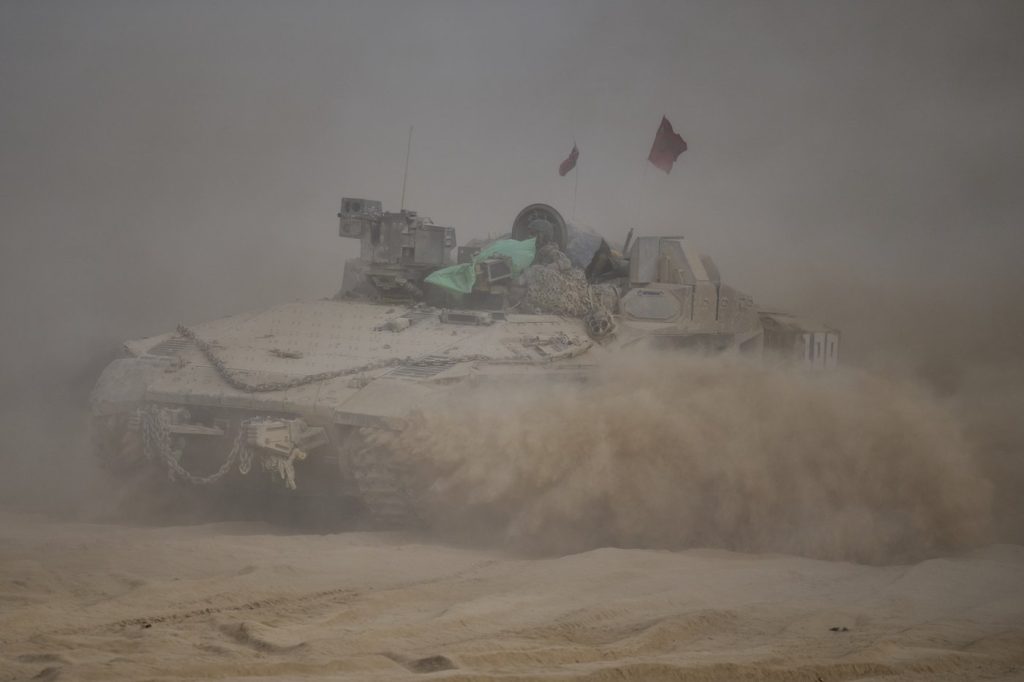
DEIR AL-BALAH, Gaza Strip (AP) – Israel has initiated the mobilization of tens of thousands of reservists as part of its strategy to intensify its offensive in Gaza City. This escalation, announced last month, has prompted domestic dissent and international disapproval.
The call for reservists, which commenced in early September, follows ongoing ground and air operations targeting locations in northern and central Gaza. Recent strikes have focused on the Zeitoun and Shijaiyah neighborhoods in western Gaza City, areas that Israeli forces have repeatedly entered during the ongoing 23-month conflict against Hamas.
Historically, Zeitoun was Gaza City’s largest neighborhood, featuring markets, schools, and clinics. However, it has undergone significant devastation over the past month, transforming into what the Israeli military has designated a “dangerous combat zone,” with streets deserted and buildings reduced to rubble.
As Hamas' political and military stronghold, Gaza City is believed to still house a vast network of tunnels despite numerous incursions throughout the conflict. The city is one of the last remaining havens in the northern region of Gaza, where hundreds of thousands of civilians seek refuge amidst the dual threats of armed conflict and starvation.
Israel’s military reported plans to gradually call up at least 60,000 reservists, in addition to extending the service of 20,000 reservists who are already deployed. In a country with a population of under 10 million, most Jewish men complete mandatory military service, thereafter remaining in the reserves for a minimum of ten years. However, as criticism regarding the ongoing war mounts in Israel, various movements are encouraging reservists to refuse the latest call-up, although the number of potential dissenters remains uncertain.
In the wake of a recent declaration by a leading global food crisis authority, Gaza City has been reported to be experiencing famine. According to Gaza's Health Ministry, malnutrition-related deaths have surged, with 185 individuals dying from malnutrition in August alone, marking the highest monthly toll in several months.
The Health Ministry estimates that a total of 63,557 Palestinians have perished in the conflict, with approximately 160,660 others wounded. While the Ministry does not differentiate between civilians and combatants in its casualty counts, it suggests that women and children comprise about half of the deceased. Although the ministry operates under the Hamas-run government, it is staffed by qualified medical professionals. Many independent experts and U.N. agencies regard its casualty figures as reliable, despite Israel disputing these numbers without providing its own estimates.
The conflict began on October 7, 2023, following a Hamas-led assault on southern Israel, resulting in the deaths of 1,200 individuals, predominantly civilians. Hamas also took 251 people hostage, with 48 hostages remaining inside Gaza; around 20 are believed to be alive, while most others were freed during ceasefires or negotiations.
As the situation continues to evolve, the ramifications of the war on both sides remain profound and disturbing, reflecting a complex humanitarian crisis and escalating violence in the region.








