

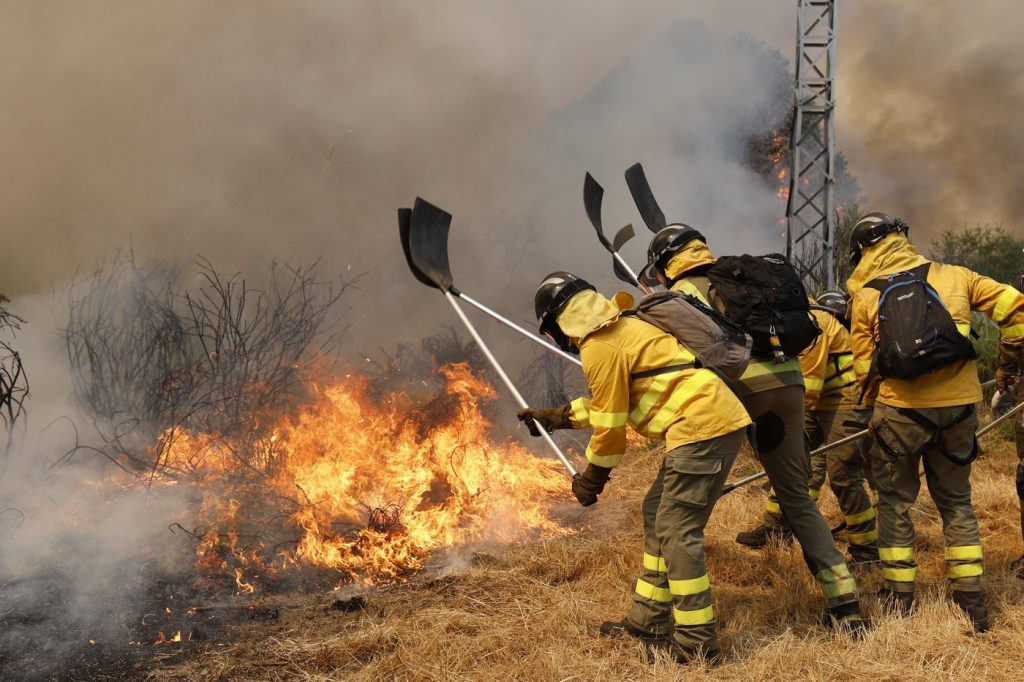
MADRID (AP) A recent study has revealed that the extremely hot, dry, and windy conditions that have contributed to one of the Iberian Peninsula's most destructive wildfire seasons in recorded history were 40 times more likely due to climate change. The analysis was conducted by World Weather Attribution (WWA) and released on Thursday, stating that these weather conditions were approximately 30% more intense compared to the preindustrial era, marking the time when the heavy reliance on fossil fuels began.
During the months of July and August, hundreds of wildfires broke out across the Iberian Peninsula, exacerbated by soaring temperatures exceeding 40 degrees Celsius (104 Fahrenheit) and strong winds. The devastation was significant, leading to the deaths of eight individuals, the evacuation of over 35,000 people, and the scorching of more than 640,000 hectares (1.58 million acres), which accounts for roughly two-thirds of Europe’s total burned area this year. Fortunately, officials reported that most of the blazes are now under control, thanks to a considerable drop in temperatures.
Clair Barnes, a researcher at the Centre for Environmental Policy at Imperial College, London, emphasized that climate change is resulting in hotter, drier, and more flammable conditions, leading to fires with unprecedented intensity. Since the 1980s, Europe has been warming at twice the global average rate, according to data from the European Union’s Copernicus Climate Change Service.
The WWA study focused on the specific conditions that allowed the Iberian wildfires to spread rapidly, particularly during Spain's hottest ten-day period on record in August, as recorded by the country’s weather agency, AEMET. The research found that, without the influence of climate change, similar extreme ten-day spells of hot, dry, and windy conditions would be exceptionally rare—occurring just once every 500 years.
Valérie Masson-Delmotte, a climate scientist at the French Alternative Energies and Atomic Energy Commission, noted that this quick study adds further evidence of how human-caused climate change intensifies the frequency and severity of extreme heat and fire weather conditions. Although this analysis was not a comprehensive attribution study, which aims to assess the impact of climate change on specific weather events, it did align with previous research findings in the region and a similar study by WWA on this year's fires in Turkey, Greece, and Cyprus, indicating that climate change has made fire-prone weather conditions in those areas 10 times more likely.
The researchers also highlighted additional factors contributing to the severity of the wildfires, including significant population shifts over the decades from rural areas to urban centers in Spain and Portugal. This migration has led to neglected overgrown farms and forests, which further fuel the fires. To mitigate this risk during wildfire seasons, they suggested using machinery to remove vegetation, encouraging grazing by livestock, and implementing controlled burns.
Ricardo Trigo, a professor at the University of Lisbon, remarked on the consequences of rural abandonment since the 1970s, allowing fine fuels to accumulate to dangerous levels, exacerbated by inadequate forestry management. In light of these events, Spanish Prime Minister Pedro Sánchez recently proposed a comprehensive 10-point plan aimed at better preparing the country for natural disasters intensified by climate change. This plan includes coordinating disaster response efforts with neighboring countries, such as Portugal and France.








