

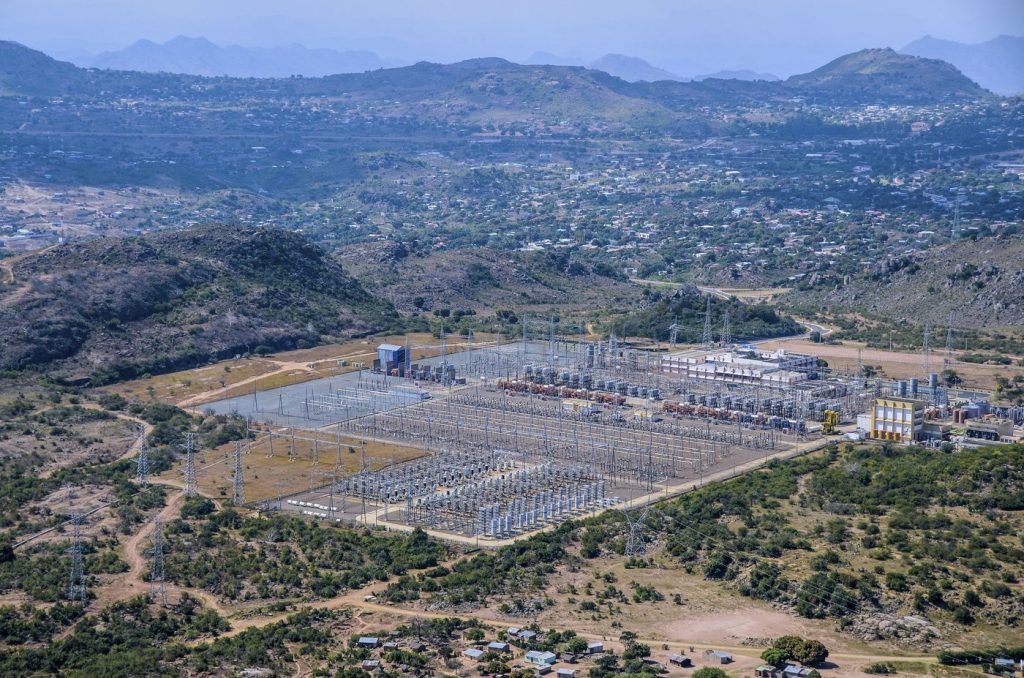
SIDUAVA, Mozambique (AP) — Hermínio Guambe, a 48-year-old barber, experienced a significant transformation in his life with the arrival of electricity in his village near Mozambique's capital. Previously operating a barbershop without power, Guambe now utilizes hair dryers, and the local pharmacy has started to stock essential medicines that require refrigeration. The increase in electricity has stimulated local trading and transport, leading to job creation.
World Bank President Ajay Banga emphasized the importance of electrification during an interview with The Associated Press in July, stating, "Electricity isn't just light, it's a chance." This sentiment echoes the broader mission of Mozambique, which aims to connect all 33 million of its predominantly rural population to electricity by 2030 through renewable sources, including hydroelectric, solar, and others.
The $6 billion Mphanda Nkuwa hydroelectric plant, supported by the World Bank, is poised to become southern Africa's largest hydroelectric project in half a century. Mozambique, categorized as one of the world's poorest nations by per capita income, has seen its electricity access nearly double from 31% in 2018 to 60% in 2024. The state-run energy supplier, Electricidade de Moçambique (EDM), reports that it connected 563,000 homes in 2024, with a goal of reaching 600,000 in 2025.
Mphanda Nkuwa is strategically located 60 kilometers downstream from the larger Cahora Bassa hydroelectric dam located on the Zambezi River. Expected to generate 1,500 megawatts by 2031, this new plant aims to address the 10,000-megawatt deficit in the region, which currently prevents millions from accessing electricity. While the World Bank isn’t directly financing the Mphanda Nkuwa project, it is providing various supports, including concessional funding for legal, environmental issues, risk guarantees, and political risk insurance.
During Banga's visit, political undercurrents were present as President Daniel Chapo, who ascended to power following the disputed 2024 elections, led enthusiastic cheers from the crowds. Banga highlighted Mozambique's rich resources, including gas, hydro, and solar, stating that it is already the largest supplier of excess electricity in Southern Africa.
Despite the promising outlook for hydropower, a significant portion of Africa's potential remains untapped. The World Bank and the International Hydropower Association estimate that around 90% of Africa's hydropower capacity is still unused. Banga acknowledged that while large projects like Mphanda Nkuwa are vital, the challenge in Mozambique lies in connecting remote areas that may not be easily reached by the national grid. Therefore, off-grid solutions, especially solar initiatives, are becoming increasingly crucial.
Energy consultant Evaristo Cumbane emphasized the necessity for smaller, local energy projects, considering Mozambique's abundant rivers, sunshine, and wind resources. He also raised concerns about the rising national debt, pointing out that public debt reached approximately $17 billion in early 2025, with a substantial $2.1 billion spent on debt servicing in 2023. The exact financial implications of the Mphanda Nkuwa project remain uncertain, with Banga estimating its final cost could range between $5 billion and $6 billion.
Mozambique's journey has been complex, marked by civil wars, intermittent violence, and ongoing insurgency issues in the north, which have stalled some projects like the $20 billion gas initiative by TotalEnergies. Nevertheless, the electrification initiatives are offering a glimmer of hope, as demonstrated by Guambe’s bustling barbershop, which serves as a testament to the positive impacts of electricity. Nearby, Aurélio Arlindo, a hopeful resident without power for years, awaits the installation of electricity to pursue his goal of opening a cold drinks stall. The positive momentum towards electrification signals a brighter future for many in Mozambique.








