

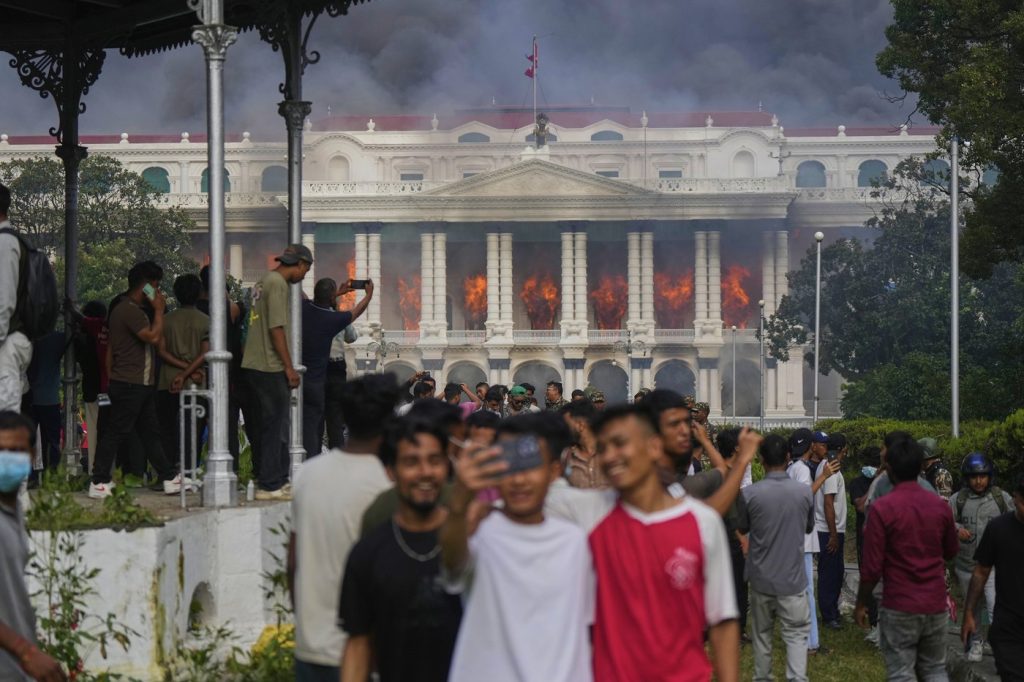
KATHMANDU, Nepal — Armed soldiers were deployed in the streets of Kathmandu on Wednesday, enforcing a curfew aimed at restoring order following a wave of protests that led to violence and chaos in the capital. Tens of thousands of demonstrators had taken to the streets, storming government buildings, setting them ablaze, and attacking political figures.
The visible presence of soldiers, armed and stationed in key areas, marked a significant escalation by the Nepali army, which is typically reluctant to intervene. The army had previously remained in barracks, leaving the police to manage the unrest, which they failed to control effectively. After the military announcement on Tuesday, soldiers began checking vehicles and individuals, reinforcing the enforced curfew, while 21 suspected looters were arrested.
The protests intensified on Tuesday, leading to further violence that resulted in the resignation of Prime Minister Khadga Prasad Oli amid growing dissatisfaction with the political elite. Despite his resignation, widespread unrest persisted, with demonstrators blocking roads and storming government facilities late into the night. Army helicopters were deployed to transport ministers to safety, reflecting the tumultuous climate in the city.
The unrest was sparked by a controversial government decision to block several social media platforms, including Facebook, X, and YouTube, citing a lack of registration and government oversight compliance. This led to demonstrations predominantly led by the youth, who were galvanized by anger over the social media ban. Tragically, police responded by firing on crowds, which resulted in the deaths of 19 individuals and triggered outrage among the populace.
Although the government lifted the ban on social media platforms on Tuesday, protests continued to grow. The demonstrations, characterized as a "Gen Z protest," reflected deeper frustrations among young people, who feel marginalized by the political advantages of the so-called "nepo kids," the children of political leaders who seem to enjoy a life of luxury while many youths struggle with unemployment — reportedly around 20% as of last year. Each day, over 2,000 young people reportedly leave Nepal seeking employment abroad in regions such as the Middle East or Southeast Asia.
Political leaders and government buildings were specific targets during the protests. Videos circulated on social media showed the assault of key leaders, such as Sher Bahadur Deuba, the leader of the Nepali Congress party, and his wife, amid chants from the crowd. The demonstrations quickly turned destructive, with significant damage inflicted on various government structures, including the parliament building, the presidential residence, and key ministry offices, all of which continued to smolder from the fires set by protesters as of Wednesday.
Additionally, the destruction spread to the Kantipur publication building, one of Nepal's largest media outlets, as well as various car showrooms, with burnt-out vehicles littering the streets. Protesters expressed their anger by holding the government accountable for the police's violent response to peaceful demonstrations.
Beyond the immediate incidents of violence and destruction, the Nepali government was pursuing new legislation aimed at regulating social media, which many critics argue serves as a tool for censorship. The proposed bill would mandate social media companies to establish a liaison within the country, drawing backlash from rights groups who fear this infringes on freedom of expression and fundamental rights. The recent protests and the government's efforts to regulate social media illustrate a complex interplay of political discontent, youth frustration, and calls for accountability within a troubled democracy.








