

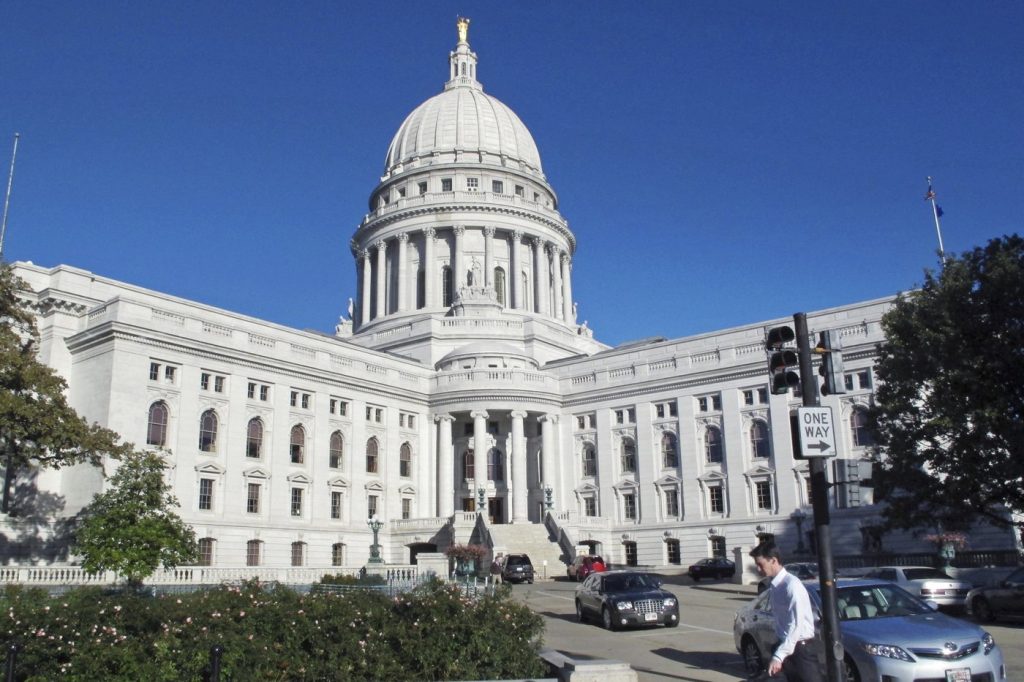
MADISON, Wis. (AP) In a recent statement, Assembly Speaker Robin Vos, the highest-ranking Republican in the Wisconsin Assembly, expressed his opposition to the idea of "fortifying" the state Capitol, which is recognized for its accessibility. Instead, he indicated that lawmakers are considering ways to enhance safety in other methods, particularly regarding security measures for officeholders at their homes. His comments followed the tragic killing of conservative commentator Charlie Kirk on a college campus in Utah and just three months after targeted shootings of two Minnesota state lawmakers.
During an interview, Vos underscored that he is not in favor of increasing security measures in a way that would transform the Capitol into a fortified building. He noted, "I don't want to fortify a single building to make people feel safer when the reality is that most of the violence that has occurred has not been inside a government building." This perspective aligns with a broader debate regarding the necessity and type of security measures to be implemented in state capitols across the country.
In light of the recent violent incidents involving lawmakers, states like Wisconsin, which were still in session in June, took immediate steps to bolster security following the Minnesota attacks, which targeted lawmakers' residences. Many states began to enhance protections for lawmakers, including measures to secure personal information. Despite the potential for increased security measures in response to these incidents, Vos's stance highlights a preference for keeping the Capitol open and accessible to the public.
Wisconsin's Capitol has its own police force, stationed in the basement, but notably lacks significant security measures such as metal detectors and screening checkpoints. The building allows public access from 8 a.m. to 6 p.m. on weekdays, enabling anyone to walk in and reach the offices of state lawmakers and other officials without undergoing any initial security checks. According to a state audit conducted last year, Wisconsin is one of 11 state capitols that do not utilize metal detectors and one of 19 without X-ray machines for scanning items brought into the building.
In the aftermath of the Minnesota shootings, some Wisconsin lawmakers have expressed their support for implementing stricter security measures. Republican state Senator Chris Kapenga, for instance, has advocated for the installation of metal detectors at the Capitol and suggests a ban on firearms for anyone within the building, with the exception of lawmakers themselves. It's noteworthy that Wisconsin is among seven states allowing concealed weapons in their capitol buildings, as reported by the Council of State Governments in 2021. In contrast, a majority of states, 36 in total, prohibit concealed weapons in their state capitol venues.
On a recent Thursday, three police officers were positioned outside the entrance of the state Assembly, yet no additional security measures were evident within the chamber where lawmakers convened. The galleries remained open to the public, with members of the community present to observe the ongoing debates. Although Vos remains opposed to enhancing security within the Capitol itself, he has indicated that discussions are taking place about improving security for lawmakers at their homes or other places where they might be vulnerable. Vos's sentiments reflect a cautious approach towards security, balancing the need for safety with maintaining public access to the legislative process.
Democratic leaders in the Wisconsin Assembly have echoed a commitment to exploring security measures as well. Assembly Minority Leader Greta Neubauer remarked, "This is top of mind for many of our colleagues and, of course, the staff who work in the Capitol as well, the press, the guests, the children that come through this building on Capitol visits." The acknowledgment of security concerns illustrates a shared apprehension among lawmakers regarding their safety in the current political climate, fostering ongoing discussions about how best to protect those who serve in public office.








