

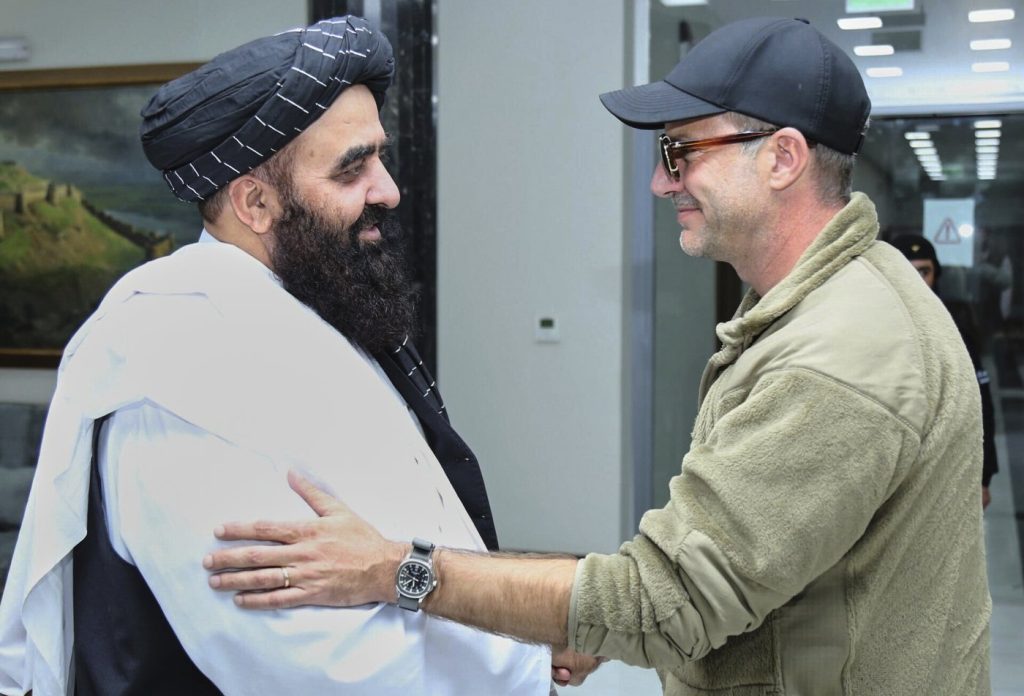
KABUL, Afghanistan (AP) In a significant meeting held on Saturday, the Taliban announced discussions aimed at normalizing relations between Afghanistan and the United States. This dialogue included meetings between the Taliban's foreign minister, Amir Khan Muttaqi, and key officials from the Trump administration, specifically Adam Boehler, who serves as the U.S. special envoy for hostage response, and Zalmay Khalilzad, another American envoy.
The White House has not provided any comments or insights regarding the meeting, nor has it issued an official statement. However, the Taliban's announcement highlighted that the discussions were extensive and focused on fostering bilateral relations, addressing issues concerning the citizens of both nations, as well as exploring investment opportunities within Afghanistan.
Furthermore, the Taliban indicated that the U.S. delegation expressed condolences for the recent devastating earthquake that struck eastern Afghanistan, highlighting a moment of empathy amid the ongoing dialogue between the two parties. This natural disaster, which occurred late last month, added another layer of urgency to the discussions surrounding cooperation and potential aid.
The meeting follows a recent development in which the Taliban released U.S. citizen George Glezmann, who had been kidnapped while traveling through Afghanistan as a tourist. His release marked the third instance in which detainees were freed by the Taliban since Donald Trump assumed the presidency. Notably, these releases come amidst a backdrop of rising tensions, particularly after the Taliban's sharp criticism of Trump’s newly implemented travel ban, which prohibits Afghan citizens from entering the United States.
The dialogue between the Taliban and U.S. officials marks a potentially pivotal moment in U.S.-Afghan relations. The meetings signal an interest in constructive engagement from both sides amidst the broader backdrop of ongoing geopolitical complexities in the region.
In summary, the recent talks highlight a willingness from the Taliban to open avenues for normalization of relations with the United States, addressing various issues that impact citizens of both nations, while also seeking to draw attention to investment prospects in Afghanistan. This evolving narrative could signify a shift towards renewed diplomatic efforts, although the full implications of these discussions remain to be seen.








