

ADEN, Yemen (AP) A somber atmosphere enveloped Yemen as hundreds of mourners gathered on Tuesday for the funeral services of 31 journalists who tragically lost their lives in Israeli airstrikes the previous week. These airstrikes targeted Iran-backed Houthi rebels in Yemen's capital, Sanaa. The strikes occurred in response to a drone launched by the Houthis, which managed to breach Israel's multilayered air defense systems, subsequently crashing into a southern Israeli airport and causing injuries to one individual.
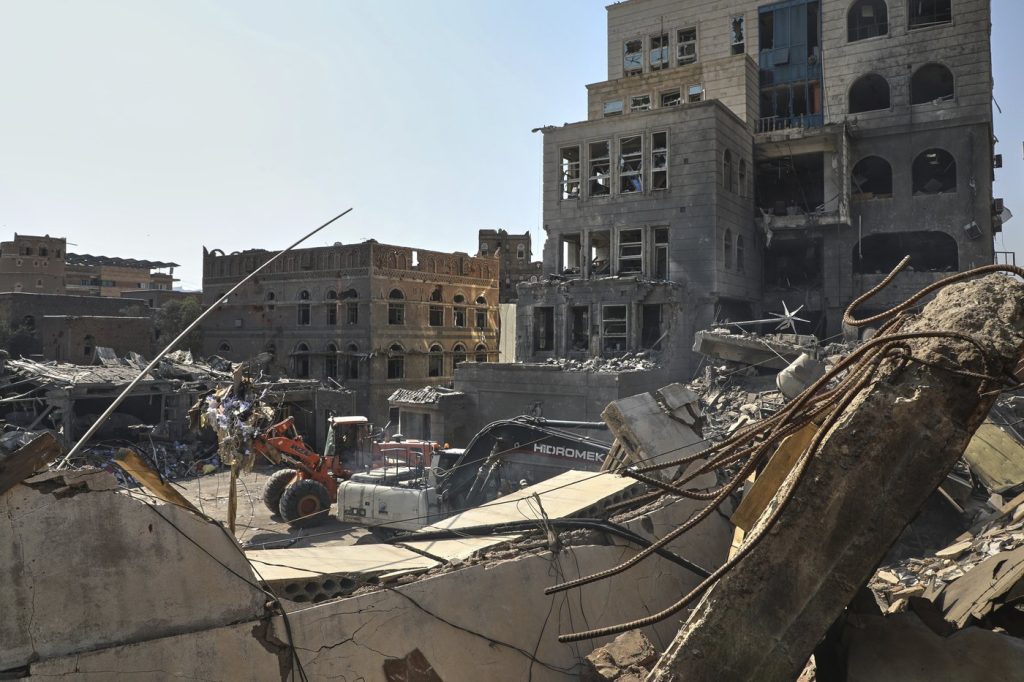
The Israeli bombardment last Wednesday resulted in numerous casualties in Yemen, including the aforementioned journalists. The strikes impacted various locations across Sanaa, affecting residential zones, a military headquarters, and a fuel station, according to the health ministry of the rebel-controlled northern region of Yemen.
Additional damage was reported at the National Museum of Yemen, with the rebels' culture ministry confirming structural harm to the building's façade. A government facility located in Hazm, the capital of the northern Jawf province, was also hit during the offensive. Al-Masirah TV, operated by the Houthis, broadcasted the funeral proceedings, displaying mourners inside a mosque as caskets were carried toward the burial site.
The turnout for the funerals was reportedly lower than anticipated for what many termed as a "huge loss." Attendees Khaled Rageh and Ahmed Malhy, who communicated with the Associated Press by phone, suggested that the heavy rain in the morning may have deterred some from attending. Israel has a history of conducting airstrikes as retaliation against the Houthis for their missiles and drone attacks directed at the Israeli territory. The Houthis assert that their military actions are in support of Hamas and Palestinians in the Gaza Strip.
In the past 22 months, the Houthis have persistently launched missiles and drones towards Israel and targeted vessels in the Red Sea, citing solidarity with the Palestinian plight amid the ongoing war in Gaza. The Committee to Protect Journalists (CPJ) reported ongoing investigations into the fatalities among Yemeni journalists but faced challenges in verifying information from rebel-controlled Sanaa. They emphasized that the information environment is severely restricted due to stringent censorship imposed by Houthi authorities, which includes a ban on sharing related photos or videos.
Human Rights Watch (HRW), in a statement on Monday, noted that the Israeli airstrikes also struck a media center housing the headquarters of two newspapers, highlighting the increasing dangers that journalists face in Yemen. According to HRW, the recent attack by Israeli forces underscores the risks that journalists confront in the country, not only from local authorities but also from external warring factions.
Yemen analyst Mohammed al-Basha shared on X that the airstrikes hit a moment when staff members of the "September 26" newspaper were preparing the next edition of their publication. The tragic events surrounding the loss of journalists in Yemen have drawn international attention to the precarious situation for media professionals in conflict zones, emphasizing the need for protection and truth in reporting.








