

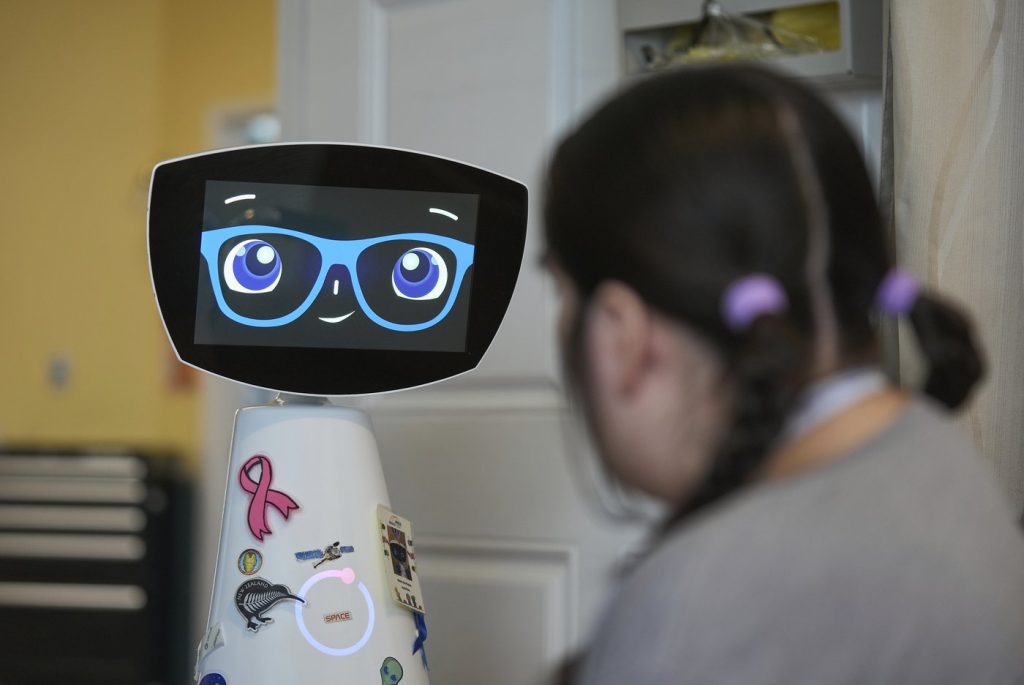
Days after Meagan Brazil-Sheehan's 6-year-old son, Luca, was diagnosed with leukemia, they had a heartwarming encounter at UMass Memorial Children's Medical Center with Robin the Robot. This 4-foot-tall (1.2-meter) therapeutic robot is programmed with a high-pitched voice reminiscent of a 7-year-old girl and is designed to provide emotional support to young patients.
Brazil-Sheehan recounted how her son’s face lit up upon seeing Robin, which he had only met once prior to their encounter. “It was so special because she remembered him,” she noted, highlighting the importance of such interactions during difficult times.
Robin is an artificial intelligence-powered therapeutic robot developed by Expper Technologies, meant to alleviate the emotional burden on patients while addressing staffing shortages in healthcare facilities. Since its launch in the U.S. five years ago, it has made its way into 30 health care facilities across California, Massachusetts, New York, and Indiana.
According to Karen Khachikyan, CEO of Expper Technologies, healthcare staff are often overworked and under pressure, leading to a lack of engagement between caregivers and patients. Robin serves as a supplement to medical personnel, providing comfort and support when human interaction may be limited.
The robot functions autonomously to about 30%, with remote operators managing the remainder of its actions under the supervision of clinical staff. Each interaction helps collect valuable data while adhering to HIPAA regulations, paving the way for a future where Robin can operate more independently.
During a recent visit to HealthBridge Children’s Hospital in Orange County, California, a staff member coordinated Robin's schedule to visit various patients, tailoring its interactiveness to each child's needs. From dancing to music to playing games like tic-tac-toe, Robin has quickly become a source of joy for both patients and their families. Speech language pathologist Samantha da Silva remarked on Robin’s ability to remember patients’ names and preferences, reinforcing its role as a comforting presence.
Robin’s design allows it to mirror the emotional state of the person it interacts with—laughing when a patient is happy and reflecting sadness during tough conversations. This capability extends beyond pediatric care; in nursing homes, Robin plays memory games with dementia patients and offers companionship similar to what a grandchild might provide to a grandparent.
One memorable incident involved a woman experiencing a panic attack who specifically requested Robin. The robot engaged her by playing music from her favorite artist, Elvis Presley, and showing images of puppies until she calmed down. Such interactions underline Khachikyan's vision for Robin as an essential element of patient care rather than a replacement for healthcare workers.
With a projected shortage of up to 86,000 physicians in the U.S. over the next 11 years, Expper Technologies is looking to extend Robin's capabilities further. Future iterations may allow the robot to monitor patient vitals and assist with basic tasks such as dressing and toileting for elderly patients.
Originally conceived during Khachikyan’s Ph.D. studies, the motivation behind Robin stemmed from his childhood loneliness in a single-parent household in Armenia. Since introducing Robin to pediatric hospitals, including a pilot program at UCLA Mattel Children’s Hospital in 2020, its personality has evolved significantly based on user feedback. One example of this evolution includes its favorite animal response, which shifted from traditional choices like dogs and cats to the humorous option of "chicken" after children found it amusing.
Through these thoughtful interactions and continuous development, Robin has carved out a unique position within the healthcare landscape, offering patients a friendly and engaging experience during challenging times.








