

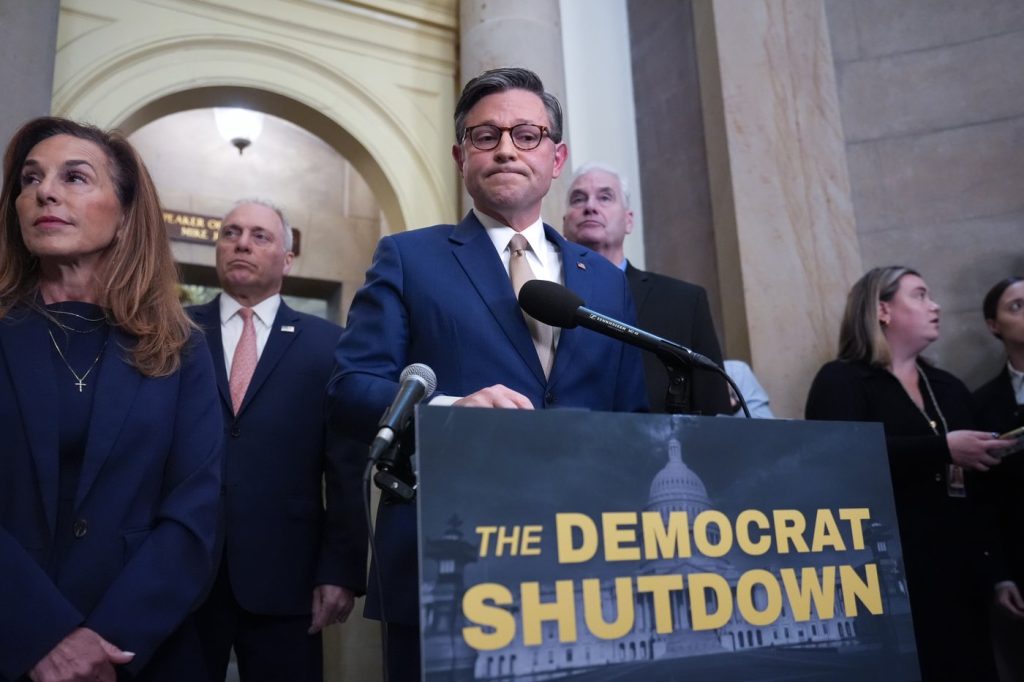
In the U.S. Capitol, Republican leaders have been urging Democrats to take action to reopen the government for a second consecutive day. House Speaker Mike Johnson emphasized their aim to protect federal workers, positioning the blame on Democrats for the ongoing government shutdown.
This political landscape marks a notable shift from previous budget standoffs, where Republican leaders often struggled to appease their conservative factions, who were eager to shut down the government to gain their policy demands. Historically, Democrats played a crucial role in keeping the government operational, providing essential votes to maintain programs they advocated for.
Senator Rand Paul remarked on this reversal, stating that both parties have seemingly switched sides on the same issue. The underlying cause of this change can be attributed to the firm control President Donald Trump holds over the GOP, leading to greater unity regarding budget priorities, with little internal resistance manifesting against them. With the government shutdown underway, significant disruptions to services and furloughs of federal workers are imminent, providing the Trump administration with an opportunity to reshape the federal structure.
As Democrats seek to regain leverage in this new political dynamic, they find themselves in a challenging position after years of being perceived as the more responsible party during shutdown threats. The GOP is harnessing a fresh consensus toward short-term government funding measures known as continuing resolutions, a subject that previously caused significant tension among hardline conservatives.
In an unexpected twist, Senator Paul was one of the few Republicans to align with Senate Democrats against a short-term funding measure that would maintain current funding levels. He articulated his opposition by suggesting that such measures perpetuate Biden-era spending levels that Trump vowed to reverse. Conversely, many of Paul’s past allies among fiscal conservatives have pivoted, now advocating for the government to reopen without the baggage of contentious policy disagreements.
Vice President J.D. Vance recently echoed this sentiment, expressing the necessity to resolve the government shutdown and emphasizing collaborative problem-solving while simultaneously reversing his stance on spending measures during his years in the Senate.
In a stark contrast to their prior positions, several Republican leaders are now exhibiting unity in their public statements on the Capitol balcony, projecting a unified front regarding the ongoing budget standoff. Senate Majority Leader John Thune expressed solidarity among party members as they advance their continuing resolution bill to a potential vote in the Senate.
The current political landscape reflects a decreasing level of resistance toward Trump’s agenda compared to his first term. His previous tax and spending proposals, along with appointments, have proceeded with significantly less controversy, suggesting a shift in internal party dynamics.
However, beneath this outward appearance of unity lies unrest among Republican lawmakers. Concerns arise regarding the unilateral approach of the Trump administration, particularly regarding aggressive spending cuts and opposition to certain healthcare subsidies tied to the Affordable Care Act's tax credits. The potential expiration of these tax credits poses a threat to key Republican constituents, inciting some GOP members to advocate for their extension during Senate debates.
The ongoing shutdown appears to show no immediate signs of resolution, and while Republicans assert a political advantage, underlying discontent with Trump’s tactics, such as his incendiary remarks toward Democrats, threatens to undermine the party’s unified front in negotiations.








