

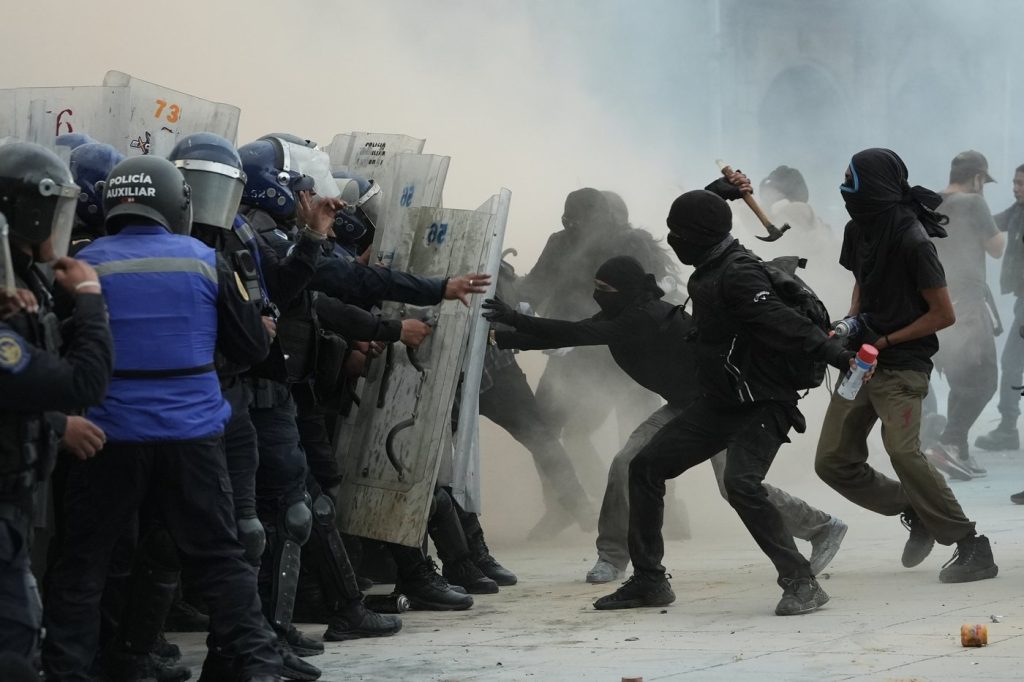
MEXICO CITY (AP) — The annual march commemorating the 1968 massacre of student protesters in Mexico City was overshadowed this year by vocal demands for an end to the humanitarian crisis in Gaza. This event, held on October 2, traditionally honors those killed in the Tlatelolco Plaza, where Mexican troops confronted students advocating for greater freedoms and an end to militarization. The march this year was infused with Palestinian flags and messages denouncing Israel’s military actions in Gaza.
Edgar López, a 23-year-old economics student, expressed his sentiments during the march, stating, “We feel empathy not only for ours, for those our grandparents died for, but for all men and women around the world who are suffering what at one time we suffered.” His commentary reflects the common sentiment among many protestors that their historical struggles resonate with those facing similar conflicts today.
The march commenced at the Tlatelolco Plaza and concluded at Mexico City’s central plaza, a route symbolizing the connection to the tragic events of 1968. While a significant portion of the protest was peaceful, there were instances of unrest; some protestors vandalized local businesses and clashed with police, including throwing objects and Molotov cocktails. Mexican officials estimated the attendance at around 10,000 participants, with approximately 350 individuals reportedly masked and exhibiting aggressive behavior.
Journalists on the scene noted tensions as at least three reporters were attacked, and an altercation occurred between police and protesters. Local media reported injuries among law enforcement, specifically mentioning at least six injured officers; however, this number was not immediately confirmed by authorities.
The background context contributing to the heightened emotions during this year’s march includes a smaller, spontaneous protest that took place in Mexico City the night before, spurred by Israel’s detention of members from a humanitarian flotilla. Among those detained were six Mexican nationals, prompting President Claudia Sheinbaum's administration to call for their immediate repatriation.
The convergence of historical remembrance with current global events highlighted the multifaceted nature of the protests in Mexico City. The resonance of past struggles for freedom continues to evoke solidarity with contemporary movements worldwide, weaving a narrative that transcends local borders. As the march concluded, the atmosphere reflected a powerful call for justice both for the past and present, spotlighting enduring issues of human rights and state authority.








