

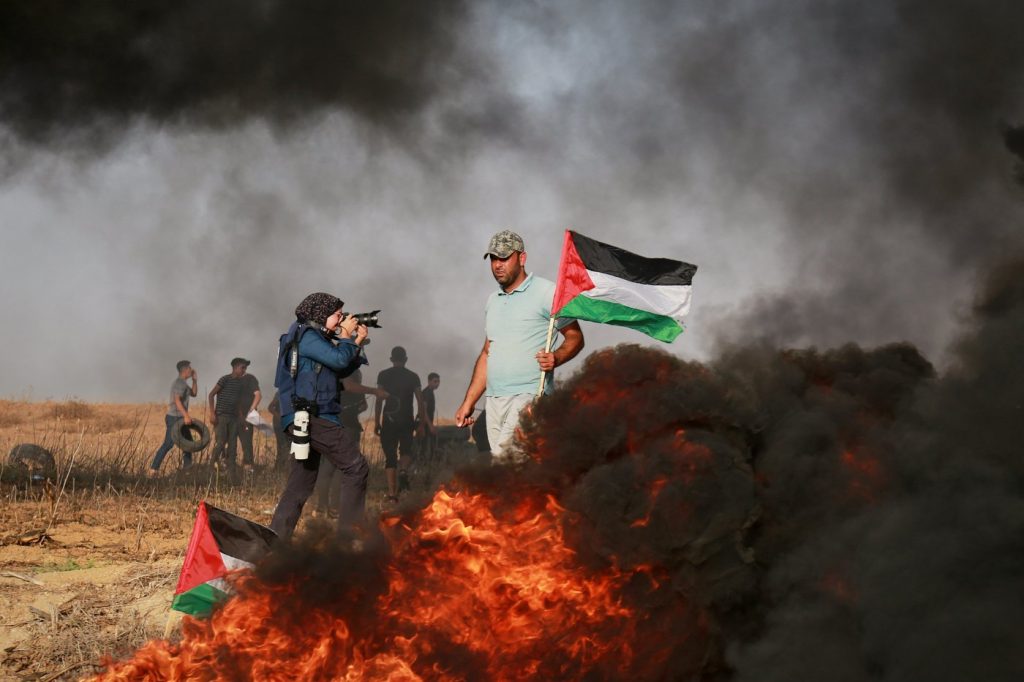
CAIRO (AP) — Two years into the war in Gaza, Associated Press photographer Fatima Shbair reflects on her experiences and the haunting images she captured during this tumultuous period. The conflict intensified following Hamas’s attack on October 7, 2023, which resulted in significant casualties, with around 1,200 individuals killed and 251 taken hostage. Following this assault, Shbair spent several days in her hometown of Gaza City, before relocating with her family to Rafah in southern Gaza as Israeli forces advanced.
Shbair recalls the chaotic events of October 8, when she was supposed to receive keys to her new apartment. Instead, she awoke to the sounds of rocket fire and airstrikes as Israel began its retaliatory campaign. Converging on the roof of the Associated Press office building, Shbair and fellow journalists documented airstrikes that lasted all night, marking the beginning of Israel's operation targeting Hamas, which operates within the dense civilian population of Gaza.
By October 19, Shbair experienced the grim reality of rescue operations as she crawled through wreckage to document people trapped after an airstrike. With her family in southern Gaza, she operated from a hospital in Khan Younis, following rescue teams to airstrike sites daily. The nature of her work took a toll on her psyche; she often found herself processing trauma in the morgue, surrounded by bodies, where she witnessed tearful families and faced grim questions about the survival of her own relatives.
On October 21, she captured the heart-wrenching image of a girl reacting to the emergency workers carrying a dead child from the rubble of a struck building in Khan Younis. As the war progressed, shock gave way to a painful sense of normalcy for children in Gaza, who often described horrifying scenes of loss to Shbair, forcing her to confront the unnerving intersection of childhood innocence and brutality.
Shbair's work took an emotionally charged turn when she received a message from Dina Ali al-Nazzal, a mother in Denmark seeking her children who had been injured in a strike. Through Shbair’s photo, she learned her son, Mohammed, had survived. This connection underscored the vital role of journalists to document and convey human stories amid chaos.
As the war continued into December, Shbair documented the lifeless body of a girl named Maya, caught in the chaos of a market airstrike. Despite the efforts of health workers to save her, the scene became a painful reminder of lost potential and the harsh realities faced by children in conflict.
In January, Shbair witnessed the emergence of mass graves as bodies were transported from across Gaza, a stark departure from past conflicts. Bodies arrived without identification, emphasizing the loss of individual stories amidst the horror of war. She felt compelled to document these nameless losses, each representing a unique life extinguished far from home.
In February, amid significant personal turmoil, Shbair was present during a chaotic surge of wounded victims flooding Al-Najjar Hospital in Rafah, where her father lay dying. This experience juxtaposed her intimate grief with the broader devastation surrounding her. She felt a responsibility to photograph the trauma, convinced that these images must serve as a testament to the overwhelming suffering endured by the community.
March brought the death of her father, a heart-wrenching loss that she documented amidst her grief. On her first day back to work, she captured mourners paying their last respects, a moment that resonated deeply considering her recent experience. Shbair's commitment to her work remained strong despite overwhelming emotional tolls, reflecting the resilience shared among journalists in conflict zones.
Finally, as Ramadan approached in March, Shbair captured a family breaking their fast amidst the ruins of their former home. This image encapsulated the loss and unyielding spirit of resilience in the face of adversity. Now based in Dubai, Shbair continues her work with the Associated Press, grappling with the memories of what she witnessed in Gaza and the impact of her photographs on families separated by conflict.








