

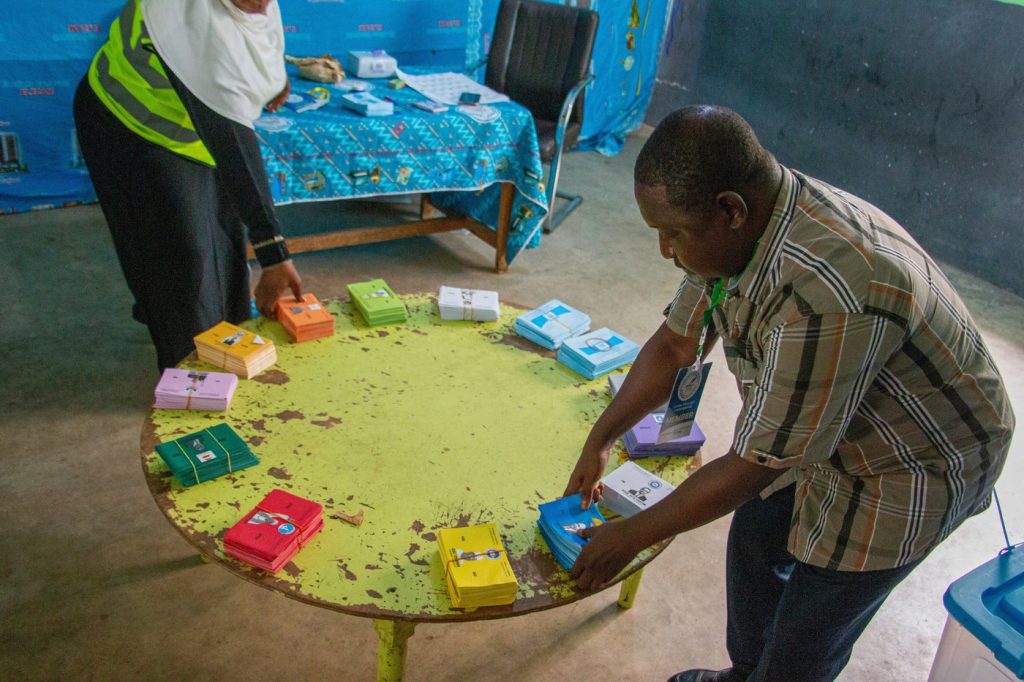
YAOUNDE, Cameroon (AP) – Polls opened on Sunday in Cameroon for an election that could see Africa's oldest leader, President Paul Biya, extend his rule by another seven years. The election is significant for a nation where Biya has been president since 1982, following the resignation of Cameroon’s first president, Ahmadou Ahidjo. Following the election, Biya, who has won every subsequent election since taking office, would be 99 years old when his new term concludes.
Approximately 8 million voters, including over 34,000 registered overseas, are eligible to vote across more than 31,000 polling stations in the Central African nation. As of 2024, Cameroon boasts a population of over 29 million, with a significant portion being youth, typical of many sub-Saharan African countries.
Polls are set to close at 6 p.m., with results expected by October 26 at the latest. Analysts largely predict a victory for Biya, who recently announced his candidacy amid increasing international challenges. “In the face of increasingly difficult international environment, the challenges facing us are more and more pressing,” Biya commented, asserting his commitment to his mission without revealing specific plans for the future.
In the current election, Biya faces nine opposition candidates, including notable former allies and appointees, such as Bello Bouba Maigari, the former minister for tourism, and Issa Tchiroma Bakary, who was recently the minister of employment. Both candidates hold considerable influence in the northern regions of Cameroon, which account for nearly 20% of eligible voters. At a campaign rally in Maroua last week, Biya promised change for one of the poorest areas in the country, appealing to the electorate in the predominantly Muslim north.
Cameroon is grappling with escalating security crises, including a secessionist conflict in the western region involving mainly English-speaking separatists who feel marginalized by the French-speaking majority. Additionally, northern Cameroon faces threats from the Boko Haram insurgency, which frequently carries out attacks on border towns, further complicating the political landscape.
According to United Nations estimates, over 43% of the population lives in poverty, defined by core living standards such as income, education, and health. The challenges facing the country are multifaceted, with a pressing need for political and social reforms. With an aging leader at the helm and increasing competition from opposition candidates, the upcoming election could mark a significant turning point for Cameroon.








