

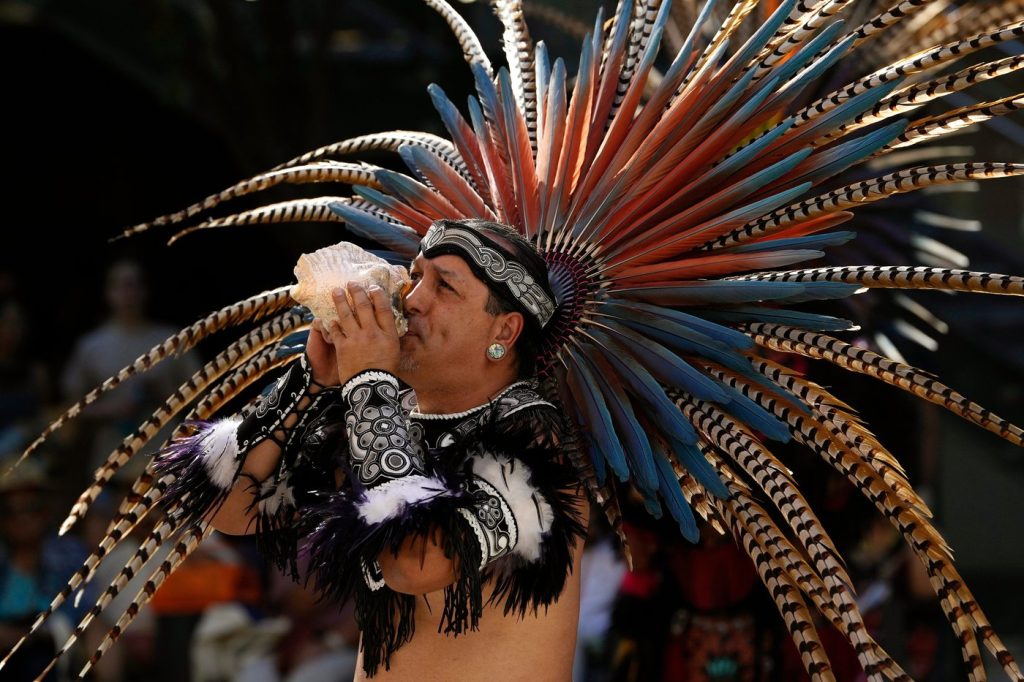
Across the United States, cities from Seattle to Baltimore celebrated Indigenous Peoples Day on Monday, marking a significant recognition of Indigenous cultures and histories. Tribal nations and communities engaged in a variety of joyful events, including powwows, markets, and musical performances, showcasing resilience and perseverance amidst a past filled with trauma.
For decades, the second Monday in October has been co-opted by some states and cities to honor both Native Americans and Christopher Columbus, the Italian explorer celebrated since the federal holiday's inception in 1937. Recently, President Joe Biden issued a declaration acknowledging both Columbus Day and Indigenous Peoples Day. However, former President Donald Trump recently reversed this decision, expressing his intention to restore Columbus's legacy, which he described as a symbol of "faith, courage, perseverance, and virtue." Trump's pledges have drawn considerable backlash from Indigenous communities who view his stance as dismissive of historical realities.
Criticism has arisen regarding Trump's portrayal of Columbus, who is linked not only to exploration but also to centuries of disease, slavery, and conquest that devastated Indigenous civilizations. Despite differing opinions on Columbus, advocates argue that the holiday's essence lies in inclusivity rather than exclusion. This year marked the first official recognition of Indigenous Peoples Day in Montana, thanks to a decade-long campaign. Democratic State Senator Shane Morigeau, a member of the Confederated Salish and Kootenai Tribes, characterized the day as one of "healing and bringing people together," emphasizing a collective approach to honor both Native and non-Native contributions.
Morigeau stated, "It's a day that brings everyone together," and highlighted the option for individuals to celebrate according to their preferences without causing offense. Communities are encouraged to reflect on their history internationally, engage in local events, or simply enjoy personal activities like fishing.
Recent protests, including those connected to the Dakota Access Pipeline in 2016 and the racial injustice movements in 2020, contributed to a broader questioning of Columbus's legacy. In response, Trump criticized narratives that depict Columbus negatively, arguing that he has been unfairly vilified by "left-wing radicals" aiming to erase American history. His proclamation emphasized the perceived war against Columbus's legacy, portraying him as a victim of cultural erasure.
Chase Iron Eyes, director of the Lakota People’s Law Project, asserted that Trump's statements perpetuate cultural tensions rather than foster constructive dialogue about history. He called for an acknowledgment of Columbus’s mixed legacy, which should encompass both the positive aspects and the detrimental impact on Indigenous populations. Iron Eyes stressed that educational systems fail to teach the comprehensive history surrounding Columbus.
On another note, Defense Secretary Pete Hegseth's announcement regarding military honors for soldiers involved in the 1890 Wounded Knee Massacre has sparked controversy and concern throughout Indigenous communities. Iron Eyes remarked on the harmful implications of such honors, particularly in the context of how children in these communities perceive historical injustices.
In September, the Trump administration redirected nearly $500 million from schools with predominantly Hispanic student bodies to historically Black colleges and tribal colleges. This change potentially doubles federal funding for tribal colleges and universities (TCUs) nationwide, a move welcomed by Indigenous leaders who view it as an investment in their communities. Larry Wright Jr., executive director of the National Congress of American Indians, emphasized the importance of bipartisan collaboration in addressing the needs and rights of Indigenous populations, despite the broader political rhetoric surrounding diversity and inclusion.
In summary, the celebration of Indigenous Peoples Day reflects a complex interplay of history, identity, and recognition of cultural resilience. The day aims to promote inclusivity and foster understanding among diverse communities while grappling with the historical implications of figures like Columbus.








