

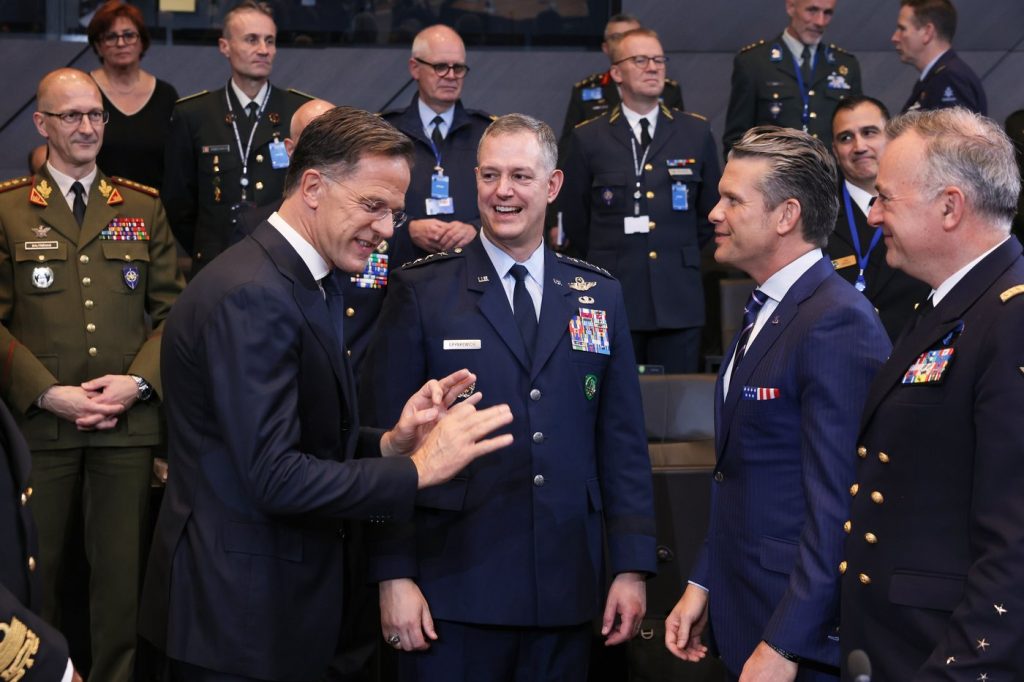
BRUSSELS (AP) — In a significant move, NATO's newest members, Finland and Sweden, announced plans to purchase additional weapons from the United States to support Ukraine. This decision comes on the heels of reports indicating a sharp decline in foreign military aid to Ukraine in recent months.
This summer, NATO began coordinating regular deliveries of substantial weapons packages to Ukraine to bolster its defenses against Russia’s ongoing invasion. The goal was to ensure at least one predictable military supply line per month, each valued at approximately $500 million.
As ammunition and arms supplies in European countries dwindle, NATO diplomats have highlighted that the United States holds an inventory worth an estimated $10-$12 billion in arms, air defense systems, and ammunition suitable for Ukrainian use. Finland’s Defense Minister, Antti Häkkänen, affirmed that his country has chosen to join the Prioritized Ukraine Requirements List (PURL), emphasizing the necessity for Ukraine to receive critical U.S. military equipment. Additionally, Finland is set to offer its own military equipment separately.
Swedish Defense Minister Pål Jonson echoed similar sentiments, stating that “Sweden stands ready to do more.” He welcomed the discussions among other Nordic and Baltic nations, including Estonia, Latvia, and Lithuania, regarding the dispatch of extra military aid to Ukraine.
Jonson expressed concern over the decreasing support for Ukraine, noting, “This is critical now because we’ve been seeing the wrong trajectory when it comes to support to Ukraine.” He made these remarks during a meeting of defense ministers at NATO’s headquarters in Brussels.
Estonian Defense Minister Hanno Pevkur also registered his apprehensions over the reduction in Western support, pointing out that the U.S. contributions to Ukraine have significantly dropped this year. U.S. Defense Secretary Pete Hegseth underscored the expectation that more countries will increase their donations and procure additional military supplies for Ukraine, aiming for a peaceful resolution to the conflict.
Contrastingly, the Trump administration has not provided military equipment to Ukraine. The administration is contemplating whether to supply Tomahawk long-range missiles should Russia not de-escalate its military operations; however, the financing of such weapons remains uncertain.
Recent data reveals that despite the PURL initiative, Western military aid to Ukraine plummeted by 43% in July and August compared to the first half of the year, according to the Kiel Institute, which monitors military deliveries and funding for Ukraine.
NATO Secretary-General Mark Rutte dismissed concerns regarding the drop in support, stating, “It has not. When you look at this year, it is more or less on average with last year.”
Amid these developments, criticism has intensified towards France, Italy, and Spain for not contributing sufficiently to Ukraine’s defense efforts. Häkkänen urged all 32 NATO allies to assume their “fair share of the burden,” declaring that “everyone has to find the money because this is a crucial moment.”
France and Italy are currently grappling with financial constraints while striving to meet NATO’s defense spending targets. Spain has cited other economic commitments, arguing that it compensates for its spending shortfall at NATO through troop deployments on alliance missions. France also advocates for the allocation of European funds towards developing its own defense industry rather than purchasing American arms, and it has opted out of participating in the PURL framework.








