

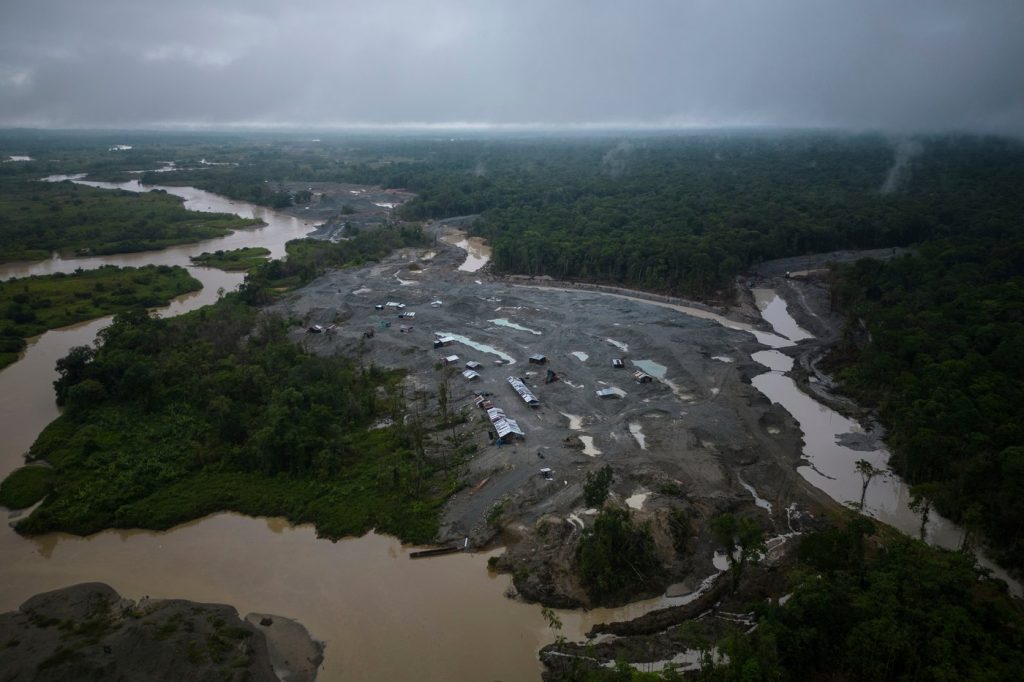
In a stark warning, the United Nations has highlighted a "serious and ongoing human rights crisis" stemming from mercury contamination linked to illegal gold mining in Colombia’s Atrato River basin. This contamination poses a severe threat to the health and survival of Indigenous and Afro-descendant communities that rely on the river for essential resources such as food, water, and cultural practices.
On Tuesday, a letter from three U.N. Human Rights Council special rapporteurs was made public, addressing concerns to the Colombian government regarding inadequate compliance with a 2016 Constitutional Court ruling. This ruling recognized the Atrato River as a legal entity deserving of protection and restoration. Marcos Orellana, the U.N. special rapporteur on toxics and human rights, expressed disappointment over the lack of implementation over the past decade, attributing it largely to organized crime activities like mercury and gold smuggling, as well as corruption within military and police forces.
The Atrato River, spanning nearly 500 miles from the western Andes to the Caribbean Sea, traverses the biodiverse but impoverished Choco region of Colombia. It sustains predominantly Afro-Colombian and Indigenous communities engaged in fishing and small-scale agriculture, both of which are increasingly threatened by toxic pollution caused by illegal gold mining.
Illegal gold mining has emerged as a significant cause of deforestation and pollution across many Amazon regions in Latin America. Rising gold prices and weak traceability systems have surged the demand for illicit gold infiltrating global supply chains. The mercury utilized in gold extraction has not only harmed local wildlife, including river dolphins and fish, but has also contaminated the food sources for Indigenous communities living in remote Amazonian areas.
Recent AP reporting revealed that local residents have taken it upon themselves to safeguard the river, often facing dangers from armed groups involved in illegal mining. Orellana reported that evidence shows more than one-third of the Atrato watershed's population has been exposed to mercury levels surpassing World Health Organization safety limits, with the consequences being profoundly troubling. Mercury is known for its extreme toxicity, leading to neurological damage, organ failure, and developmental issues in unborn children.
Although the 2016 court ruling was celebrated worldwide as a landmark in environmental law, spurring similar "rights of nature" initiatives globally, Orellana noted that political changes, insufficient funding, and corruption have weakened its enforcement. He emphasized that long-term institutional commitment is essential for compliance with court decisions, which are frequently undermined by political realities and budget constraints.
The U.N. rapporteurs, who also included the special rapporteur on the right to a healthy environment and the Working Group of Experts on People of African Descent, described the mercury contamination issue as a violation of health, life, and environmental rights. They urged the Colombian government to take "immediate and effective" action to limit illegal mining, remediate polluted areas, and provide medical assistance to affected communities.
Despite Colombia's 2018 ban on mercury use in mining, enforcement remains poor, especially in conflict zones dominated by armed groups and criminal networks. Orellana also highlighted evidence of human rights abuses, including forced labor akin to slavery, forced prostitution, and displacement directly tied to illegal mining in the Atrato region. He called for such violations to be treated as environmental crimes.
Furthermore, Orellana urged Colombia to take a proactive stance in strengthening international mercury regulations under the Minamata Convention on Mercury, citing existing regulatory gaps that enable cross-border trade in mercury. He stressed that real progress would involve a substantial decrease in mined hectares and ensuring affected communities have access to health care and guidance to mitigate mercury exposure.
As the call for action continues, it remains to be seen how the Colombian government will respond to these pressing human rights and environmental concerns.








