

LONDON (AP) The ongoing challenges faced by Israelis and Palestinians in the wake of the recent ceasefire in the two-year Gaza war echo aspects of the Northern Ireland peace process from the 1990s. This historical context may provide insights into transitioning from deep-rooted conflict to a sustainable peace. Key figures from the Northern Ireland peace efforts, such as former British Prime Minister Tony Blair and his chief of staff Jonathan Powell, are again in the spotlight as they engage in discussions about Gaza alongside the U.S. and other nations.
During a recent address, Prime Minister Keir Starmer emphasized the importance of applying lessons learned from Northern Ireland, offering Britain’s assistance in overseeing the disarmament of Hamas's weapons.
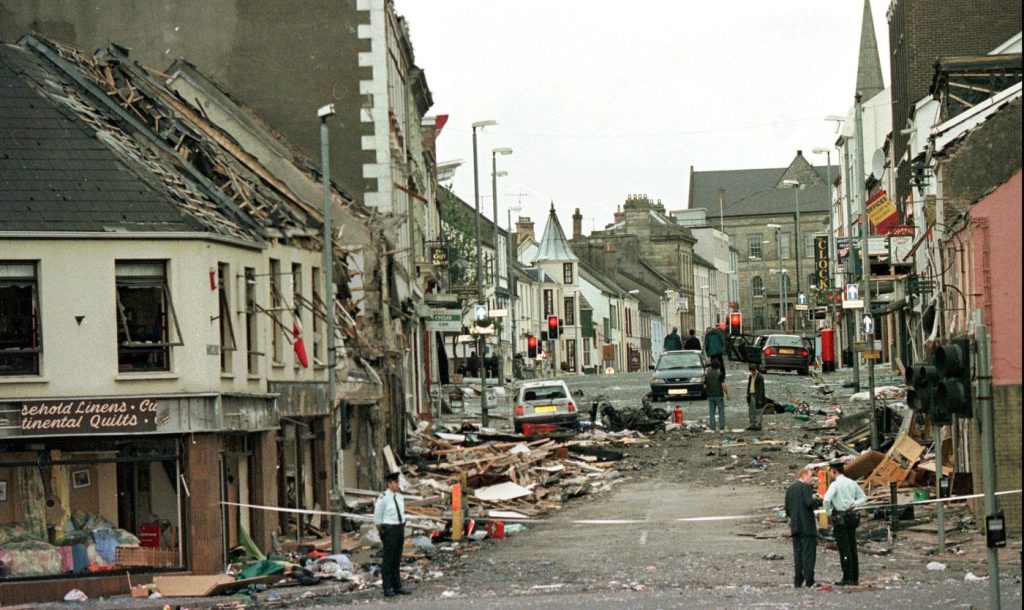
The conflict in Northern Ireland, marked by a violent period known as "the Troubles," led to the deaths of approximately 3,600 individuals and left around 50,000 wounded. This prolonged violence was characterized by Irish republican militants striving to separate Northern Ireland from the United Kingdom. After enduring many setbacks, a pivotal peace accord in 1998 facilitated the disarmament of the Irish Republican Army (IRA) and other militant groups.
In contrast to the more comprehensive Trump-backed plan for Gaza, which falls short of addressing the broader Israeli-Palestinian conflict, experts indicate that parallels and significant differences exist between these two situations. The ongoing violence in Gaza, reignited by Hamas's assault on Israel on October 7, 2023, led to substantial casualties, with 1,200 deaths and many hostages taken.
Widespread destruction in Gaza has resulted in an estimated 68,000 Palestinian fatalities, according to health officials in the Hamas-run territory. Kristian Brown, a political science lecturer at Ulster University, acknowledged that the dynamics of bitterness and threats in Gaza surpass those evident during the Northern Irish conflict.
Disarmament in Northern Ireland was achieved through a clandestine process controlled by an international commission, which paralleled efforts to resolve underlying political disputes—an endeavor faced with numerous obstacles in the Middle East over the past three decades. The IRA ultimately agreed to disarm only when they felt secure in a political settlement, a consensus that remains elusive in the Israeli-Palestinian context.
The proposed 20-point plan for Gaza is criticized for its lack of specificity regarding essential issues such as the status of Jerusalem, security arrangements, and Palestinian statehood, which are pivotal to resolving the conflict. In contrast, the Good Friday Agreement provided concrete frameworks for Northern Ireland's governance, established after lengthy negotiations that fostered trust between historically opposing sides.
Contemporary challenges also include the unstable power-sharing political system in Northern Ireland, which has experienced repeated collapses. Despite this, peace has predominantly persisted, with parties previously linked to violent factions, such as Sinn Fein, now playing significant political roles.
Pivotal to Northern Ireland's peace efforts was the inclusion of those previously engaged in violence, a principle some experts believe applies to the ongoing situation in Gaza. Peter McLoughlin from Queen's University Belfast warns that excluding Hamas from future political processes might hinder efforts to achieve lasting peace. He suggests that an inclusive approach could be vital to success.
Starmer's reference to the U.K.’s experiences highlights the potential roles of Blair and Powell, the latter now serving as Starmer's national security advisor. Blair’s past involvement includes navigating complex Middle Eastern issues as an envoy for the "Quartet," comprising the U.S., European Union, Russia, and the United Nations.
However, skepticism persists regarding the application of Northern Ireland’s lessons to Gaza, as exemplified by Bronwen Maddox of Chatham House, who asserts that while Britain may contribute diplomatically, it is unlikely to play a decisive role in the region's future.








