

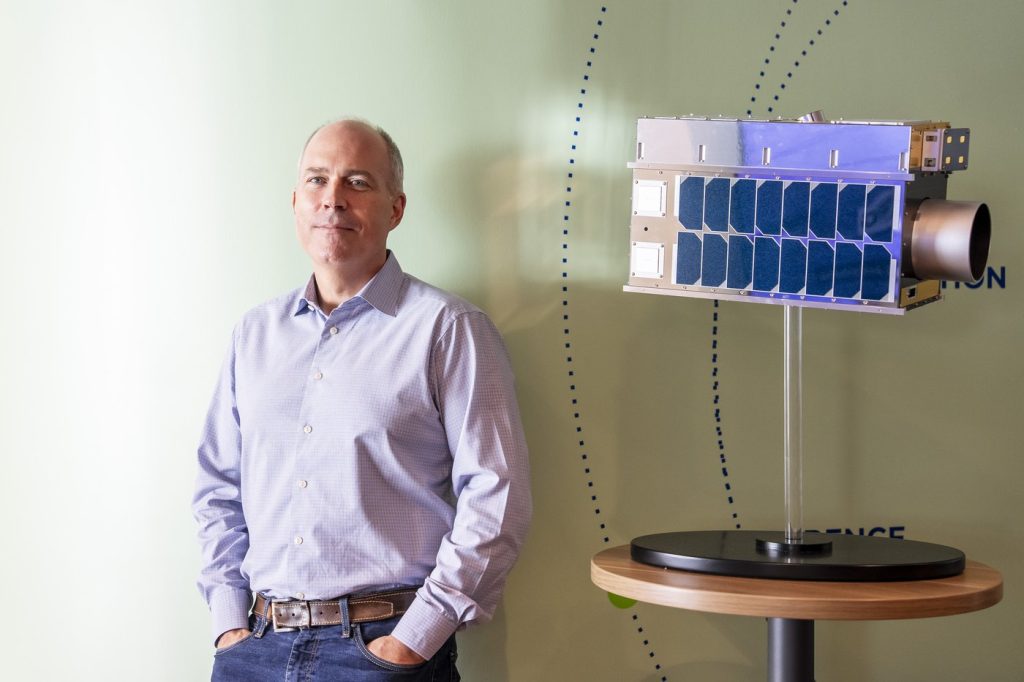
MONTREAL – Stéphane Germain, the CEO of Montreal-based GHGSat, reported that demand for his satellite-based technology to monitor methane emissions is surging despite a perceived decline in government commitments to climate change. Since its inception in 2016, GHGSat has successfully launched 14 satellites capable of detecting methane emissions from various sources, including oil and gas facilities, coal mines, landfills, and agricultural feedlots. Scientists have indicated that methane is responsible for approximately one-third of global warming.
In a notable development, GHGSat recently signed a contract with ExxonMobil Corp. to monitor emissions from the oil company's operations in Canada, the U.S., and Asia. Additionally, the company raised $47 million in equity and debt financing to facilitate its global expansion initiatives. Germain emphasized that GHGSat has continued to thrive amid a U.S. retreat from greenhouse gas monitoring and a political climate seemingly less focused on climate commitments. Under the Trump administration, plans to shut down two NASA missions that track carbon dioxide and plant health have emerged, reflecting the latest fiscal budget's lack of funding for the Orbiting Carbon Observatories.
Despite the apparent reduction in U.S. government interest in climate issues, Germain asserts that clients are committed to long-term strategies. He noted that these clients recognize that their end customers increasingly prioritize climate change, necessitating a shift toward becoming both the lowest-cost and lowest-carbon footprint producers of oil and gas to remain competitive in the future.
Germain acknowledged that U.S. companies are important clients, but he also pointed out that there is significant interest in Europe, Asia, and Australia, where efforts to combat climate change are gaining momentum. He explained the technology behind GHGSat’s capabilities, stating that different gases absorb light at unique wavelengths akin to a spectral fingerprint. By analyzing this absorption, satellites can accurately measure gas levels over industrial sites. GHGSat’s clientele includes governmental bodies, heavy industrial emitters, and stakeholders such as insurance firms.
The data generated from these satellites serves various purposes, such as mitigating safety risks related to leaks and tracking corporate carbon footprints. Germain mentioned that GHGSat had also been engaged in assessing methane emissions resulting from decomposing materials in palm oil ponds across 12 countries during the summer.
Dave Risk, a methane measurement scientist and professor at St. Francis Xavier University in Nova Scotia, observed a rising popularity of satellite technology for methane emissions measurement. He pointed out that these satellites are part of a global initiative, facilitating coordinated emissions monitoring, notably beneficial for countries with previously unregulated emissions. Nevertheless, he cautioned that the technology might not be effective everywhere, particularly in nations like Canada, where the oil and gas industry already maintains low emissions levels that are often undetectable from space.
Furthermore, he highlighted that some of the largest methane-emitting countries may be reluctant to invest in monitoring, and adoption rates in the agricultural sector remain low despite its significant emissions sources linked to livestock and waste management. Risk identified potential growth areas in satellite monitoring within the waste sector, where landfills release methane. Canada has introduced draft regulations aimed at requiring landfills to manage methane emissions and implement gas recovery systems to maximize capture.
Both Germain and Risk noted that reducing methane emissions from landfills is often cost-effective and can even be profitable. Germain emphasized that municipalities are beginning to recognize the potential financial benefits of capturing methane as an alternative revenue source, calling it a win for both business and the environment.
Additionally, Canada has targeted a 75% reduction in oil and gas methane emissions from 2012 levels by 2030, reflecting the goals set forth in its 2022 methane strategy. While Germain acknowledged Canada’s commitment to methane reduction, he also recognized that public polls indicate climate concerns have become less of a priority for Canadians in the current context of global challenges such as wars and economic uncertainties.
Germain remains optimistic about the future, envisioning a world where every industrial facility is monitored for carbon and methane on a daily basis. He imagines a future in which food packaging not only lists nutritional information but also includes carbon footprint data, aiding consumer choices. He concluded by emphasizing the ongoing, underlying consciousness surrounding climate change, urging that it cannot be ignored indefinitely.








