

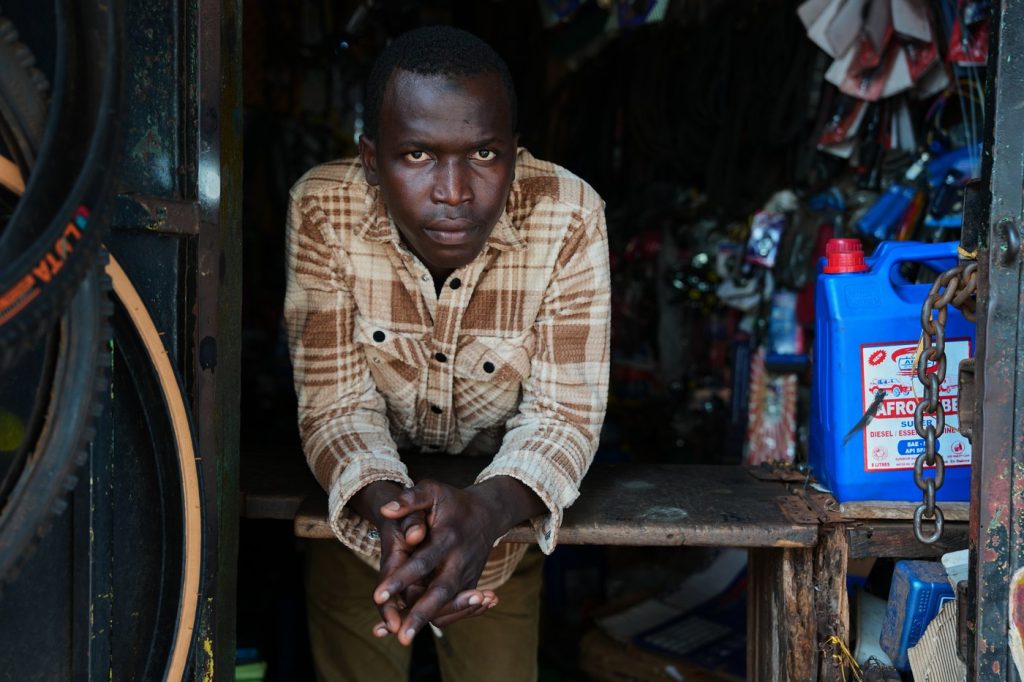
CONAKRY, Guinea – Oumar Bella Diallo, a 24-year-old returnee, believed his struggles with migration had concluded when he boarded a flight back to Guinea in July. His arduous journey, which spanned nearly a year, included harrowing experiences such as police violence, scams, and witnessing death during his trek through Mali, Algeria, and Niger. Ultimately, faced with dire circumstances, he decided to return home.
Diallo is one of many Africans assisted by the International Organization for Migration (IOM), which aims to facilitate the return of those attempting to reach Europe. Funded largely by the European Union (EU), the IOM provides return flights and promises follow-up aid to migrants like Diallo. However, many returnees express frustration, claiming that the support promised by IOM is often not realized, leaving them in precarious situations with unresolved trauma, debt, and societal stigma.
In discussions with the Associated Press, returnees from Guinea and Gambia reported long delays and a lack of communication from the IOM, exacerbating their feelings of hopelessness. Diallo, for instance, reached out to the IOM seeking assistance to start a small business but received minimal support—a phone number for a counselor and a brief orientation course. He lamented, “Every time I call them, they tell me to wait.” Furthermore, he has been denied medical assistance for an injury sustained during his migration.
The financial resources allocated to the IOM’s program are substantial, with a budget of $380 million earmarked for repatriating over 100,000 migrants from 2022 to 2025. However, a significant portion of this budget—58%—is designated for post-return support. IOM representatives assert that many returnees have successfully engaged in their reintegration process, yet the lived experiences of many returnees tell a different story of unmet needs and unfulfilled promises.
Experts have highlighted the lack of oversight and transparency regarding how EU funds contribute to effective reintegration outcomes. An audit by the European Court of Auditors indicated that the program failed to demonstrate sustainable results and that monitoring was insufficient to ensure accountability. Critics argue that while the IOM attempts to provide aid, the primary goal appears to be fulfilling donor requirements rather than genuinely supporting returnees’ reintegration into society.
The challenges of reintegration are compounded by the economic realities in Guinea, where over half of the population of 15 million lives in extreme poverty, according to the World Food Programme. Diallo and other returnees struggle to find stable employment in a country with scarce job opportunities. The official minimum wage is less than $65, and many who manage to find work do so in the informal economy, earning even less. Diallo stated, “If there were job opportunities in the country, everyone would stay here.”
Another returnee, Kabinet Kante, has had similar experiences. After enduring a near two-year odyssey attempting to migrate to Europe, often facing dangerous situations, Kante returned to Guinea with the hope of obtaining training to operate heavy machinery. However, he found himself ignored by IOM officials and resorted to forming a WhatsApp group for other disgruntled returnees. Kante expressed feelings of shame and frustration, stating he is currently without work and unable to repay his family for supporting his migration attempts.
Despite the IOM's initiatives, the socio-economic environment in Guinea hinders successful reintegration. Elhadj Mohamed Diallo, director of the Guinean Organization for the Fight Against Irregular Migration, acknowledged the systemic issues, emphasizing that while they aim to help returnees regain control of their lives, the persistence of socio-economic challenges may drive them to consider migration again. He remarked, “Migration is a natural thing. Blocking a person is like blocking the tide.”
In summation, while the IOM’s return program may extract individuals from perilous situations, the promised reintegration support frequently fails to materialize, leaving returnees to navigate a challenging landscape of poverty, stigma, and dashed dreams of migration.








