

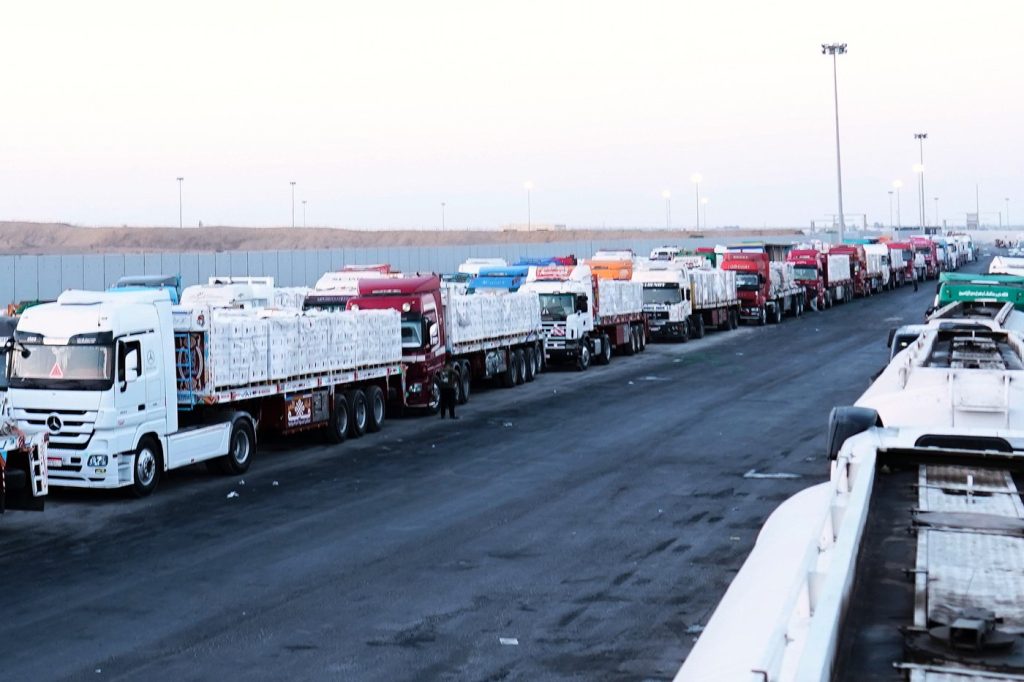
CAIRO (AP) — The Israeli government announced on Wednesday that it plans to reopen the Rafah border crossing in the coming days, enabling Palestinians to exit Gaza. This decision could represent a significant development for the residents of the war-torn region, where leaving has been exceedingly challenging, if not impossible, during most of the ongoing conflict.
The reopening has spurred optimism that many of Gaza's sick and wounded inhabitants will finally gain access to necessary medical care. The health care system in Gaza has been severely damaged over the course of the two-year war, making advanced surgical procedures largely unavailable.
However, several complications remain. Israel has stated that Palestinians wishing to leave Gaza must obtain approval from both Israeli and Egyptian security forces, although the specific criteria for this approval are not yet disclosed. Furthermore, another point of contention is Israel's stance that it will permit only the exit of Palestinians from Gaza until militants return all hostages taken during the October 7, 2023, attack, which initiated the conflict.
On the other hand, Egypt has expressed its desire for the crossing to be opened for traffic in both directions, allowing Palestinians currently in Egypt to enter Gaza. This position reflects Egypt's strong opposition to the permanent resettlement of Palestinian refugees within its borders.
Prior to the outbreak of war, Rafah served as a bustling link for the transport of goods and people between Egypt and Gaza. While Gaza has four other border crossings, these are primarily with Israel, making Rafah the only official conduit to another nation. Following the invasion by Hamas-led militants in 2023, which left approximately 1,200 Israelis dead and resulted in the abduction of 251 others, Egypt tightened its restrictions at the Rafah crossing. After Israel gained control of the Gaza side of the crossing in May 2024, it was largely closed, permitting only sporadic medical evacuations. The Gaza Health Ministry reported over 70,100 Palestinian fatalities since the conflict began, with claims that about half of those killed were women and children.
The Gaza Health Ministry, which is administrated by Hamas, maintains detailed health records that are generally deemed credible by the international community. The reopening of the Rafah crossing is seen as a potential lifeline for over 16,500 individuals requiring urgent medical attention, as well as an opportunity for Palestinians to travel internationally or visit family members in Egypt. Furthermore, a functioning crossing would aid in reviving Gaza's crippled economy, permitting merchants to access broader markets.
Despite the announcement of a reopening, last-minute hurdles could obstruct swift action. An Israeli official, requesting anonymity to discuss operational details, indicated that the European Union mission overseeing the crossing must finalize logistical aspects before it can open. Additionally, significant damage from the war may necessitate repairs at the crossing and ongoing disputes between Israel and Egypt about Palestinian entry into Gaza could further delay proceedings.
According to an unnamed Egyptian official, Egypt's State Information Service reported that once an agreement is reached, the Rafah crossing will facilitate travel in both directions, aligning with a ceasefire plan advanced by former U.S. President Donald Trump. Egypt's reluctance to accept Gaza refugees stems partly from its already substantial population of approximately 9 million migrants, as well as tens of thousands of Palestinian residents. Egyptian President Abdel Fattah el-Sissi has issued warnings regarding the potential security ramifications of a mass transfer of Palestinians to Egypt’s Sinai Peninsula.
In summary, Egypt supports the establishment of a Palestinian state across the West Bank, Gaza, and East Jerusalem, fearing that a permanent displacement could undermine that objective. Meanwhile, Israel’s spokesperson Shosh Bedrosian reiterated that entry into Gaza would not be authorized until all remaining hostages are returned. As of the last reported updates, there are believed to be two deceased hostages in Gaza whose remains have not yet been identified.








