

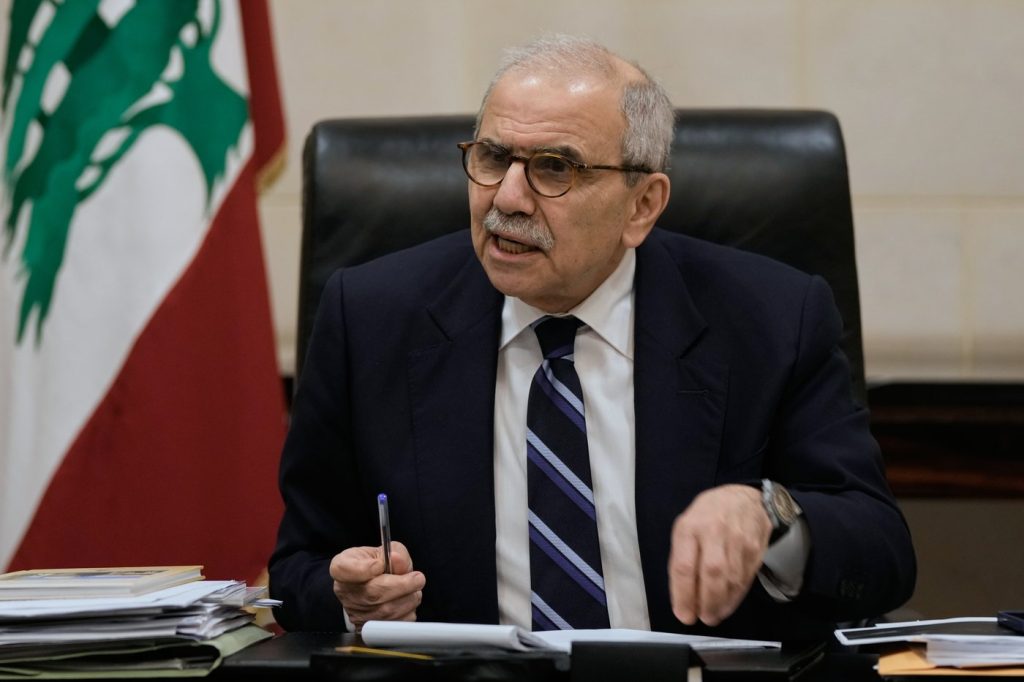
BEIRUT (AP) – On Wednesday, Lebanese Prime Minister Nawaf Salam declared that Lebanon is "far from" achieving diplomatic normalization or economic relations with Israel, despite recent efforts aimed at alleviating tensions between the two nations. His remarks come in stark contrast to a statement made by Israeli Prime Minister Benjamin Netanyahu, who announced that Israel would send an envoy to pursue negotiations with Lebanese diplomatic and economic representatives. Netanyahu characterized this move as an "initial attempt to create a basis for relations and economic cooperation" between the two countries.
Lebanon and Israel recently appointed civilian members to a previously military-only committee that monitors the enforcement of a U.S.-brokered ceasefire, which brought an end to the last conflict between Israel and the Lebanese militant group Hezbollah a year ago. The inclusion of civilian members in the committee's discussions signifies a potential step toward direct bilateral talks, which the United States has been advocating for.
However, Prime Minister Salam reiterated Lebanon's commitment to the 2002 Arab peace initiative, which stipulates that normalization of diplomatic relations with Israel hinges on the establishment of a Palestinian state. This condition stands in opposition to the current administration under Netanyahu, which has consistently rejected the idea of establishing a Palestinian state.
Salam emphasized, "Economic relations would be part of such normalization, so then obviously anyone following the news would know that we are not there at all." His comments underscore the complexities and longstanding animosities that characterize Lebanese-Israeli relations, rooted in decades of conflict and a mutual lack of recognition.
The absence of diplomatic relations between Lebanon and Israel has persisted since 1948, when the state of war was formally declared. The recent civilian talks may signal a willingness to engage in dialogue; however, the fundamental issues impeding normalization remain unresolved. Lebanon's stance reflects a broader sentiment in the Arab world that any reconciliation with Israel must coincide with meaningful actions regarding the Palestinian issue.
As the situation evolves, both nations face significant challenges as they navigate their complex relationship, influenced by domestic political opinions and regional dynamics. The potential for future discussions no doubt exists, but the gap between the two sides remains substantial, requiring careful diplomatic efforts to bridge.








