

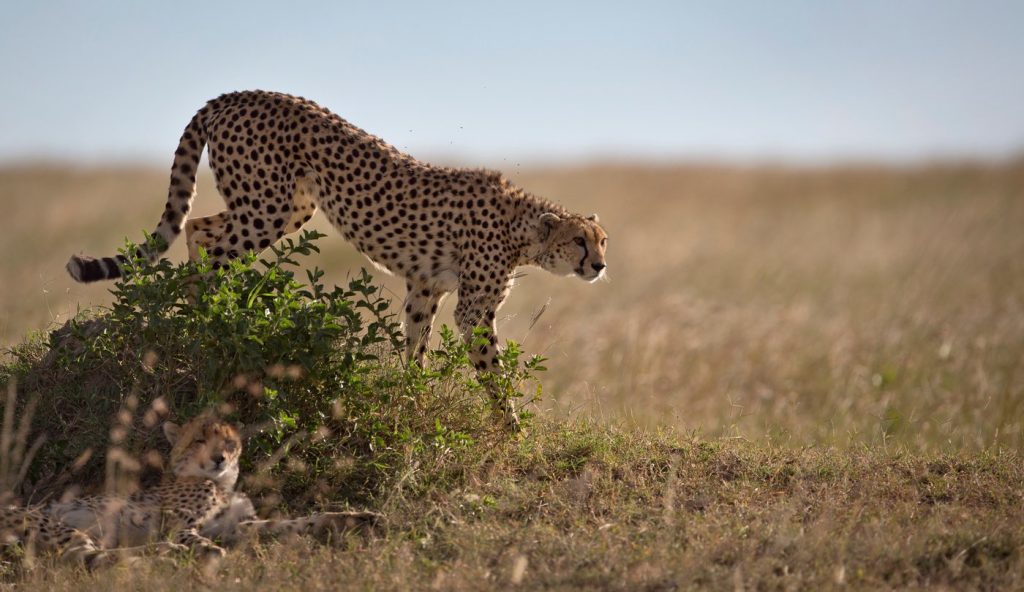
CAPE TOWN, South Africa (AP) — Laurie Marker, an American zoologist, has devoted 35 years to establishing a cheetah sperm bank in Namibia as a precautionary measure for the world's fastest land animals, fearing they may face extinction in the future. The sperm bank, housed at the Cheetah Conservation Fund founded by Marker in 1990, serves as a “frozen zoo” comprising genetic material from cheetahs. It is intended for use in dire situations, as their populations in the wild have declined significantly over the past five decades.
Marker emphasizes the importance of this facility during World Cheetah Day, noting that there are fewer than 7,000 cheetahs left in the wild, comparable to the critically endangered black rhino. Cheetah populations are scattered across approximately 33 fragmented groups mainly in Africa, with most of these comprising fewer than 100 individuals. Such isolation leads to a reduction in their gene pool, which affects their reproduction rates and overall genetic diversity.
Over the past 50 years, global cheetah numbers have plummeted by 80%, and they have lost 90% of their historical range. The danger to their survival comes largely from habitat loss, human-wildlife conflict, and the illegal animal trade. Marker explains that cheetahs have a high incidence of abnormal sperm, constituting about 70-80%, further complicating their reproductive success. This bleak genetic landscape necessitates the maintenance of a sperm bank as a measure of support for future biological interventions.
The practice of storing sperm for conservation purposes is not exclusive to cheetahs. It is employed by conservationists for various species, including elephants, rhinos, and different birds, highlighting its importance in wildlife conservation. The experience of the northern white rhino serves as a poignant example; with only two females remaining, the species is functionally extinct, relying on previously collected frozen sperm for any hope of future reproduction.
The situation is dire, as both surviving northern white rhinos cannot carry pregnancies, prompting scientists to attempt to implant northern white rhino embryos into southern white rhino surrogates, though success has yet to be achieved. This commitment underscores the ongoing efforts to combat extinction threats against various species.
Marker collects sperm samples opportunistically, usually from injured or captured cheetahs whose owners seek the support of her team due to livestock threats. In addition, samples can also be retrieved from deceased cheetahs. Currently, the sperm bank holds samples from around 400 cheetahs, stored at ultralow temperatures in liquid nitrogen. However, the research does not involve artificial insemination since breeding wild animals in captivity is prohibited in Namibia.
If cheetah populations face imminent extinction, the first line of backup would be the approximately 1,800 captive cheetahs in zoos. Unfortunately, consort breeding among these animals has proven inefficient, positioning the sperm bank as possibly the last resort for the species’ survival, much like the situation with the northern white rhino. Marker stresses that without such resources, the outlook for cheetahs would be significantly compromised.
As the conservation efforts continue, the survival of the cheetah—a remarkable and rapid predator—hangs in the balance, highlighting the critical role that conservation strategies like the sperm bank play in the fight against extinction.








