

LONDON (AP) - Britain and Norway have announced plans to initiate joint naval patrols aimed at safeguarding undersea cables from potential threats posed by Russia. This decision comes following discussions between U.K. Prime Minister Keir Starmer and his Norwegian counterpart, Jonas Gahr Støre, held on Thursday in London to address defense concerns.
The U.K. government has outlined that a combined fleet of at least 13 warships will be deployed to hunt for Russian submarines and protect critical infrastructure located in the North Atlantic. This strategic move follows a substantial £10 billion ($13.4 billion) agreement reached in August, which involves Norway purchasing no fewer than five British-built frigates. These Norwegian vessels, along with eight British ships, will operate collaboratively in the waters along NATO's northern flank.
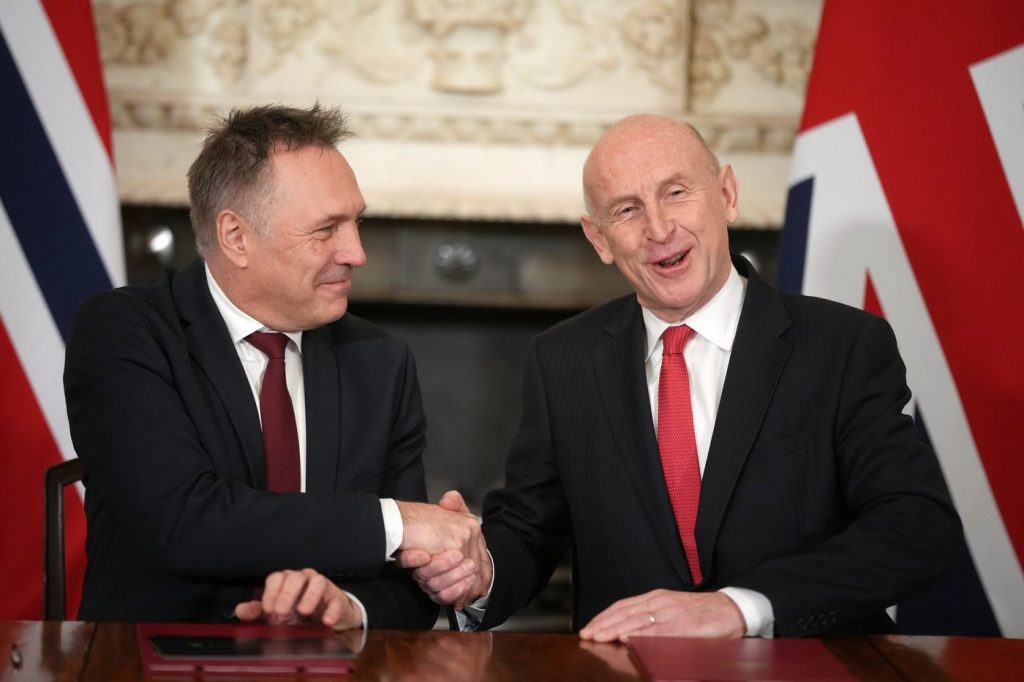
Integral to this partnership is an agreement formally signed in London on Thursday by the two nations' defense ministers. Notably, the U.K. has committed to employing Norwegian missiles for the surface fleet of the Royal Navy, thus enhancing their combined military capabilities.
Prime Minister Starmer and Prime Minister Støre conducted their discussions at the U.K. prime minister's official residence at 10 Downing Street. They were also scheduled to visit British and Norwegian personnel stationed at RAF Lossiemouth in Scotland afterward, where they intend to engage with aircraft crews responsible for monitoring Russian maritime activities. Reports indicate that Russian naval operations in the vicinity of U.K. waters have surged by 30% over the past two years, highlighting growing security concerns.
This joint initiative between Britain and Norway marks a significant step in bolstering defense strategies against escalating threats from Russia in the North Atlantic region, particularly in light of increased Russian naval operations. The calculated deployment of their combined naval capabilities, including advanced frigates and sophisticated missile technology, demonstrates a united front in the face of rising geopolitical tensions.








