

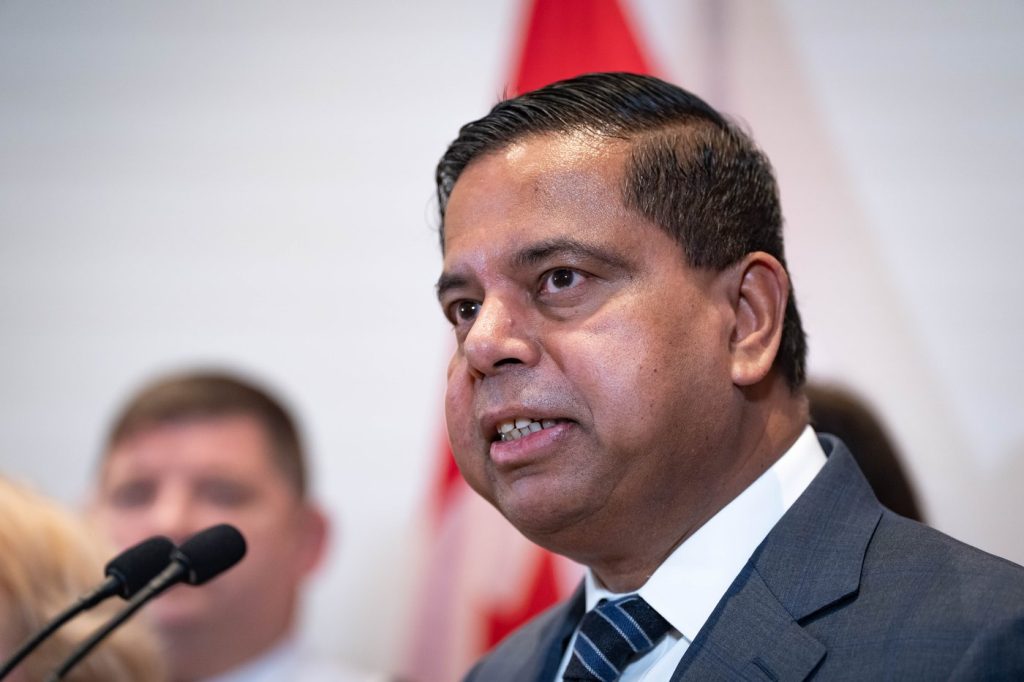
OTTAWA – In a significant development in Canada’s approach to firearms regulation, Public Safety Minister Gary Anandasangaree announced the initiation of a review of the country’s firearms classification regime. This comprehensive review will particularly focus on the semi-automatic SKS rifle, which has drawn widespread attention due to its complex role in Canadian society.
The SKS rifle is notable for its common usage in Indigenous communities, where it is primarily employed for hunting food. However, it has also gained notoriety due to its involvement in several police killings and high-profile shootings in recent years. This duality of purpose has sparked heated discussions among both gun control advocates and Indigenous rights groups.
Gun control organizations, such as PolySeSouvient—established in response to the tragic 1989 mass shooting at Montreal’s École Polytechnique—are urging the federal government to ban the SKS rifle. They emphasize the need for public safety measures while simultaneously advocating for an exemption specifically for Indigenous hunters, who rely on this firearm for sustenance.
Anandasangaree, in a news release accompanying the announcement, outlined that the review would take a broad perspective on the legal framework surrounding firearms, ammunition, and magazines. The objective is to enhance simplicity and consistency in the classification system, ultimately leading to clearer regulations for all firearm users across Canada.
This review is notably a follow-up to a recommendation made more than two years ago by the Mass Casualty Commission. This commission conducted an extensive examination of the tragic events that unfolded during a shooting spree in rural Nova Scotia in April 2020, where a gunman killed 22 people over several hours. The outcomes of this commission have influenced government discussions and policies regarding firearms in Canada.
As the review progresses, consultations with Indigenous communities will be crucial to understanding the implications of any potential changes to the SKS rifle's classification. The government aims to strike a balance between effective gun control and the rights of Indigenous peoples to utilize traditional hunting methods.
The political landscape surrounding firearms regulation in Canada continues to evolve as stakeholders from various sectors engage in dialogues. As public sentiment and advocacy efforts grow more intense, the outcome of this review could significantly shape the future of firearms policy in the country.
In light of these developments, it will be essential for the federal government to navigate the complexities of public safety, Indigenous rights, and community needs in their forthcoming decisions regarding firearms classification. The engagement with Indigenous communities, along with the insights garnered from gun control advocates, will play a vital role in crafting a comprehensive and effective firearms regulatory framework for Canada.








