

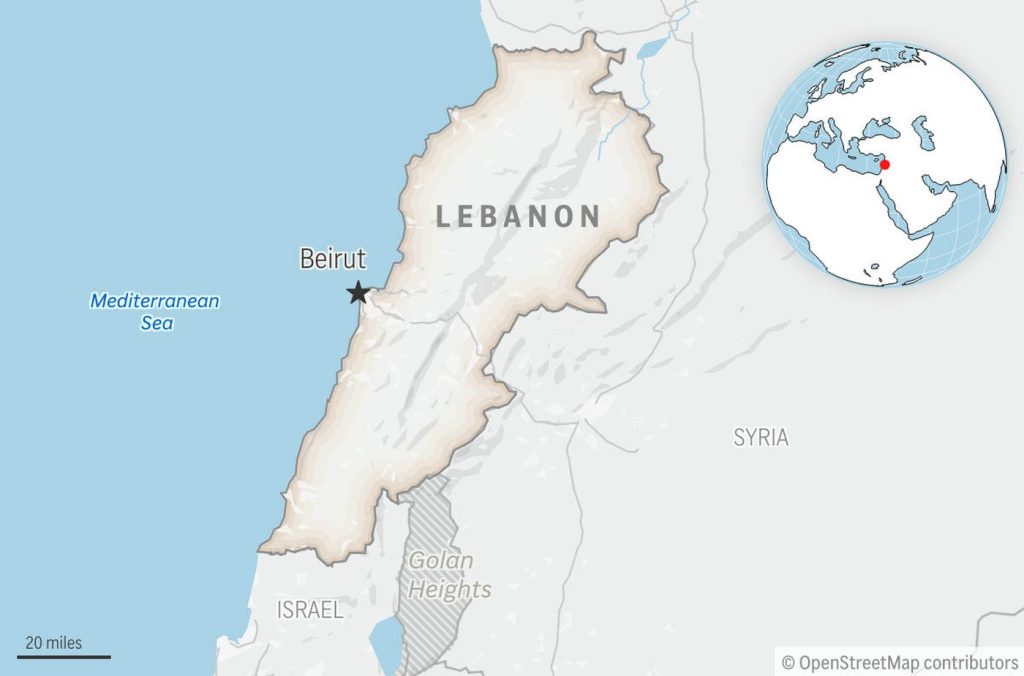
BEIRUT (AP) — On Friday, Lebanese Prime Minister Nawaf Salam addressed a visiting United Nations delegation regarding the need for a follow-up force in southern Lebanon along the border with Israel. He emphasized that this force would be essential in filling the security vacuum expected after the expiration of the U.N. peacekeepers' mandate by the end of 2026. The current peacekeeping mission, known as UNIFIL, has operated for nearly five decades and has played a crucial role in monitoring the security dynamics in the region, particularly during the recent Israel-Hezbollah conflict.
The U.N. Security Council had voted unanimously in August 2023 to terminate the UNIFIL operation by 2026. This decision has prompted concerns among Lebanese officials, notably Prime Minister Salam, who believes the absence of a peacekeeping presence could exacerbate tensions in the volatile area. Salam pointed out that enhanced support, possibly in the form of a small follow-up force akin to the U.N. observers deployed along Syria's border with Israel since 1974, would bolster Lebanese military efforts to maintain order and security along the border against Hezbollah's actions.
Salam's discussions with the delegation representing the 15 members of the U.N. Security Council highlighted the urgency of establishing a post-UNIFIL presence to support Lebanese military operations in southern Lebanon. This area has seen heightened military activity following the 14-month war between Israel and the Hezbollah militant group. The Lebanese military is attempting to secure the border, which has previously been marred by conflicts involving Israel and Hezbollah.
A Tunisian and Yassine the delegation had visited Syria before arriving in Lebanon, where they held meetings with various Lebanese officials. Lebanon's President Joseph Aoun also welcomed proposals for the continued presence of international forces in southern Lebanon after UNIFIL's departure. This collaboration aims to help stabilize the region amid ongoing tensions and violence.
Moreover, President Aoun announced the appointment of former ambassador Simon Karam to lead the Lebanese delegation at a military committee monitoring the U.S.-brokered ceasefire that ended the latest Israel-Hezbollah conflict. His appointment, however, has sparked controversy, particularly from Hezbollah. Naim Kassem, the Hezbollah leader, criticized the move as a "concession" to Israel, arguing that it would not alter the Israeli military's aggression, which has reportedly included nearly daily airstrikes on what the Israeli military claims are Hezbollah targets within Lebanon since the ceasefire began in November 2022.
In recent developments, Israeli air forces conducted multiple airstrikes on southern Lebanon, targeting alleged Hezbollah infrastructure while providing warnings for nearby residents to evacuate the area. These ongoing bombings are a direct response to the increased hostilities that reignited following the Hamas attacks on October 7, 2023, when Hezbollah fired rockets into Israel in support of Hamas militants. The subsequent Israeli operations have reportedly weakened Hezbollah's military capabilities significantly.
The situation in southern Lebanon remains complex, as the interplay of military actions, international diplomacy, and local politics continues to shape the region's stability. With the potential withdrawal of UNIFIL looming, Lebanese officials are anxious about who might fill the impending security gap and the consequences of a diminished peacekeeping presence.








