

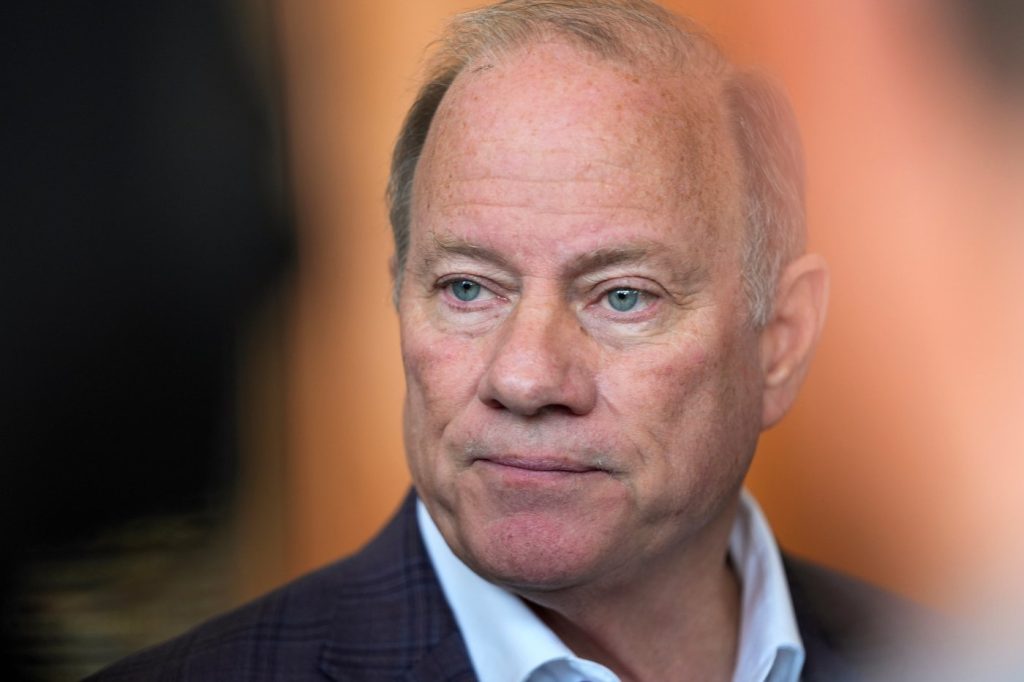
DETROIT (AP) - Mayor Mike Duggan has announced his intention to run for Michigan governor from the Renaissance Center in Detroit, highlighting the transformation of the city since he took office in January 2014.
The Detroit that Duggan inherited was marked by severe challenges, including blocks of vacant housing, numerous empty storefronts, rampant crime, and numerous broken streetlights. Many residents believe that Detroit is finally undergoing a renaissance.
One local resident, 40-year-old plumber Thomas Millender, expressed regret at Duggan's departure, praising him for the city's considerable refurbishment. Millender noted improvements in neighborhoods where renovation crews are actively working on once-vacant houses. “There is not any neighborhood in this city that hasn’t had blight reduced,” Duggan stated during an interview with The Associated Press, underscoring the consistent upgrades across the city.
Duggan, a former prosecutor and health center chief, was elected during Detroit's financial crisis when it was facing billions in debt. Previous Mayor Dave Bing acknowledged the dire situation in 2013, stating, “We’ve hit bottom.” The financial struggles for Detroit intensified after former Mayor Kwame Kilpatrick’s scandal, leading to state intervention and the appointment of an emergency manager who officially declared bankruptcy in 2013.
Under Duggan's leadership, Detroit successfully emerged from bankruptcy in December 2014, effectively erasing $7 billion in long-term debt. Since then, the city has maintained more than a decade of balanced budgets, with a noticeable drop in violent crime rates, including a decline in murders.
When Duggan began his tenure, there were over 40,000 vacant houses and empty buildings in Detroit. His administration used mostly federal funds to demolish more than 24,000 of these structures. There have also been efforts to save others that were on the brink of collapse. As Duggan noted, “The city lost a million people since 1957,” emphasizing the need for a long-term strategy for growth, as the city’s population continues to show signs of recovery—recent estimates indicate a population of 645,705 in 2024, a rise of about 12,000 since 2021.
Local resident Jay Williams acknowledged the reduction in blight but voiced a desire for more productive uses of vacant lots besides demolition. The Rev. Solomon Kinloch, a Detroit megachurch pastor and recent mayoral candidate, stressed the importance of equitable investment across all neighborhoods, asserting, “You can’t make all of the investments downtown.”
City Council President Mary Sheffield, set to take office in January, has committed to building on Duggan's achievements, focusing on ensuring that progress extends to every corner of Detroit. Rip Rapson, chief executive of the Kresge Foundation, highlighted the multifaceted responsibilities of a mayor, stating the need for a holistic approach to city governance—addressing housing, public safety, and educational opportunities to foster vibrant neighborhoods.
Experts, including Professor Jeff Horner from Wayne State University, suggest that while notable improvements exist, disparities remain, with some areas still facing significant hardship. Overall, Duggan's legacy reflects substantial successes in revitalizing Detroit, despite the long road that lies ahead for complete recovery.








