

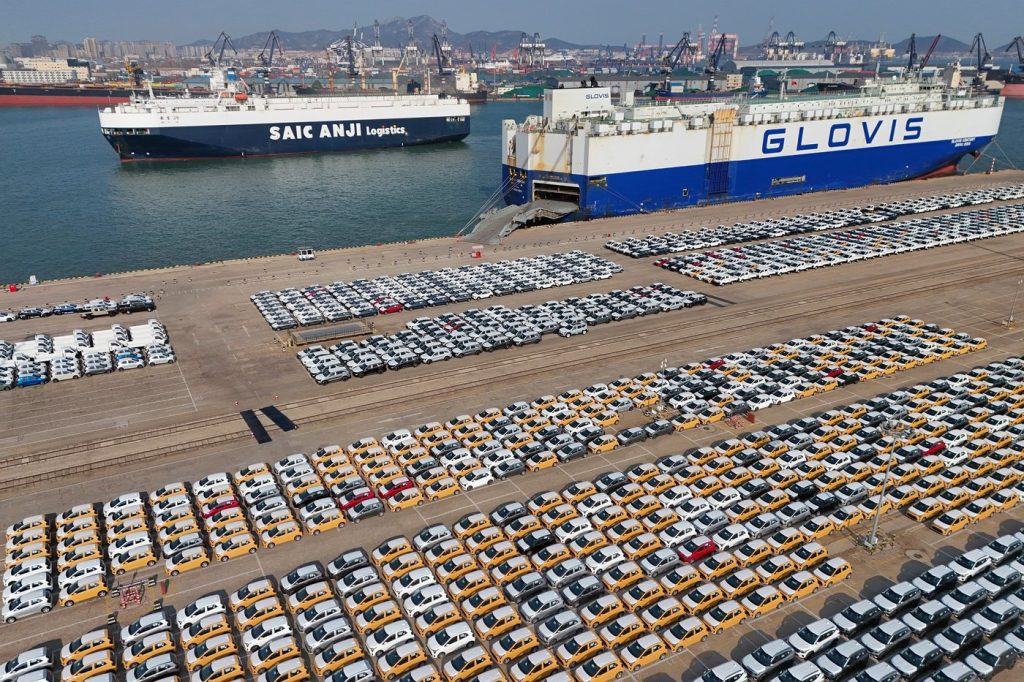
HONG KONG (AP) - China's exports showed a significant rebound in November, reporting a 5.9% increase compared to the same month last year, amounting to $330.3 billion, according to customs data released on Monday. This marks a positive turnaround from the 1.1% contraction witnessed in October, surprising many economists who anticipated weaker performance. However, shipments to the United States experienced a sharp decline, plummeting nearly 29% year-on-year. This trend represents the eighth consecutive month of double-digit declines in exports to the U.S.
The decline in exports to the U.S. contrasts sharply with robust growth in other regions. While exports to the U.S. have struggled throughout 2023, shipments to Southeast Asia, Africa, and Latin America surged during the same timeframe. This diversification highlights China's efforts to strengthen trade relationships outside of its primary market.
Additionally, China's imports saw a modest increase of 1.9% in November, improving from the 1% growth in October. Despite this, the country continues to grapple with a persistent downturn in its property sector, which is affecting both consumer spending and overall business investment. This economic pressure underscores the challenging landscape within which China is operating, with the property market’s woes likely weighing on broader economic growth.
A significant trade truce between China and the U.S. was established at a late October meeting between U.S. President Donald Trump and Chinese leader Xi Jinping in South Korea. The agreement included tariff reductions by the U.S. and a commitment from China to cease its export controls related to rare earth materials. Despite this progress, economists from ING Bank cautioned that while the trade truce and tariff reductions should benefit Chinese exports, unfavorable comparison effects from previous high growth periods might keep future trade growth modest.
In the context of ongoing economic challenges, last month China's factory activity recorded its eighth consecutive month of contraction, according to an official survey. Economists expressed caution regarding whether a genuine rebound in external demand was occurring following the Sino-U.S. trade truce, given the existing headwinds in China’s manufacturing sector.
Despite these hurdles, economists are generally optimistic that China will meet its economic growth target of around 5% for this year, bolstered by the recent uptick in exports. Chinese leadership has outlined a strategic focus on advanced manufacturing over the coming five years, with details expected to emerge from a recent economic planning meeting. This forward-looking agenda is seen as crucial for maintaining China’s economic momentum amid global trade uncertainties.
Chi Lo, a Global Market Strategist at BNP Paribas Asset Management, suggested that while the current stable trade environment might not be long-lasting, given the stagnation in China-U.S. relations, China’s export market could continue to expand. In line with this view, Morgan Stanley has projected that by 2030, China’s share of the global export market could rise to 16.5%, up from approximately 15% now. This growth is anticipated to be driven by advancements in high-growth sectors such as electric vehicles, robotics, and battery technology.
Chetan Ahya, Chief Asia Economist at Morgan Stanley, remarked that despite ongoing trade tensions, rising protectionism, and proactive industrial policies among G20 economies, China's potential to capture a larger share of the global goods export market seems likely. This perspective suggests a resilient outlook for China's economy amid prevailing global challenges.








