

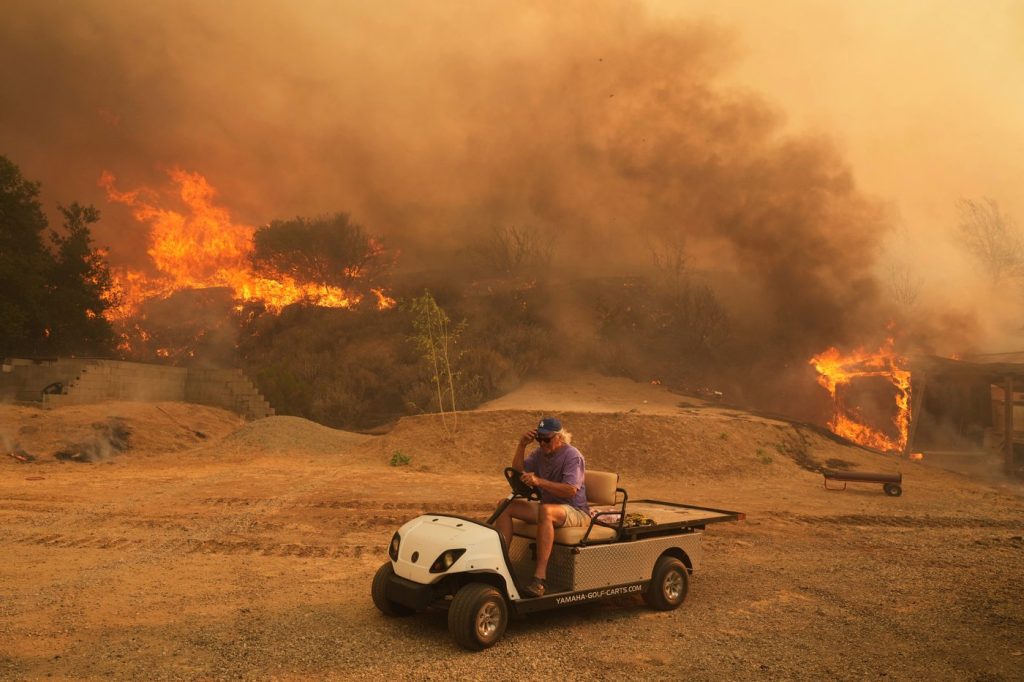
The world is at a critical juncture regarding environmental crises, as emphasized in a recent U.N. report. The report advocates for a new approach to address the interconnected issues of climate change, biodiversity loss, land degradation, and pollution. Released during the U.N. Environment Assembly in Nairobi, Kenya, this quadrennial assessment underscores the urgent need for collaborative policies.
According to the authors of the U.N. Environment Programme’s Global Environment Outlook, these problems are intrinsically linked and necessitate solutions that encompass increased investment and financial incentives. Transitioning away from fossil fuels, encouraging sustainable agricultural practices, reducing pollution, and minimizing waste are critical steps highlighted in the report.
Bob Watson, one of the lead authors and a prominent climate scientist, noted, “You can’t think of climate change without thinking of biodiversity, land degradation, and pollution.” He emphasized that these issues collectively undermine the global economy, exacerbating health and poverty, and posing threats to food, water, and national security.
With contributions from nearly 300 scientists across 83 countries, the report is described as the most comprehensive global environmental assessment to date. Experts warn that the world is nearing a tipping point concerning climate change and biodiversity loss. However, efforts to tackle these crises have largely followed fragmented approaches without achieving substantial progress.
The report advocates for a systemic approach that involves all levels of government, the financial sector, industry, and citizens, promoting a circular economy that recognizes the limitations of natural resources. Watson stated, “What we’re saying is we can become much more sustainable, but it will take unprecedented change to transform these systems.” He also stressed the urgency of acting swiftly, stating, “We’re running out of time.”
The findings of the report depict a grim future if current trends continue. Emissions of greenhouse gases, primarily from fossil fuels like coal, gas, and oil, have reached a new peak in 2024, contradicting decades of international negotiation efforts to stabilize emissions. A decade after almost 200 nations committed to the Paris Agreement, which aimed to limit warming to 1.5 degrees Celsius (2.7 degrees Fahrenheit) since preindustrial times, the trajectory suggests a potential increase of 2.4 degrees Celsius (4 degrees Fahrenheit) by 2100.
Scientists outline that climate change is a multiplier of threats, intensifying issues such as land degradation and biodiversity loss. Katharine Hayhoe, a climate scientist not involved in the report, remarked, “If we don’t fix climate change, we’re not going to be able to fix these other issues too.” The report highlights that up to 40% of global land is degraded, over 1 million species are at risk of extinction, and pollution is responsible for roughly 9 million deaths annually.
While adopting a comprehensive solution is anticipated to be costly, scientists argue it would be significantly less expensive than the potential consequences of inaction. The report estimates that achieving net-zero emissions by 2050 and restoring biodiversity will require approximately $8 trillion in global investment annually. Nonetheless, by 2050, the economic benefits could outweigh this investment, potentially yielding $20 trillion a year by 2070 and up to $100 trillion annually thereafter.
Watson insists on the need to reevaluate the measure of economic health beyond gross domestic product, as it fails to account for sustainable growth and its associated risks. He also emphasized the importance of uniting governments, nonprofits, industry, and financial entities to promote renewable energy and sustainable practices.
Michael Mann, a climate scientist from the University of Pennsylvania, welcomed the focus of the report on intergovernmental and societal collaboration. He stated, “We must do what is right, rather than what seems politically expedient. The stakes are simply too great.”
Despite the report's urgent call for action, the current landscape of international cooperation is precarious. The report underscores the challenges posed by U.S. policies under former President Donald Trump, who withdrew from the Paris Agreement and advanced fossil fuel initiatives. Watson noted the difficulty in achieving international commitments, as seen in the shortcomings of this year’s U.N. climate conference in Brazil and the unsuccessful treaty discussions on plastic pollution in Geneva.
Watson indicated that without the U.S.'s active participation, other nations may hesitate to commit to climate action. Nonetheless, he remains optimistic that some countries will take decisive steps forward, even as others lag behind. Hayhoe expressed hope that necessary changes would occur, given the growing urgency of these issues. “It’s not about saving the planet. The planet will be orbiting the sun long after we’re gone. The question is, will there be a healthy, thriving human society on that planet?” she concluded, highlighting the crucial nature of humanity's future amidst looming environmental challenges.








