

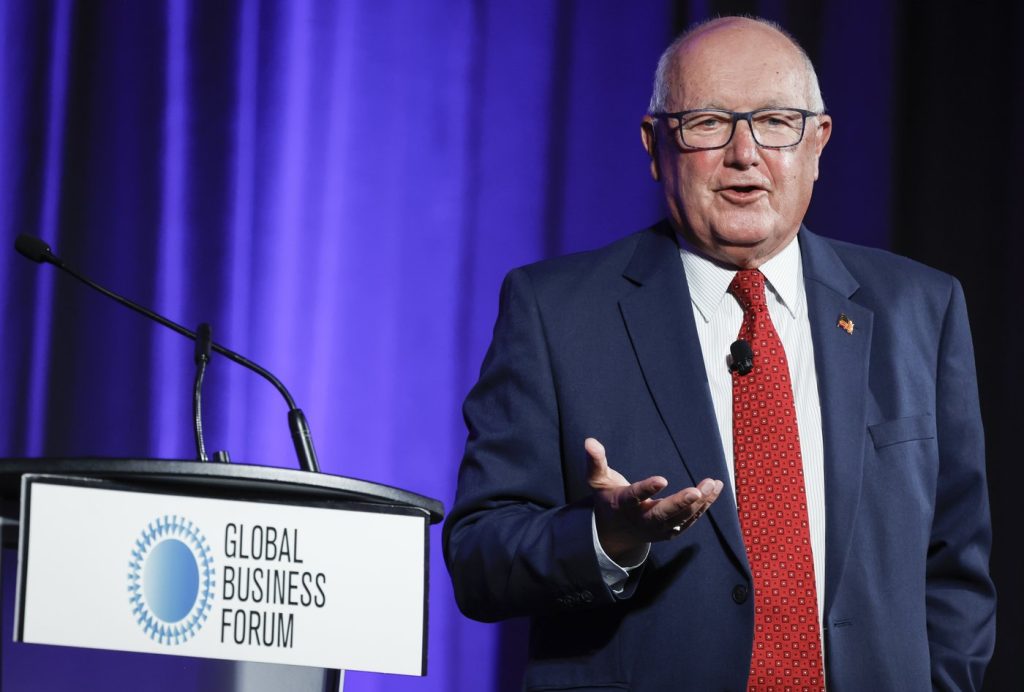
OTTAWA – U.S. Ambassador to Canada, Pete Hoekstra, has attempted to allay fears that the newly implemented U.S. national security strategy might result in American interference in Canadian domestic politics by supporting politically aligned parties. In a recent interview with The Canadian Press, Hoekstra expressed that he does not foresee the U.S. engaging in the internal political matters of Canada.
However, he highlighted a contradiction by accusing the Ontario government of engaging in political interference of its own. Hoekstra criticized Ontario for running a television advertisement on American networks featuring a quote from the late President Ronald Reagan, which attacks tariffs. This move has stirred controversy, as it demonstrates a willingness from Ontario to reach out beyond its own borders to influence public opinion.
During a year-end discussion, Hoekstra characterized the language within the U.S. national security document as being open to broad interpretation. This document indicates that the U.S. government aims to “reward and encourage” governments, political parties, and movements that align with its core principles and strategies. This declaration has drawn scrutiny, particularly from critics who express concern that it serves as a potential blueprint for American interference in Canada’s domestic affairs.
Artur Wilczynski, a former Canadian diplomat, raised alarms by interpreting this language as a possible signal of U.S. backing for Canadian political actors aligned with former President Donald Trump's "Make America Great Again" (MAGA) movement. He noted that Hoekstra failed to categorically commit to the idea that the U.S. would refrain from meddling in Canada’s political landscape, further fueling fears of interference.
This news was initially reported on December 9, 2025, by The Canadian Press, reflecting ongoing concerns regarding the relationship between the U.S. and Canadian politics and the implications of the newly adopted national security strategy. As debates continue and both public and governmental responses evolve, the dynamics of U.S.-Canada relations remain a focal point for both nations.








