

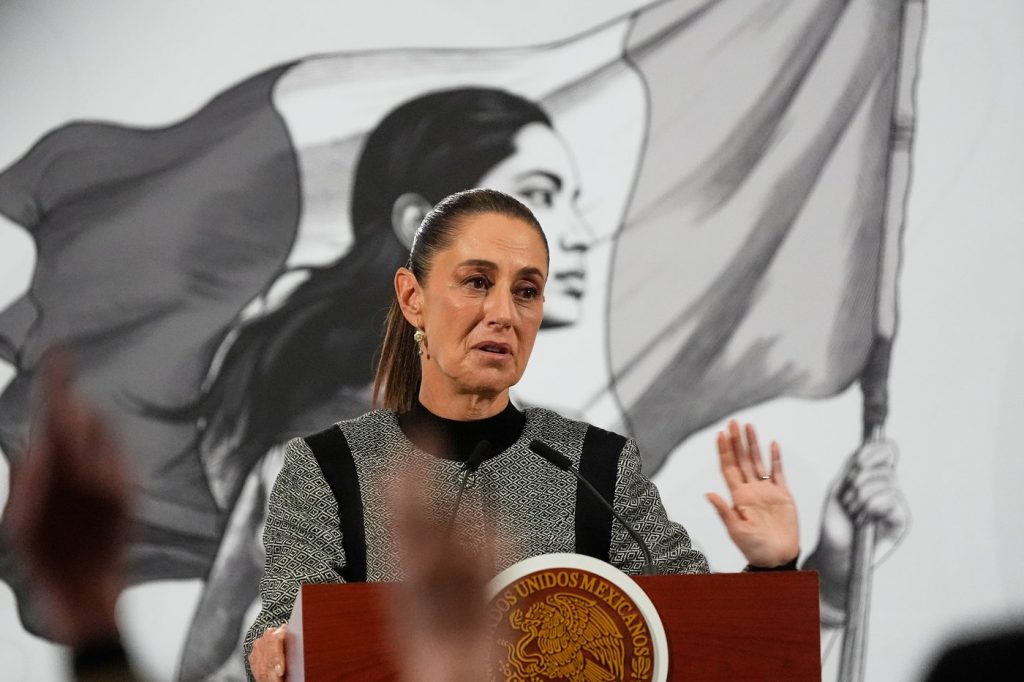
MEXICO CITY (AP) – On Wednesday, Mexico's Congress approved significant tariff increases on over 1,400 products imported from China and other countries lacking free trade agreements with Mexico. This measure received overwhelming support from the governing Morena party led by President Claudia Sheinbaum. The Senate passed the legislation with 76 votes in favor, while five senators opposed it and 35 abstained. The lower chamber had previously approved the tariff hike shortly before dawn on the same day.
President Sheinbaum stated that the tariff increases were essential for promoting domestic production. However, analysts suggest that the underlying motivation for this legislation is linked to ongoing negotiations with the United States, Mexico's largest trading partner. The current administration is seeking relief from tariffs imposed by the Trump administration on Mexican imports, accusing China of using Mexico as a conduit to enter the U.S. market.
The proposed tariff increases may reach as high as 50%, affecting a wide range of products, including textiles, shoes, appliances, and automotive parts, starting in January. Notably, China is expected to feel the most significant impact, as Mexico imported $130 billion worth of products from the country in 2024, making China Mexico's second-largest source of imports after the United States. The Chinese government has criticized the planned tariff hikes since their announcement in September.
Oscar Ocampo, the director of economic development at the Mexican Institute for Competitiveness, commented that the main motivation behind the tariffs relates to the impending review of the United States-Mexico-Canada Agreement (USMCA). He mentioned that these negotiations aim to achieve tariff reductions and exemptions for Mexico's access to the U.S. market. Despite these motivations, Mexico continues to face U.S. tariffs in critical sectors, including automotive, steel, and aluminum.
However, Ocampo expressed concern that Mexico's government is yielding to the unpredictability of U.S. President Donald Trump and altering its trade policy inappropriately. He warned that the new tariffs could harm various sectors, such as auto parts, plastics, chemicals, and textiles. The implementation of these tariffs is likely to disrupt supply chains and exacerbate inflation at a time when the Mexican economy is already slowing down.








