

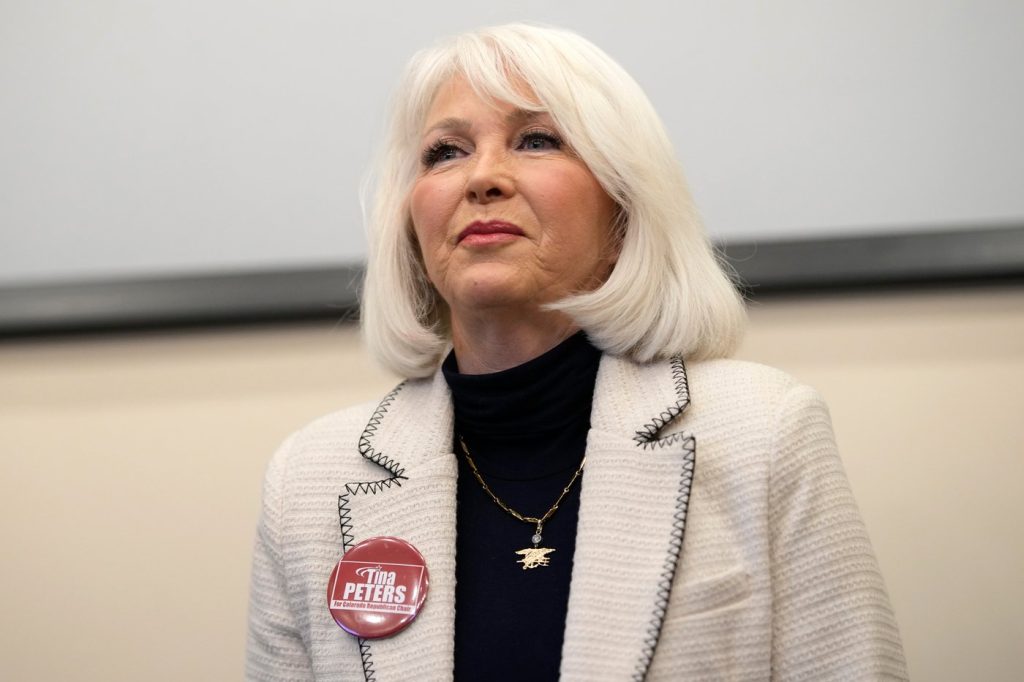
On Thursday, President Donald Trump issued a symbolic pardon for Tina Peters, a former Colorado elections administrator. However, this pardon does not alter the legal status of Peters, who was convicted under state laws for orchestrating a data breach scheme fueled by unsubstantiated claims of fraud related to the 2020 presidential election. The limitations of Trump's pardon powers mean that he cannot grant relief for state crimes, which is precisely what Peters is serving her nine-year prison sentence for.
In a social media post, Trump expressed his support for Peters, characterizing her as a "Patriot" who aimed to ensure fair and honest elections. He reiterated his debunked allegations that the 2020 election was marred by fraud. Peters, previously serving as the Mesa County clerk, was found guilty of allowing an individual to misuse a security card to access her county's election system and then misrepresenting that individual's identity. The man involved in this scheme was associated with Mike Lindell, the CEO of MyPillow, a well-known proponent of the false narrative that voting machines were manipulated to secure Joe Biden's victory over Trump.
This pardon reflects Trump's continued efforts to validate the narrative that the 2020 election results were fraudulent. Despite the absence of any credible evidence supporting such claims, courts across the United States and even Trump's former Attorney General, William Barr, have consistently affirmed that there was no widespread electoral fraud that could have influenced the election's outcome. Numerous reviews, recounts, and audits conducted in battleground states have confirmed Biden's victory, further discrediting the assertions presented by Trump and his allies.
In addition to Peters, Trump had previously issued similar symbolic pardons to Rudy Giuliani, his former personal attorney, and Mark Meadows, his former chief of staff, along with many others implicated in state-level crimes as part of Trump's effort to contest the results of the 2020 election. These pardons serve to reinforce Trump's narrative and galvanize his supporters, particularly within the election conspiracy movement.
Peters has remained defiant regarding her actions, and her case has garnered significant attention within the election conspiracy community. Her supporters have urged Trump for months to take action to secure her release from incarceration. In a notable attempt, the Trump administration sought to transfer Peters from a state prison to a federal facility; however, state officials resisted this move.
On the legal front, a federal magistrate judge recently dismissed Peters' appeal for temporary release during her ongoing legal battle over her conviction. This rejection indicates the complexity and challenges she faces in her legal journey, as she continues to navigate the ramifications of her controversial actions surrounding the 2020 elections.
In summary, while Trump’s pardon serves as a symbolic gesture reinforcing his stance on election integrity, it does not provide any real legal relief for Peters, who will continue to serve her sentence under Colorado state law.








