

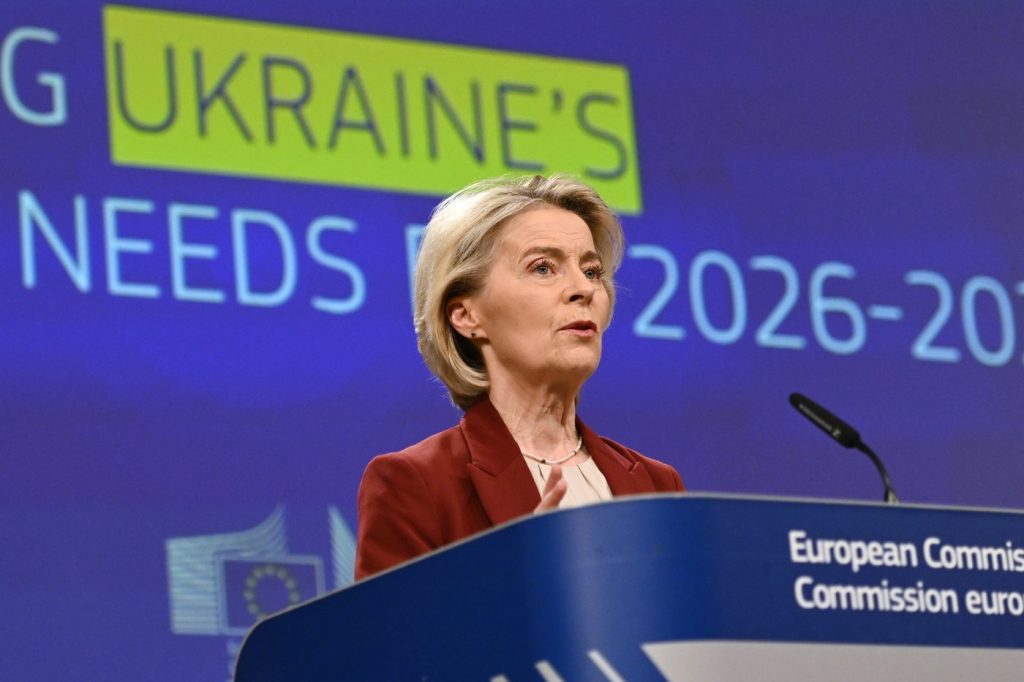
On Friday, the European Union is set to take a significant step by locking up Russian assets held in Europe until Russia ceases its ongoing war in Ukraine and provides compensation for the substantial damage inflicted over the past nearly four years. This move is a pivotal action enabling EU leaders to strategize at a summit next week regarding the potential use of the tens of billions of euros in Russian Central Bank assets. These funds could be instrumental in underwriting a substantial loan aimed at assisting Ukraine with its financial and military requirements for the next two years.
Hungarian Prime Minister Viktor Orbán, known as Russian President Vladimir Putin's closest ally in Europe, has vocally criticized the European Commission, which has prepared the decision. He accused the Commission of "systematically raping European law," reflecting deep divisions within the EU regarding support for Ukraine. The total amount of Russian assets frozen in Europe currently stands at 210 billion euros (approximately $247 billion). Among these, a significant portion—around 193 billion euros (about $225 billion) as of the end of September—resides within Euroclear, a Belgian financial clearing house.
The freezing of these assets is a result of the sanctions imposed by the EU in response to the war Russia commenced on February 24, 2022. However, these sanctions require renewal every six months and necessitate the approval of all 27 EU member countries. Notably, Hungary and Slovakia have expressed opposition to providing further support to Ukraine during this crisis.
The anticipated decision on Friday, which utilizes EU treaty provisions designed to protect economic interests during emergencies, would circumvent Hungary and Slovakia's ability to block the rollover of the sanctions. This move is expected to facilitate the easier use of the frozen assets for supporting Ukraine.
Orbán took to social media to announce that this decision signifies "the end of the rule of law in the European Union," asserting that Europe's leaders are placing themselves above established regulations. He claimed that the European Commission is undermining European law in a bid to prolong a war in Ukraine that he characterized as unwinnable. He emphasized Hungary's commitment to restoring a lawful order within the EU.
In a letter addressed to European Council President António Costa, Slovak Prime Minister Robert Fico firmly stated his refusal to support any initiatives that would cover Ukraine's military expenses in the coming years. He cautioned that the utilization of frozen Russian assets could directly threaten U.S. peace efforts, which rely on these resources for Ukraine's reconstruction.
In response to criticisms, the European Commission argues that the war has incurred significant costs, driving up energy prices and hindering economic growth across the EU. To date, the EU has already extended nearly 200 billion euros (approximately $235 billion) in support to Ukraine.
As these discussions unfold, the complexities surrounding international law, economic strategies, and humanitarian needs continue to challenge European unity in addressing the ongoing conflict in Ukraine.








