

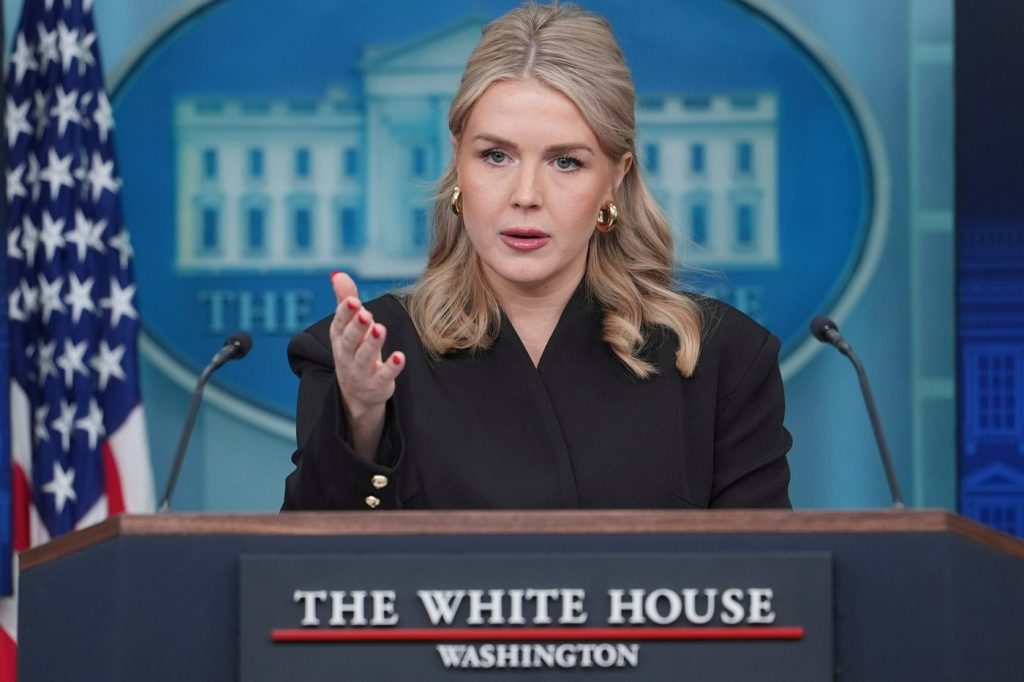
The Trump administration is currently facing a lawsuit that argues for the requirement of real-time American Sign Language (ASL) interpretation during significant events, such as White House press briefings. The legal action, brought by the National Association for the Deaf, claims that discontinuing ASL interpretation denies hundreds of thousands of deaf Americans meaningful access to vital national and international communications released by the White House. This issue is especially critical because the Biden administration had regularly utilized ASL interpretation during its tenure.
The Department of Justice (DOJ) has put forward the argument that requiring real-time ASL interpretation would severely intrude upon President Donald Trump's prerogative to control the image and messaging he presents to the public. In a recent court filing opposing the request for a preliminary injunction, DOJ attorneys have stated that the president has the right to shape his administration's image as he sees fit. However, the attorneys did not elaborate on how providing ASL services might negatively impact the portrayal of the president in the public eye.
Furthermore, government attorneys highlighted that alternative methods are available for the Deaf and hard-of-hearing community to access presidential statements, including online transcripts and closed captioning. They also raised concerns regarding the logistical challenges and potential difficulties connected with providing ASL interpretation, particularly during spontaneous press interactions that might not adhere to a structured format.
The National Association for the Deaf previously sued the Trump administration during his first term, advocating for ASL interpretation during press briefings related to the COVID-19 pandemic. The recent lawsuit is another attempt to ensure that deaf Americans have equal access to important information disseminated by the government.
The situation escalated when a federal judge ruled in favor of the National Association for the Deaf, ordering the White House to provide ASL interpretation for Trump's remarks in real-time. In response, the administration has filed an appeal against this ruling. While some ASL interpretation services have commenced at certain events, there remains considerable disagreement over what specific services the administration is obligated to provide.
Coinciding with recent developments in the lawsuit regarding ASL interpretation, President Trump has signed an executive order aimed at halting diversity, equity, and inclusion (DEI) programs across the U.S. government during his first week back in office. This move reflects a broader agenda to reshape DEI policies, which Trump deems incompatible with effective governance.
Additionally, Defense Secretary Pete Hegseth issued an order reinforcing the narrative that DEI policies do not align with the mission of the Pentagon. In a similar vein, Secretary of State Marco Rubio has directed that diplomatic correspondence should revert to using the traditional Times New Roman font, criticizing the previous use of the Calibri font as a product of misguided DEI policies from the Biden administration.
Amidst these ongoing legal and administrative changes, the White House has yet to provide a detailed comment regarding the lawsuit or elaborate on how ASL interpretation might impact Trump's public image. The implications of these policies extend beyond mere communication; they highlight a significant shift in the administration's approach to inclusivity and representation for marginalized communities, particularly the Deaf and hard-of-hearing population.








