

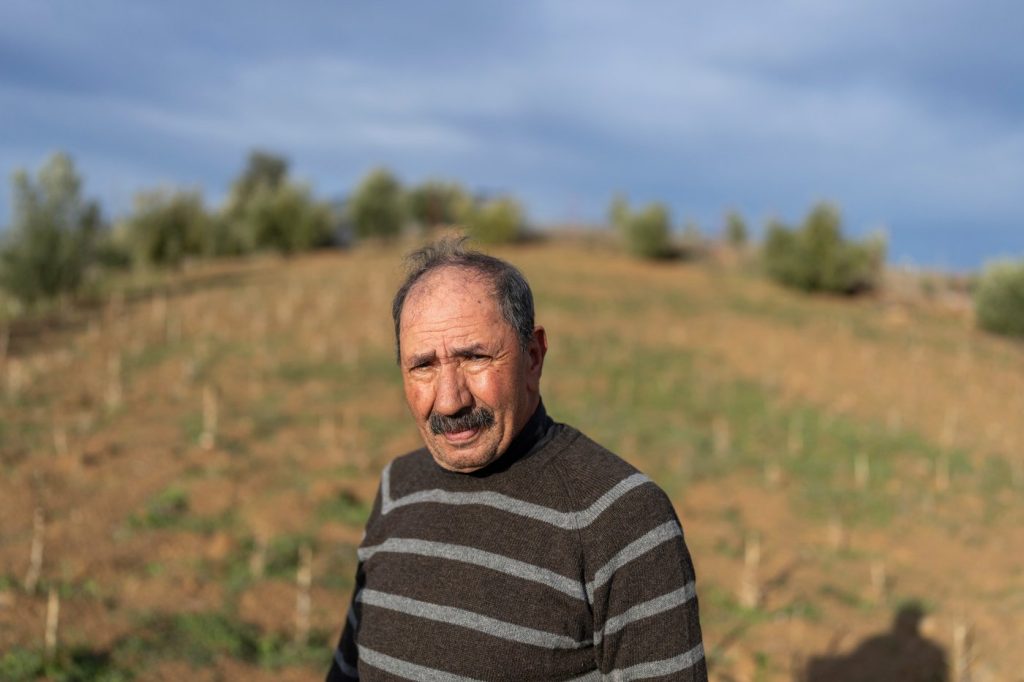
BAB BERRED, Morocco (AP) — Mohamed Makhlouf, who began growing cannabis at the age of 14, has spent decades in fear and secrecy, vulnerable to the threat of imprisonment or confiscation of his crops. However, with Morocco's recent movement toward legal cannabis cultivation, Makhlouf now finds himself in a more secure position, able to integrate his work into the formal economy.
Located in the Rif Mountains, Makhlouf’s farmland now yields a government-approved cannabis strain. While police patrol a nearby road, he no longer fears their presence. The authorities are aware of his legal operations, as he sells his produce to a local cooperative. Makhlouf expressed that “legalization is freedom,” allowing growers like him to operate within the law and contribute to the economy without the fear of repercussions.
At 70 years old, Makhlouf's experience is becoming increasingly common among a rising number of farmers transitioning from Morocco’s black market to the legal framework established for medicinal cannabis. According to United Nations reports, Morocco remains the world’s largest producer of cannabis, primarily supplying the resin for hashish, while authorities have alternated between enforcement and tolerance regarding cannabis cultivation, indirectly affecting countless lives in the Rif Mountains.
Abdelsalam Amraji, another farmer who has embraced legalized cultivation, stated that cannabis is essential for sustaining the community. He noted that no other crops, like wheat or apples, have proven sustainable in the region. For many years, farmers had to navigate the threat of arrest and government crackdowns, which often resulted in the destruction of their fields. Though illegal cannabis can yield higher profits, Amraji remarked that the peace of mind from legal cultivation outweighs the risks of the black market.
The pathway to this transformation began in 2021 when Morocco became the first Muslim-majority nation to pass legislation legalizing specific forms of cannabis cultivation. The government aimed to lift small-scale farmers out of poverty and reintegrate the cannabis-growing regions into the national economy. Notably, in 2024, King Mohammed VI pardoned over 4,800 imprisoned farmers to assist them in rejoining the legal agricultural landscape.
Since the legalization mandated in 2022, Morocco has imposed stringent regulations governing every aspect of the cannabis trade, from seeds and pesticides to farming licenses and distribution networks. Although some forms of cultivation are now authorized, the government has made no strides toward legalizing recreational use of cannabis.
“We have two contradictory missions that are really to allow the same project to succeed in the same environment,” remarked Mohammed El Guerrouj, the director-general of Morocco's cannabis regulatory agency. The agency has issued licenses to more than 3,371 growers and recorded nearly 4,200 tons of legal cannabis production. Furthermore, the Biocannat cooperative near Bab Berred collaborates with approximately 200 farmers during harvest seasons, converting raw cannabis into CBD oil, lotion, and chocolates available in pharmacies.
Despite these advancements, the transition to a fully legal market has revealed considerable challenges. Protests erupted in Taounate after cooperatives failed to compensate farmers for their crops, leading to frustration among growers demanding their promised rights. This discontent reflects the ongoing struggles the new regulated market faces.
While the legalization process aims to ease the burdens of illicit cultivation, black market demand persists. Recent figures indicate that legal cannabis is grown on 14,300 acres in the Rif, contrasting sharply with the over 67,000 acres dedicated to illegal cultivation. A report by the Global Institute Against Transnational Organized Crime emphasized that the cannabis industry exists in a state of “coexistence,” suggesting that reform efforts are still in their infancy.
In this dual reality, Morocco's legal and illegal cannabis markets operate side by side as the government attempts to shift a historic trade into legitimacy without abandoning the farmers who have relied on it for generations. Amraji summed up this dramatic change with optimism, saying, “Cannabis is legal now, just like mint. I never imagined I’d one day be authorized to grow it. I’m shocked.”








