

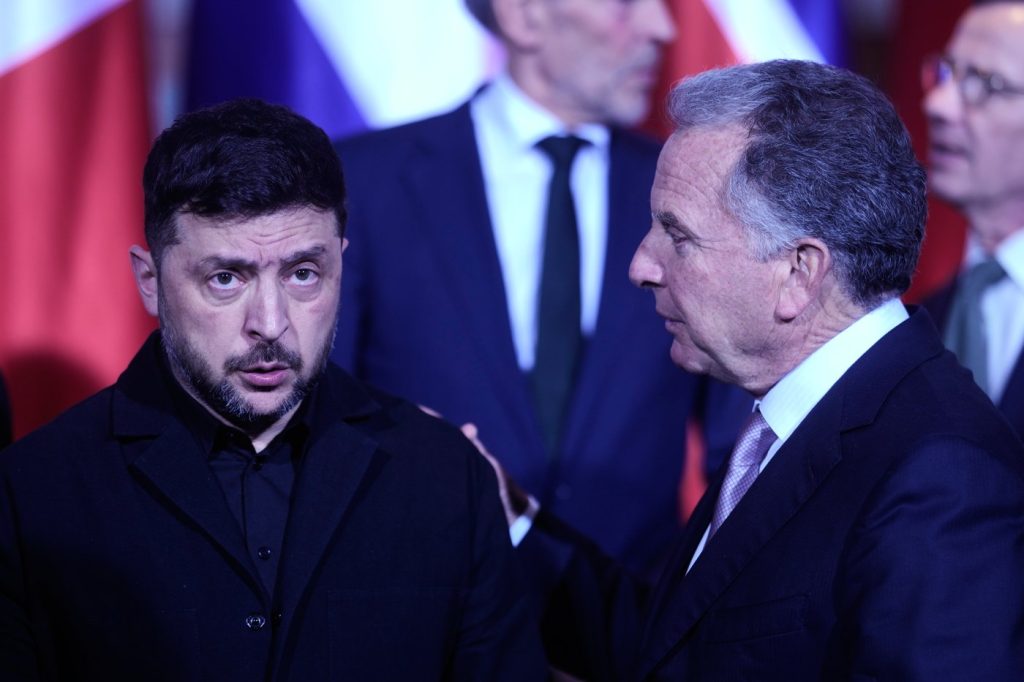
Ukrainian President Volodymyr Zelenskyy, along with representatives from over 30 countries, is set to formally approve the establishment of a compensation body designed to address the damages inflicted on Ukraine due to the ongoing Russian invasion. This significant approval is expected to occur during a ceremony in The Hague, Netherlands, highlighting the international support for Ukraine amidst its conflict with Russia.
The creation of this compensation body follows recent peace talks held in Berlin, where Zelenskyy met with notable figures, including U.S. President Donald Trump's special envoy Steve Witkoff, his son-in-law Jared Kushner, and German Chancellor Friedrich Merz. During these discussions, Zelenskyy expressed his readiness to consider dropping Ukraine's bid for NATO membership in exchange for Western security guarantees. However, he firmly rejected any proposals that involved ceding territory to Russia, framing the proposed security guarantees as a necessary compromise to prevent further Russian aggression.
The International Claims Commission, facilitated by the Council of Europe, will allow Ukrainians to file for compensation regarding "damage, loss or injury" that has occurred since the full-scale invasion began in February 2022. This commission is set to assess claims already made to the damages register that was initiated during a 2023 Council of Europe summit in Iceland. In his video address to the summit, Zelenskyy emphasized that "there will be no reliable peace without justice," underscoring the importance of addressing wartime damages.
Currently, approximately 80,000 claims have already been submitted to the damage register, which operates out of The Hague. However, uncertainties linger about the funding mechanisms for the claims commission. The Council of Europe is adamant that Russia should bear financial responsibility for the damages incurred, yet a clear strategy for enforcing this payment has not yet been established. One potential solution is to utilize some of the substantial frozen Russian assets held in Europe, which are estimated to total in the tens of billions of dollars.
A total of 25 countries needs to endorse the commission for it to officially begin operations, although more than 30 nations are expected to participate, marking an unprecedented level of support for a Council of Europe treaty at its inception. The majority of participating countries will hail from Europe, with the European Union signaling its intent to join as well. Additionally, delegations from Mexico, Japan, and Canada are also taking part in the signing ceremony.
Many of the same countries that support the compensation body have also endorsed the formation of a new international court under the auspices of the Council of Europe. This court is intended to hold senior Russian officials accountable for their roles in the full-scale invasion of Ukraine. In line with these developments, Zelenskyy is scheduled to address the Dutch parliament and meet with King Willem-Alexander of the Netherlands, further emphasizing the international diplomatic efforts surrounding the crisis.








