

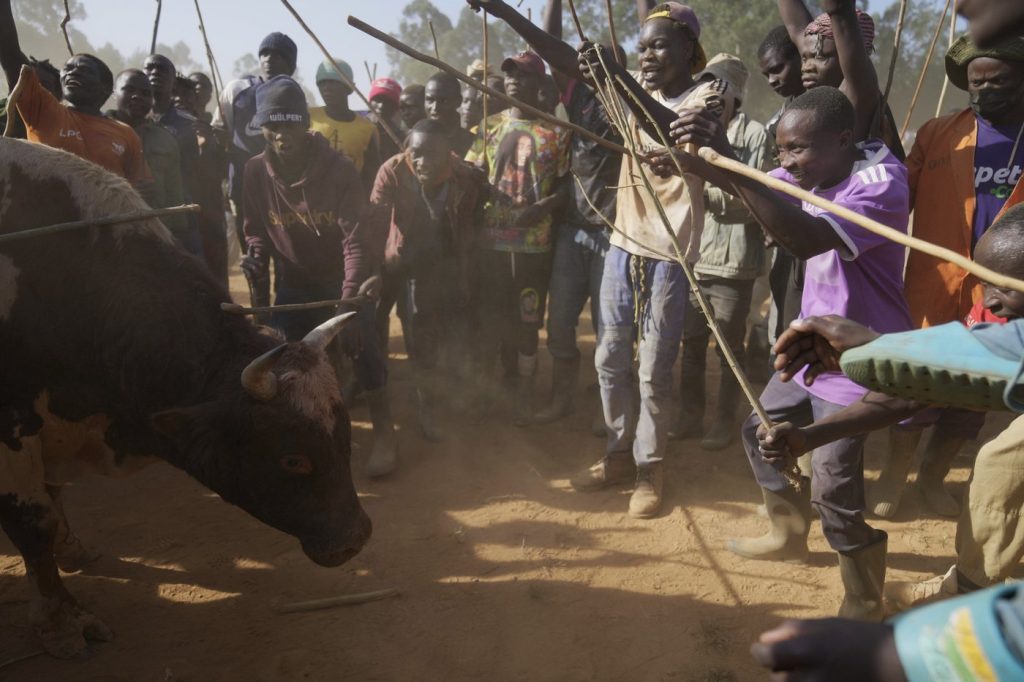
KAKAMEGA, Kenya (AP) – Match day has arrived in Kakamega County, western Kenya, known as the heartland of bullfighting. The atmosphere is electric as two bulls are poised to clash in a dusty arena, drawing thousands of enthusiastic fans eager to witness the spectacle.
This particular derby is a rematch between Shakahola, a relative newcomer named after the forest where over 400 individuals connected to a cult tragically perished in 2023, and Promise, a seasoned contender with an impressive record of only a few losses in over a decade.
The tradition of bullfighting is deeply entrenched in the cultural fabric of the Luhya community in Kakamega County. Originally a form of entertainment and celebration following the harvest season, bullfighting has transformed into a popular sport that captivates audiences. Young people flock to the matches, with some engaging in betting activities that have extended to social media platforms. The encounters typically last under five minutes, and victory is declared once one bull retreats, without the intention of causing injury to either animal.
Sociologist Kathleen Anangwe from the University of Nairobi attributes the rising popularity of bullfighting to socialization needs amidst a backdrop of unemployment, which stands at approximately 9% according to official estimates. However, workers' rights groups suggest that the youth unemployment rate is significantly higher. Anangwe observes that bullfighting fosters economic contributions, unity, and social cohesion. Young attendees utilize these events as opportunities to forge connections and sell items like snacks and bull-chasing sticks.
Anangwe noted, “The youth are interested in identity, ‘who am I?’ and authenticity. Bullfighting gives them that opportunity.”
As the match day unfolds, preparations begin hours before the confrontation. Shakahola is provided with his daily fare of napier grass, water, and a blend of traditional herbs thought to enhance his strength, as explained by his handler, who has cared for him for three years. He is pampered away from public scrutiny, then transported to the arena.
His owner, Josphat Milimo, conducts a traditional ritual, speaking words of encouragement to Shakahola, urging him to triumph over his adversary within the time limit. Elders ceremoniously declare victories while striking the ground with herbal-covered sticks.
Today’s highly anticipated showdown gives Shakahola a chance for redemption after suffering defeat at the hooves of Promise two years ago. As the bull makes his way to the waiting truck, a procession of hundreds of people on motorcycles accompanies him, chanting and waving sticks designed to keep the bulls at bay — setting the stage for the event even before it officially begins.
After a journey of about 10 kilometers (6 miles), the arena is alive with anticipation as thousands gather. Shakahola and Promise, adorned with flags depicting their images, arrive to cheers from their respective supporters. Vendors mingle with the crowd, selling sticks and refreshments, as excitement builds around the fighting bulls.
When the bulls finally lock horns, the dust flies as they clash fiercely, drawing gasps from those close to the action. Among the audience is Brenda Milimo, 20, Josphat's niece, who has gained popularity on TikTok as a bullfighting aficionado. Traveling from Nairobi, Brenda dedicates significant effort to engage in major matches like this one.
“Bullfighting is in my blood,” she proclaims, having previously placed casual bets of up to 1,500 Kenyan shillings ($11), despite being unemployed. “We do casual betting via social media and through word-of-mouth, but I’m sure soon there will be a website for bullfighting betting because it's becoming very popular among the youth,” she affirms.
Other spectators, such as David Gitau from central Kenya, relish experiencing the bullfighting tradition for the first time. “I’ve enjoyed myself and I’d like to encourage my kinsmen to come and experience this amazing tradition,” he expresses.
In a swift conclusion to the match, Promise ultimately retreats, leaving behind traces of blood on his hide. Shakahola emerges victorious, prompting jubilant celebrations among the crowd, who break into song and dance, hoisting Josphat Milimo aloft on their shoulders.
“I am very happy,” exclaims Josphat Milimo. “Last time, I was cheated of victory and this time round I was ready.”








