

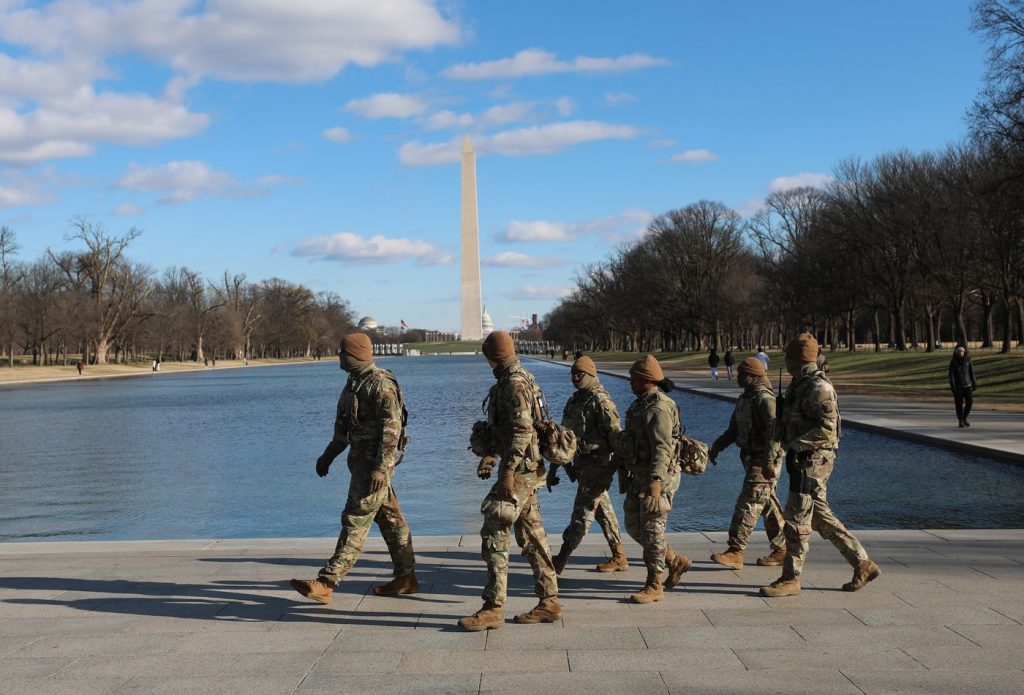
A U.S. appeals court has ruled that the deployment of the National Guard in Washington, D.C., will continue, temporarily staying a lower court ruling that called for its cessation. This decision came from a three-judge panel of the U.S. Court of Appeals for the District of Columbia Circuit and was announced on Wednesday.
The panel highlighted that President Trump may have a compelling argument regarding the unique powers he wields in relation to mobilizing the National Guard within the federal district of Washington, D.C. This ruling effectively halts the execution of a previous order issued by U.S. District Court Judge Jia Cobb on November 20, which judged the deployment as an illegal overreach, infringing upon local officials' authority to manage law enforcement in the district.
In their ruling, the judges noted that the Trump administration's position was supported by various factors. Among these was the potential disruption to the lives of thousands of military service members, as well as the administration’s stated interest in safeguarding federal governmental functions and properties within the capital. The court underscored that the District of Columbia had failed to demonstrate any current injury to its statutory interests resulting from the deployment.
While this ruling is not final, it indicates that the appeals court sees a legitimate case for the Trump administration's appeal based on the circumstances evaluated. The appeals court’s unanimous ruling spans 32 pages and appears to favor the arguments presented by the administration regarding the deployment of the National Guard.
The National Guard's presence in Washington, D.C., has been a significant topic of discussion and debate, particularly in the context of local governance and federal oversight. The continued deployment is framed not only as a protective measure but also as a critical assertion of federal authority within the capital. Local officials, represented by Judge Cobb’s earlier ruling, had aimed to assert their control over law enforcement responsibilities, highlighting the tension between federal and local governance.
This latest development reflects ongoing legal complexities surrounding the use of military resources in domestic scenarios, especially in the unique setting of the nation’s capital, where federal and local powers often intersect. The appeals court's decision to stay the lower court's ruling allows for further legal deliberation on this contentious issue, poised at the intersection of law, governance, and public safety.








