

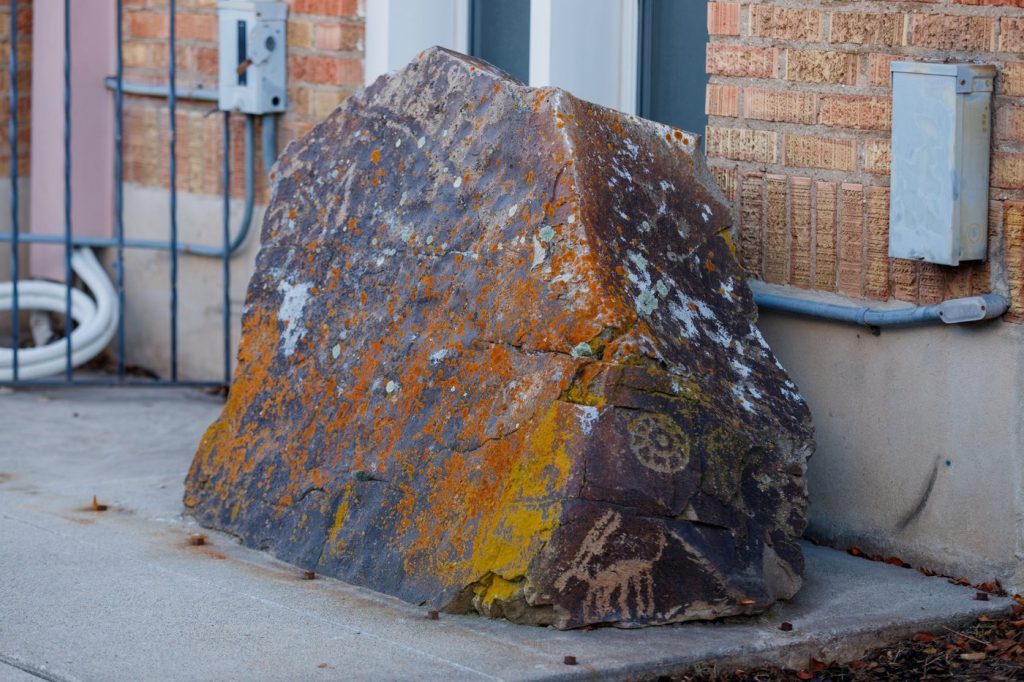
TREMONTON, Utah (AP) – A significant cultural artifact, a large rock adorned with petroglyphs that date back over 1,000 years, has returned to its original home in the mountains of northern Utah. The rock, which is a vital piece of heritage for the Northwestern Band of the Shoshone Nation, was airlifted to its original location earlier this month, concluding a repatriation effort that started in 2011.
This sacred rock had been removed from its place of significance and was situated for approximately 80 years in front of a church meetinghouse in Tremonton, located about 80 miles (129 kilometers) north of Salt Lake City. The Church of Jesus Christ of Latter-day Saints issued a statement on Wednesday, detailing the collaboration between historians and conservators, alongside the tribe and the state to carefully extract and restore the 2,500-pound (1,134-kilogram) rock. The restoration process involved the use of saws, chisels, and gentle cleaning with soap and water to remove lichen growth that had obscured the petroglyphs over the years.
Brad Parry, the vice-chair of the tribe, expressed deep emotions at the rock’s return, describing the area as a spiritual site where Shoshone ancestors would gather for camping and hunting activities. Parry indicated that this moment felt akin to fitting a crucial piece back into a fragmented historical puzzle, emphasizing the significance of reclaiming their heritage. “Our history is so fractured with a lot of things that happened to us,” he noted. “To have these positive things now that are coming out—it's rebuilding our history. And I can’t overstate that.”
The journey of the rock to the church remains shrouded in mystery, with various accounts suggesting that it was transported by a group of individuals who simply carried it into town decades ago. Ryan Saltzgiver, the history sites curator for the Church History Department, remarked on the ambiguity surrounding its relocation, speculating that it was likely not taken to the church out of malice, but rather due to a lack of understanding about its importance.
In 2011, the quest to identify the rock’s original location intensified when amateur archaeologists utilized a 1937 rock-art survey to trace its origins. Saltzgiver shared that the church had been working on aligning all the necessary components for the rock's return since that time. Collaborations with the Utah State Historic Preservation Office were crucial in bringing various partners together, allowing for the establishment of a preservation and repatriation plan between the church and the Shoshone tribe. Saltzgiver emphasized the church’s moral and ethical responsibility to care for its possessions and to return sacred items to their rightful ownership.
After extracting the rock from its concrete base, it was transported to Provo, where experts from the Midwest Art Conservation Center meticulously cleaned it using bamboo and plastic tools. Following this care, the rock was trucked to a location near the Utah-Idaho border, where a helicopter was employed to place it back in its rightful spot, although the exact coordinates were kept confidential to ensure its preservation.
To commemorate this significant return, tribal spiritual leader Rios Pacheco gave a blessing in the Shoshoni language. Brad Parry concluded with a sentiment that encapsulated the emotional essence of the event: “This rock was meant to be here. It’s like this rock knows it’s home.” The return of the rock signifies a step toward healing and a profound connection to the tribe's storied past.








