

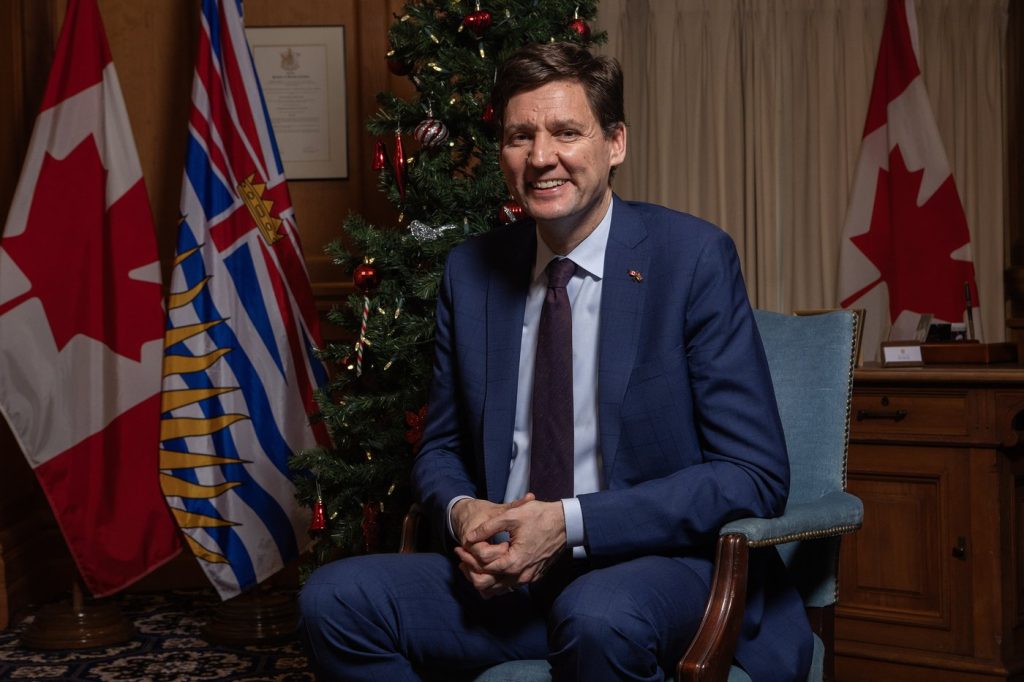
On December 3, 2025, following the announcement of the pulp mill closure in Crofton, B.C., resulting in 350 job losses, the political spotlight shifted unexpectedly from Premier David Eby's government to the turmoil within the Opposition B.C. Conservatives. Twenty MLAs publicly called for then-leader John Rustad's resignation, reflecting a year characterized by instability and chaos in the Conservative ranks. Eby noted that this internal strife has lent political advantages to his New Democratic Party (NDP) government.
Despite these advantages, Eby dismissed the notion that he would receive an easy pass in the 2025 elections after securing only a one-seat majority in the October 2024 vote. In a year-end interview, he stated, “If that was a hall pass, then I guess I’ll never ask to go to the bathroom again in school.” Eby acknowledged the challenges his administration faced in 2025, including strained relationships with First Nations, labor unions, and environmental groups.
On the other hand, the B.C. Conservative Party experienced turmoil, losing confidence in their leader, Rustad, which led to a decline in their legislative representation from 44 to 39 MLAs. This chaos became a distraction from broader governmental issues, and Rustad eventually resigned, with Trevor Halford appointed as interim leader amid ongoing leadership race preparations. Eby observed, “A lot of people assume that the Conservative chaos is helpful,” but he underscored that the situation was also damaging to the important work needed within the province.
The uncertainty raised questions around the possibility of Eby calling an early election to take advantage of Conservative disarray. He indicated that an election might occur if the Opposition obstructed vital legislation, highlighting a recent vote on the North Coast Transmission Line that was treated as a confidence measure, which was narrowly passed by one vote with Speaker Raj Chouhan's assistance. However, he clarified, “But we’re not seeking an election here,” emphasizing that the public does not desire an election at this time.
In 2025, significant issues arose including a U.S. trade war, a massive public service strike, and Indigenous claims court rulings, all testing party cohesion. Eby’s government tackled U.S. protectionism with new legislation but faced pushback on two bills designed to accelerate resource projects, which drew criticism from First Nations and environmental activists. Furthermore, Eby’s suggestions to possibly amend the Declaration on the Rights of Indigenous Peoples Act following a court ruling regarding inadequate consultation with Indigenous groups heightened tensions between the government and First Nations communities.
Additionally, labor unions criticized the government for its decision to purchase four new BC Ferries vessels from a Chinese shipyard, culminating in an eight-week public service strike that cast doubt on the NDP’s labor credentials. During this period, newly elected B.C. Greens Leader Emily Lowan publicly showed solidarity with the striking workers. Environmentalists, both external to and within the NDP, similarly expressed disapproval over the government’s endorsement of new resource initiatives in Northern B.C.
Financial forecasts indicated a shift from a projected surplus of almost $6 billion in 2022 to a looming deficit of $11.2 billion, prompting Eby to address the altered economic landscape and resource dependency. “The decision is: do we keep working to support British Columbians, or do we cut back?” he said, affirming the need for the government to bolster support for citizens facing hardships rather than implementing cuts.
Despite his administration cutting 1,100 public service positions, Eby emphasized the ongoing needs for additional schools and hospitals, stating, “The bottom line is, we’re not going to cut our way out of this.” He acknowledged that not every party member agrees with his governmental direction, particularly on environmental and Indigenous issues. However, he pointed to a recent leadership review where nearly 83 percent of NDP delegates expressed their support for him, indicating a unified front within the party despite the internal challenges.








