

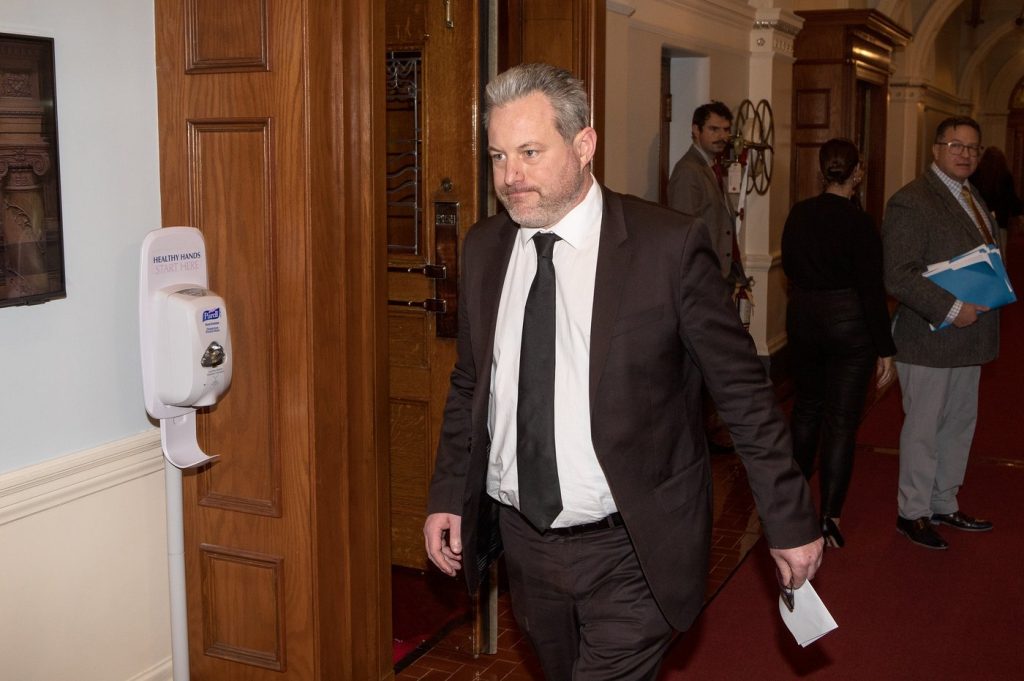
On December 3, 2025, Trevor Halford stepped into the British Columbia legislature as the new interim leader of the Conservative Party of B.C., following the release of a letter from 20 Conservative Members of the Legislative Assembly (MLAs) expressing a loss of confidence in the leadership of John Rustad. The announcement came amid ongoing internal disputes that had adversely affected the party's fundraising capabilities and overall credibility.
The party board stated that Rustad had become "professionally incapacitated," but he refused to resign despite previously securing a leadership review with 71 percent support. This led to a unique situation in which two individuals claimed leadership over the party: Halford, appointed by the party board, and Rustad, who maintained some backing from party members. In the legislature, the two men sat just three seats apart, each seemingly ignoring the other as they focused on their phones and paperwork throughout Question Period.
While reflecting on the surreal atmosphere, Halford acknowledged the difficulties faced by his colleagues during this tumultuous transition. He deemed the preceding 48 hours as "unprecedented" and recognized that the party was still grappling with the fallout from Rustad's leadership challenges. Nevertheless, he expressed a commitment to moving forward and highlighted improvements in fundraising and membership growth for the party under his interim leadership.
Halford empathized with the personal toll that the political disputes had taken on the caucus members, including Rustad. He stated the importance of prioritizing the constituents they serve, demonstrating a collective duty to the people of British Columbia.
Rustad's resignation on December 4, following the awkward encounter in the legislature, was motivated by his desire to prevent a "civil war" within the party. Under his leadership, the Conservatives had gained significant ground, securing 44 seats just over a year prior and almost forming a government. However, his tenure also highlighted ideological divisions within the party's caucus.
Halford emphasized that while no caucus is free from challenges, the Conservative Party was striving for unity and growth. He expressed optimism that the party would emerge stronger and more cohesive, focusing on stabilizing its presence in the legislature and ensuring accountability for the New Democratic Party (NDP) government led by David Eby. He pointed out various crises facing British Columbia, including issues in healthcare, housing, and municipal governance, and asserted that the government must be held accountable for its policies.
Additionally, Halford mentioned concerns regarding property rights stemming from the Cowichan Tribes case, calling for the repeal of the Declaration on the Rights of Indigenous Peoples Act. He stressed that the Conservative Party must present a unified vision rather than become preoccupied with individual issues.
As the party prepares for a leadership race, Halford remarked on a wide array of potential candidates, including federal Conservative MP Aaron Gunn and former federal MP Kerry-Lynne Findlay. Although none have officially declared their candidacy, the diverse list reflects ongoing interest in the party's future direction. Halford is not worried about the potential for division among caucus members in supporting the eventual winner, advocating that unity will be vital in overcoming ideological discrepancies.
He reframed political discourse around right versus left, stating that the focus should shift from party lines to addressing the fundamental needs and struggles of British Columbians, many of whom do not hold political affiliations. Halford described the upcoming leadership race as pivotal in clearly defining the party's stance and aligning it with the needs of the electorate as they prepare for future elections.








