

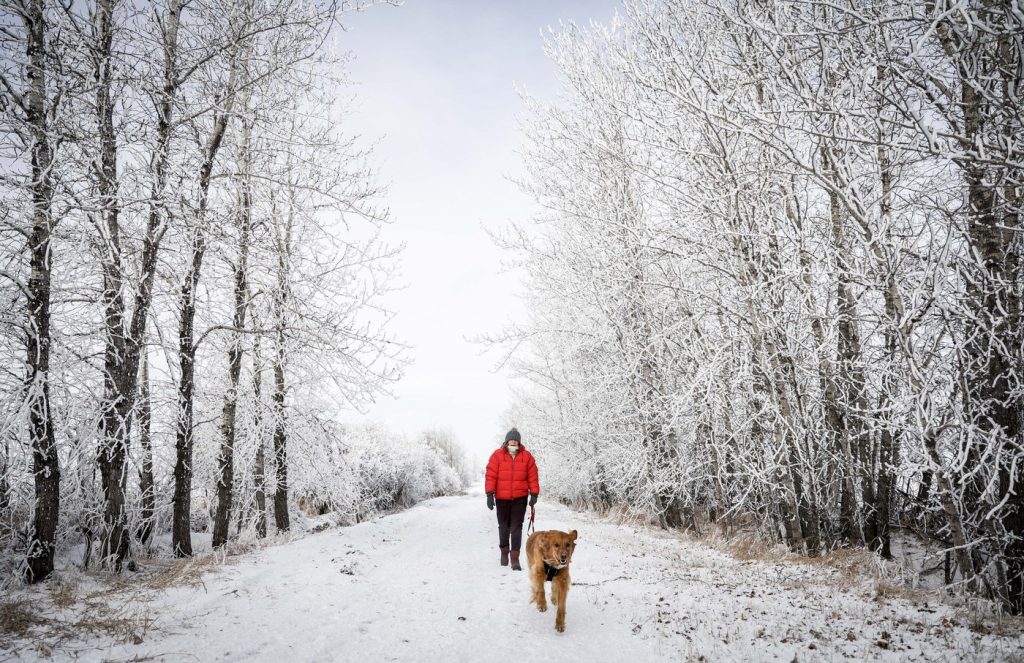
Frigid temperatures are gripping much of Western Canada, particularly impacting Alberta, where advisories are urging residents to prepare for a snowy Christmas Eve and Christmas Day. Environment Canada forecasts that Central Alberta may receive between 10 to 20 centimeters of snow by Christmas morning, prompting the agency to recommend that drivers adjust their travel plans based on the anticipated road conditions.
In addition to the snow advisories, cold weather warnings are also in place for parts of Manitoba, alongside continuing warnings in Alberta and Saskatchewan. In these areas, wind chill values are projected to plummet to between -45 and -50 degrees Celsius. Additionally, parts of British Columbia's northern interior may experience similar extreme wind chill conditions, potentially dropping as low as -45 degrees through Christmas Day.
Moreover, the Yukon territory has been experiencing extreme cold for several days, with wind chills in certain regions forecasted to range from -45 to -55 degrees Celsius over the Christmas period. Derek Lee, a meteorologist with Environment Canada, indicated that Arctic air has settled over the Yukon for the past week and a half, contributing to the severe conditions.
However, there is a consistent shift expected in the weather pattern. Lee noted that upcoming systems will move through the Yukon in the following days, bringing moisture and cloud cover, which should prevent temperatures from remaining as low as they are currently. This cloud cover is anticipated to glide over the territory from north to south, with the expectation of trapping warmer air in the region.
Despite these changes, the overall trend indicates that temperatures will likely remain below average for this time of year. Lee commented that as the weekend approaches, temperatures might rise by 10 to 20 degrees compared to current conditions. By the time the weekend arrives, the Yukon can expect to transition from negative 50s to the range of negative 35 to negative 40 degrees Celsius.
This situation illustrates the significant cold snap affecting multiple provinces and territories across Western Canada as residents brace for substantial snowfall, hazardous travel conditions, and extreme temperatures during the holidays.








