

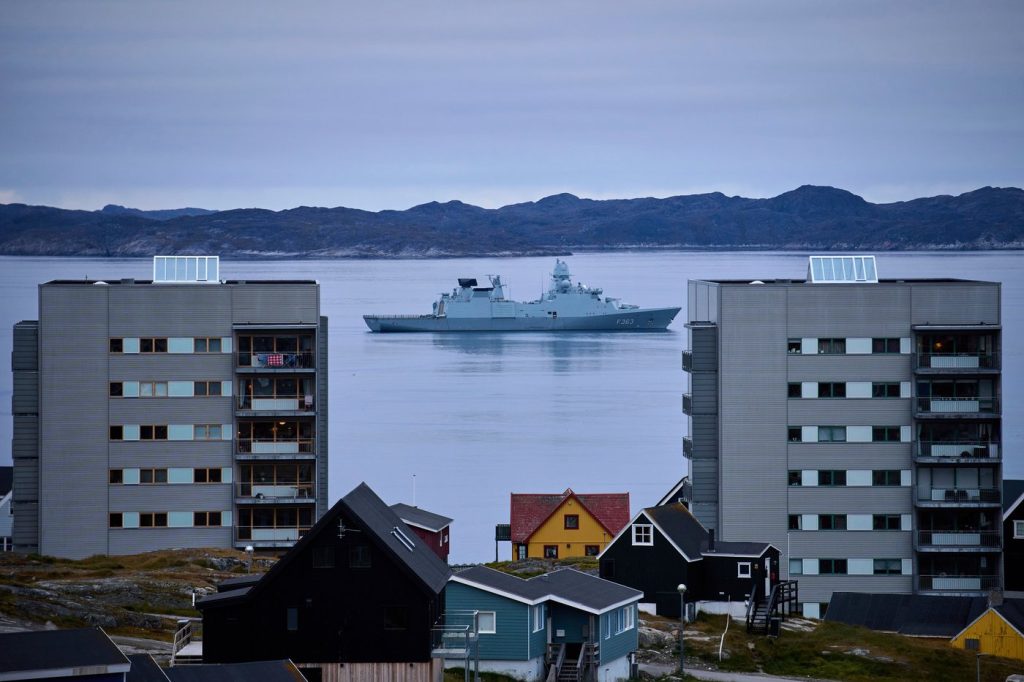
OTTAWA – Foreign Affairs Minister Anita Anand has reaffirmed Canada’s commitment to respecting Greenland's sovereignty amidst renewed U.S. interest in the self-governing territory of Denmark. The remarks come on the heels of a recent announcement from the United States government, where President Donald Trump appointed Louisiana Governor Jeff Landry as an envoy to Greenland, signaling a push for potential annexation of the territory.
Anand held discussions on Tuesday with her Danish counterpart, Lars Lokke Rasmussen, to express Canada's unwavering support for the sovereignty and territorial integrity of Greenland. This is a significant diplomatic stance, particularly as the U.S. continues to voice aspirations of making Greenland part of the United States.
Plans are underway for Anand to visit Greenland’s capital city, Nuuk, to inaugurate a Canadian consulate in early 2026. Her upcoming visit is seen as a crucial step in strengthening Canada’s ties with Denmark, which are already bolstered through cooperative efforts within the Arctic Council and the NATO defense alliance. Anand emphasized the importance of Canada's role in Arctic security, advocating that NATO should focus more on this critical region in line with its historical contributions to European security.
In his remarks, Governor Landry denied any imperialistic ambitions, stating that the U.S. is not seeking to "conquer anybody" or "take over anybody's country." His comments reflect a sensitive and strategic approach as the U.S. navigates its interests in the Arctic, a region that holds significant geopolitical importance due to its resources and shipping routes.
This development occurs against the backdrop of increasing global focus on the Arctic, where climate change and territorial disputes have heightened the stakes for nations with vested interests in the region. Canada, along with Denmark, has been a steadfast supporter of Greenland's autonomous governance and the rights of its Indigenous population, often advocating for collaborative efforts in managing Arctic affairs.
The current geopolitical climate, marked by competition for influence and resources, has prompted nations to reconsider their strategies in the Arctic. As Anand prepares for her visit, Canada is positioning itself as a key player in Arctic governance, promoting stability and respect for national sovereignty in the face of external pressures.
The discussion of Greenland's future is of paramount importance, not only for Danish residents but also for the broader international community. With nations keenly eyeing the Arctic for emerging opportunities, understanding the dynamics of territorial claims and assertions of sovereignty will play a crucial role in shaping the region's future.
The narrative surrounding Greenland, its sovereignty, and its relationship with powerful allies like the U.S. and Canada illustrates the complexities of modern geopolitical interactions, particularly in regions that are increasingly exposed to the implications of climate change and international interest.








