

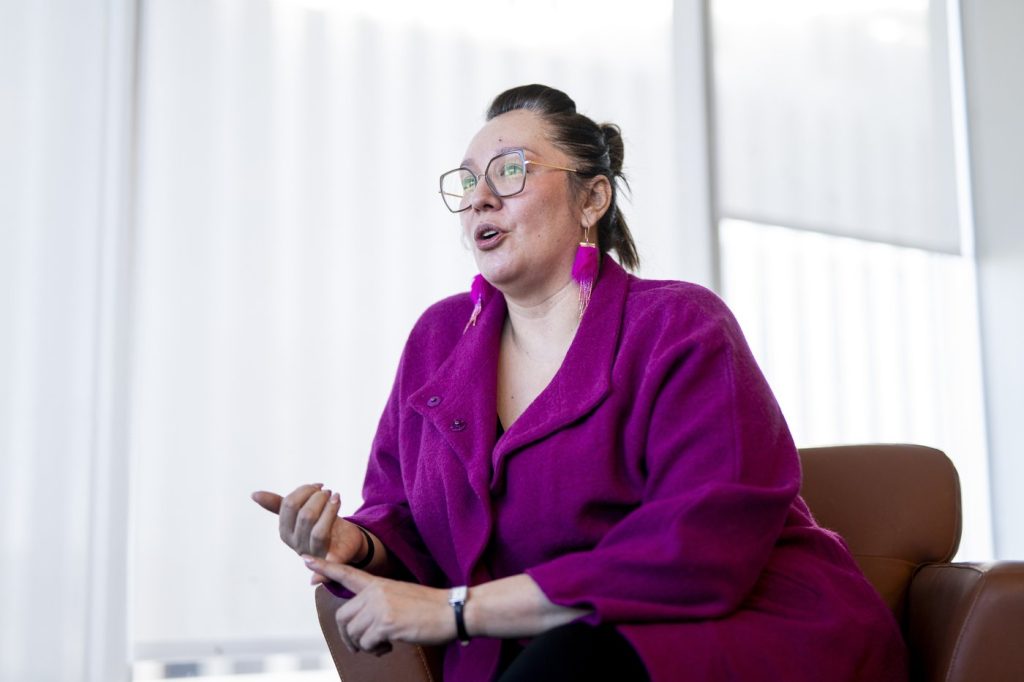
OTTAWA - When Mandy Gull-Masty took on the role of Indigenous Services Minister in May 2025, after being elected as a Member of Parliament for the first time in April, a central question arose: why would a Cree woman choose to administer the Indian Act, especially when another First Nations woman, Jody Wilson-Raybould, had previously declined the role? Despite concerns that the government was "setting her up for failure," Gull-Masty expressed her willingness to “take the risk.”
Gull-Masty believes that her position offers the opportunity to create pathways for the communities she has long worked alongside, focusing on vital issues like clean drinking water, housing, and child welfare. She acknowledges the significant learning curve she has encountered, stating, “I’ve had the opportunity to learn way more than I ever expected.” Over her first 200 days in office, she has felt an increase in support from those wanting her to succeed, showing gratitude for the collaboration she's experienced.
Gull-Masty is the second First Nations woman to be offered the Indigenous Services role by a Liberal Prime Minister, yet she is the first to accept. Jody Wilson-Raybould had declined the position under former Prime Minister Justin Trudeau, as she opposed the Indian Act, which she believed grants excessive control to the federal government over Indigenous Peoples and communities. In contrast, Gull-Masty, appointed by Prime Minister Mark Carney, has adopted a different perspective about the responsibilities that come with the role.
Holding an insider's viewpoint has reshaped Gull-Masty's relationship with other cabinet members, many of whom may lack the same understanding of Indigenous communities. She actively engages with her colleagues by editing speeches and providing feedback to ensure that their messaging aligns with the realities faced by these communities. This includes challenging others to consider Indigenous perspectives, even in non-Indigenous files.
Her collaboration with Natural Resources Minister Tim Hodgson illustrates this dynamic. As a rookie MP and former chair of Hydro One, Hodgson has found himself needing to foster relationships with Indigenous communities regarding federal projects. However, his approach has faced criticism, exemplified by his suggestion to meet with Coastal First Nations via Zoom instead of in person, which many viewed as dismissive. After receiving backlash, Hodgson quickly apologized and committed to an in-person meeting.
Gull-Masty has also had to extend grace to herself, recognizing that even if Indigenous issues do not dominate public discourse, they remain critical for the communities she serves. “I don’t judge who’s important and who’s not important,” she reflected, acknowledging the essential role she occupies. While she is new to federal politics, Gull-Masty previously served as the Grand Chief of the Grand Council of the Crees, where she developed valuable relationships with First Nations leaders nationwide.
Her dual roles became evident during the December Assembly of First Nations gathering in Ottawa, where she delivered government messaging to chiefs with whom she previously collaborated. The experience proved intense as she navigated her new position while acknowledging the current challenges faced by First Nations communities. “Seeing my colleagues being in that space and trying to help and guide them through that as well, that was not something that I’ve ever experienced,” she shared.
Although Gull-Masty’s political history shows she has always identified as a Liberal, she once leaned towards the NDP, endorsing former leader Tom Mulcair in 2015. Reflecting on her evolution, she noted that leadership qualities like structure and stability, which she perceives in Prime Minister Carney, have played a pivotal role in her political journey. “What I’m looking for in leadership is someone that’s really going to be structured, going to have stability, going to ensure there’s clarity in the path that they’re trying to take,” she explained, expressing pride in her current affiliation.








