

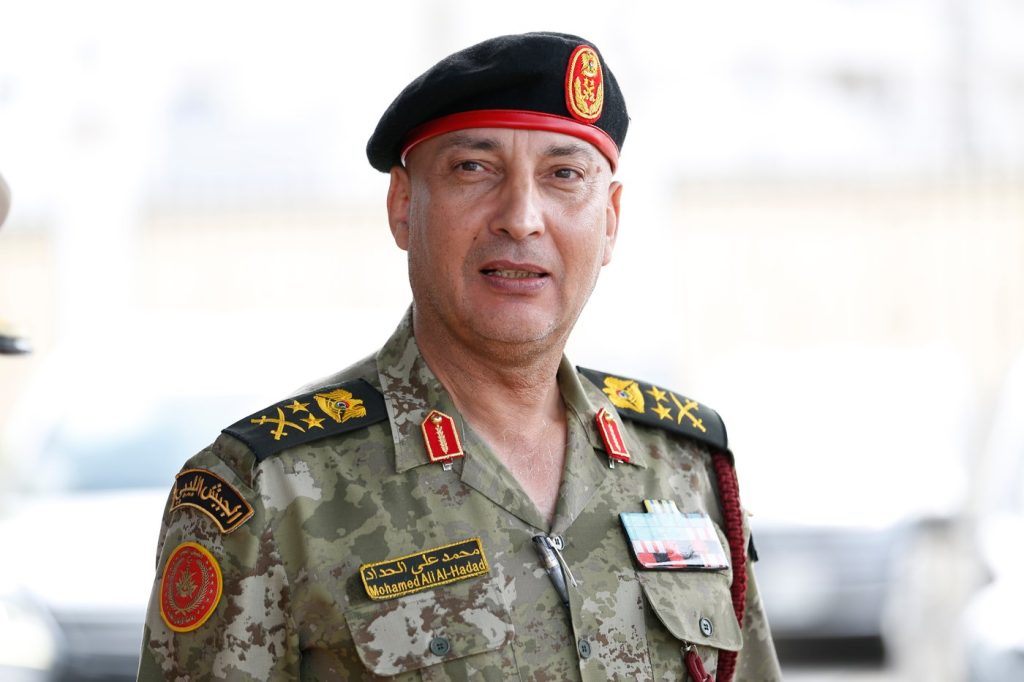
ANKARA (AP) – Turkey held a military funeral ceremony on Saturday morning for five Libyan officers, including General Muhammad Ali Ahmad al-Haddad, who tragically died in a plane crash earlier this week. This somber event took place at 8:00 a.m. local time at Murted Airfield base, located near Ankara, Turkey's capital. The ceremony was attended by prominent figures, including Turkey's military chief and the defense minister.
The private jet carrying General al-Haddad, four other military officers, and three crew members crashed on Tuesday shortly after departing from Ankara. Unfortunately, all individuals on board were killed in the incident. According to Libyan officials, the crash was attributed to a technical malfunction of the aircraft.
General al-Haddad served as the top military commander in western Libya and was instrumental in the ongoing United Nations-brokered efforts aimed at unifying Libya’s military forces. The high-profile delegation was reportedly returning to Tripoli, the capital of Libya, after engaging in defense talks in Ankara, which were intended to strengthen military cooperation between Turkey and Libya.
Following the ceremony, the five caskets, each cloaked in a Libyan national flag, were loaded onto a plane for repatriation to Libya. State-run news agency TRT reported that Turkey’s military chief, Selcuk Bayraktaroglu, was also on the plane en route to Libya.
In the aftermath of the crash, the bodies recovered from the site were held at the Ankara Forensic Medicine Institute for identification purposes. Justice Minister Yilmaz Tunc informed reporters that DNA samples were compared with those of family members from a 22-person delegation that traveled from Libya following the crash.
In an effort to investigate the incident thoroughly, Tunc announced that Germany had been requested to assist in examining the black boxes of the aircraft as an impartial third party. This underscores the gravity of the situation and the importance of understanding the circumstances that led to the crash.
Libya has endured significant turmoil since the 2011 uprising that resulted in the overthrow and death of longstanding dictator Moammar Gadhafi. This chaos has led to a divide in the country, with rival administrations established in the eastern and western regions, each supported by various rogue militias and foreign governments.
Turkey has been a key ally of Libya's government in the west, but it has recently taken steps to enhance relations with the eastern-based government as well. This shift could have implications for the already complex political landscape in Libya.
The loss of General al-Haddad, a pivotal figure in Libya's military, represents a significant blow to the aspirations for unity and stabilization in the war-torn country. The repercussions of this tragic event may be felt within both Libya and its international connections, emphasizing the need for continued dialogue and cooperative efforts for peace.








