

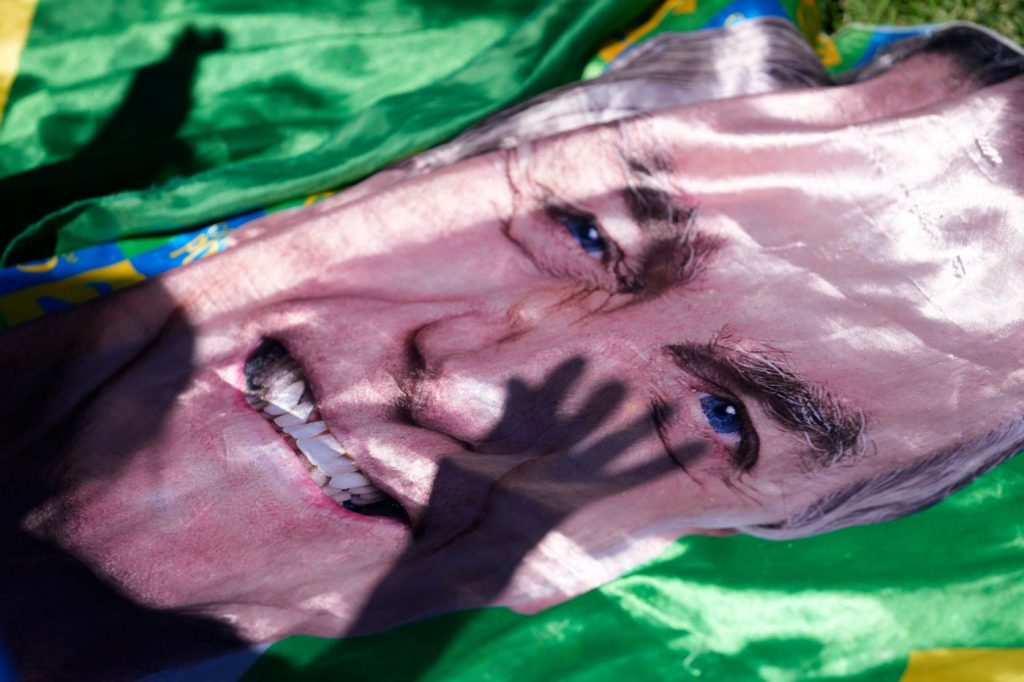
On Saturday, a Brazilian judge issued house arrest orders for ten individuals convicted for their involvement in a plot aimed at keeping former President Jair Bolsonaro in power following his loss in the 2022 election. The ruling was made by Supreme Court Judge Alexandre de Moraes.
The decision came shortly after authorities in Paraguay arrested Silvinei Vasques, a former police commander implicated in the conspiracy, and extradited him back to Brazil. Vasques had entered Paraguay secretly and attempted to board a flight bound for El Salvador using false Paraguayan documents. Brazilian police reported that he had removed his ankle monitor and driven to Paraguay in a rental car.
The ten individuals now under house arrest had previously faced precautionary measures, such as wearing ankle monitors or being required to stay at a fixed address each night. Among them is Filipe Martins, a former adviser to Bolsonaro.
In September, Bolsonaro was convicted and sentenced to 27 years in prison for attempting a coup to maintain his presidency despite losing the election. His trial and those of several generals and law enforcement officials involved in the plot are being closely monitored in Brazil, a nation that reinstated its democracy in 1985 after years of military rule.
The actions against Bolsonaro have drawn international attention. Former U.S. President Donald Trump characterized the proceedings against his ideological ally as a "witch hunt" and took punitive measures by raising tariffs on Brazilian imports, labeling the trial an "international disgrace." Furthermore, the Trump administration had imposed financial sanctions on Judge de Moraes, who presided over Bolsonaro's case. However, following Bolsonaro's conviction, the U.S. government seemed to soften its stance.
Earlier in November, Trump signed an executive order to lower tariffs on Brazilian beef and coffee, crucial exports for Brazil. Subsequently, in an apparent thaw in relations, the U.S. Treasury Department lifted sanctions against Judge de Moraes and his wife, as both Brazil and the United States continue to pursue trade negotiations.
This unfolding situation continues to raise significant discussions about the state of democracy in Brazil, as well as its implications for international relations, particularly with the United States. The outcomes of these trials and the corresponding political effects could have lasting impacts on the Brazilian political landscape.








