

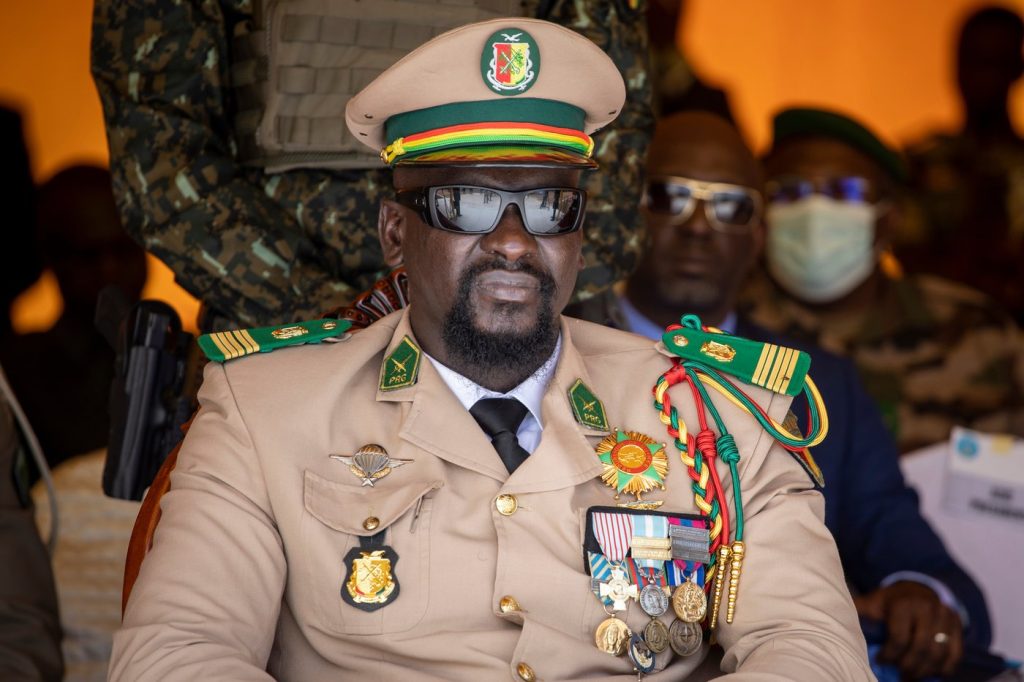
CONAKRY, Guinea — Guineans cast their votes on Sunday in a presidential election that marks the first since the 2021 coup led by junta leader Gen. Mamadi Doumbouya. Analysts predict a likely victory for Doumbouya, citing a significantly weakened opposition amidst an election featuring eight other candidates.
This election is the culmination of a transition process initiated four years ago when Doumbouya ousted former President Alpha Condé. Following the coup, Doumbouya's regime reportedly suppressed dissent and opposition, allowing him to stand uncontested by any formidable political opponents.
Despite Guinea's vast mineral wealth, particularly its status as the world's largest exporter of bauxite, over half of the country's population of 15 million is facing severe poverty and food insecurity, as reported by the World Food Program. Young people, in particular, are pinning their hopes on the election. Idrissa Camara, an 18-year-old resident of Conakry, voiced his concerns about unemployment and his hopes for improved living conditions.
The election is being conducted under a new constitution, which allows military leaders to run for office and extends the presidential mandate from five to seven years. This constitution was overwhelmingly approved in a September referendum, despite calls from opposition parties for a boycott.
This vote is part of a broader trend in Africa, where a significant surge in military coups has rendered political landscapes unstable, with at least ten countries experiencing forceful takeovers by military leaders who claim a failure of elected officials to provide governance and security.
Political analyst Aboubacar Sidiki Diakité highlighted that this election could reshape Guinea’s history and expressed skepticism about fair competition due to the sidelining of major opposition parties and the oversight of the General Directorate of Elections by the government.
In addition to the suppression of political opposition, activists have reported increased censorship of the press, the silencing of civil society leaders, and the abduction of critics since the 2021 coup. Last year, more than 50 political parties were disbanded in a controversial move described by authorities as a way to “clean up the political chessboard.”
Heavy security was observed in Conakry and surrounding areas, with nearly 12,000 police officers deployed and checkpoints established along major routes. On the eve of the election, authorities claimed to have neutralized an armed group allegedly threatening national security in the Sonfonia neighborhood, where gunfire was reported.
Polling stations saw long lines of predominantly young voters, under close surveillance by police. Nine candidates are contesting this election, with Doumbouya's closest rival being Yero Baldé from the Democratic Front of Guinea party, who previously served as education minister under Condé.
Two former opposition candidates, Lansana Kouyaté and Ousmane Kaba, were excluded on technical grounds. Longtime leaders Cellou Dalein Diallo and Sidya Toure remain in exile. While Baldé advocates for governance reforms, Doumbouya's platform focuses on infrastructure projects and improvements made since he took power.
The junta's flagship project, the Simandou iron ore venture, is set to expand Guinea's revenue through investments across various sectors, creating tens of thousands of jobs and diversifying the economy. Mamadama Touré, a high school student, emphasized advancements in digital skills training provided under Doumbouya’s administration.
Approximately 6.7 million registered voters were expected to participate at around 24,000 polling stations nationwide, with results anticipated within 48 hours. If no candidate secures a majority, a runoff will ensue.
As for individual sentiments, 22-year-old student Issatou Bah expressed uncertainty about voting this time, voicing frustration over unfulfilled expectations following previous elections. Bah hopes for real changes in a nation rich in resources but struggling to realize its potential.








