

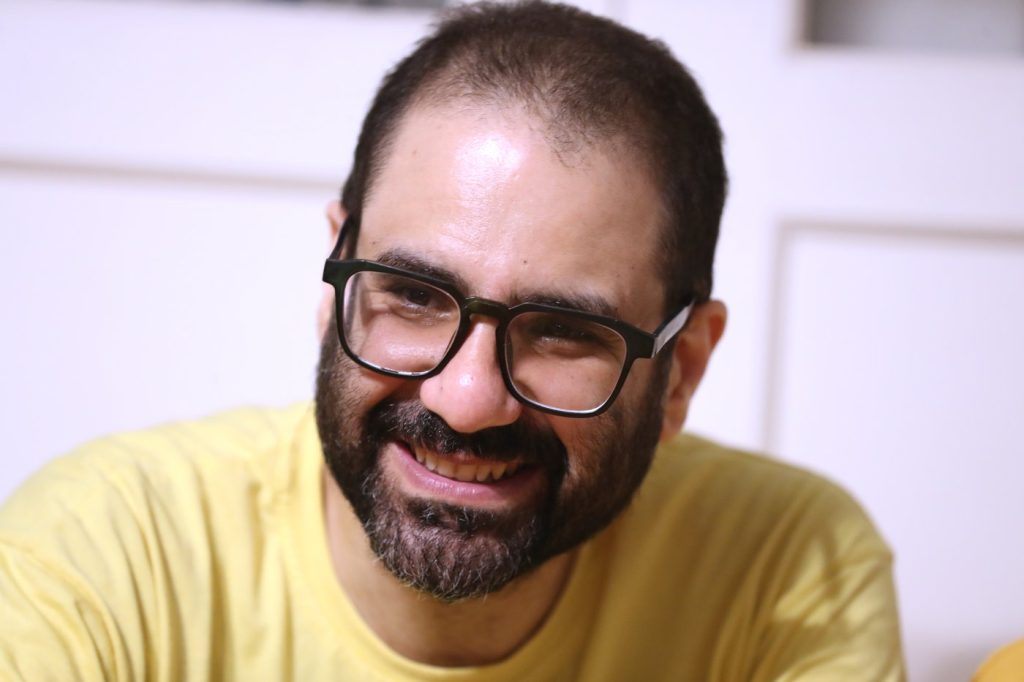
LONDON (AP) The U.K. Prime Minister Keir Starmer is under fire following his celebration of the return of human rights activist Alaa Abd el-Fattah, who was recently released from an Egyptian prison. Despite his release, the activist's past social media postings have raised concerns due to their violent and antisemitic language.
Alaa Abd el-Fattah, a dual national, had been imprisoned in Egypt for the majority of the past 14 years. He arrived back in the U.K. on Friday after Egyptian authorities lifted a travel ban that had kept him in the country since his release in September. The campaign for Abd el-Fattah's freedom has been a priority for successive British governments, which have advocated for his release due to his longstanding opposition to President Abdel-Fattah el-Sissi’s government.
Following Abd el-Fattah’s arrival, Prime Minister Starmer expressed his joy, stating he was “delighted” that the activist had been reunited with his family. However, the response has ignited criticism from a senior member of the opposition Conservative Party. Robert Jenrick, the Conservative spokesman on justice issues, questioned Starmer's endorsement of Abd el-Fattah, raising concerns about whether he was aware of the activist's controversial past social media posts that reportedly included endorsements of violence against "Zionists" and police.
Jenrick urged Starmer to condemn Abd el-Fattah's statements and to retract his “unalloyed endorsement” of the activist. He highlighted the importance of separating support for those imprisoned for peaceful dissent from approval of individuals whose expressed views might promote hate and violence. “Nobody should be imprisoned arbitrarily nor for peaceful dissent,” Jenrick asserted, but he emphasized that it was equally crucial for the Prime Minister not to support someone whose words could be classified as crossing into racism and bloodshed.
In response to these developments, a spokesperson for the Foreign, Commonwealth and Development Office reiterated that the release of Abd el-Fattah has been a long-standing goal for both major political parties in the U.K. At the same time, the government did not endorse Abd el-Fattah's historical tweets, which they deemed “abhorrent.”
Abd el-Fattah’s family in the U.K. has actively campaigned for his release over the years, contending that his lengthy imprisonment stemmed from his dissent against the Egyptian regime. His mother, Laila Soueif, notably staged a 10-month hunger strike to compel British authorities to advocate more vigorously for her son's liberation.
Upon his return, Starmer paid tribute to Abd el-Fattah’s family and those who supported his release. “I’m delighted that Alaa Abd el-Fattah is back in the U.K. and has been reunited with his loved ones, who must be feeling profound relief,” Starmer remarked.
Almost immediately after Abd el-Fattah's arrival at Heathrow Airport, critics began to circulate historical social media posts that appeared to endorse violence against certain groups. According to a report by The Times of London, Abd el-Fattah has claimed that his comments were misconstrued and were part of a "private conversation" during a crisis regarding Israeli military actions in the Gaza Strip.
As of now, Abd el-Fattah’s press team has not responded to inquiries seeking further clarification on the authenticity of these posts, and concerns linger regarding the implications of his past statements amid his newfound freedom.








